

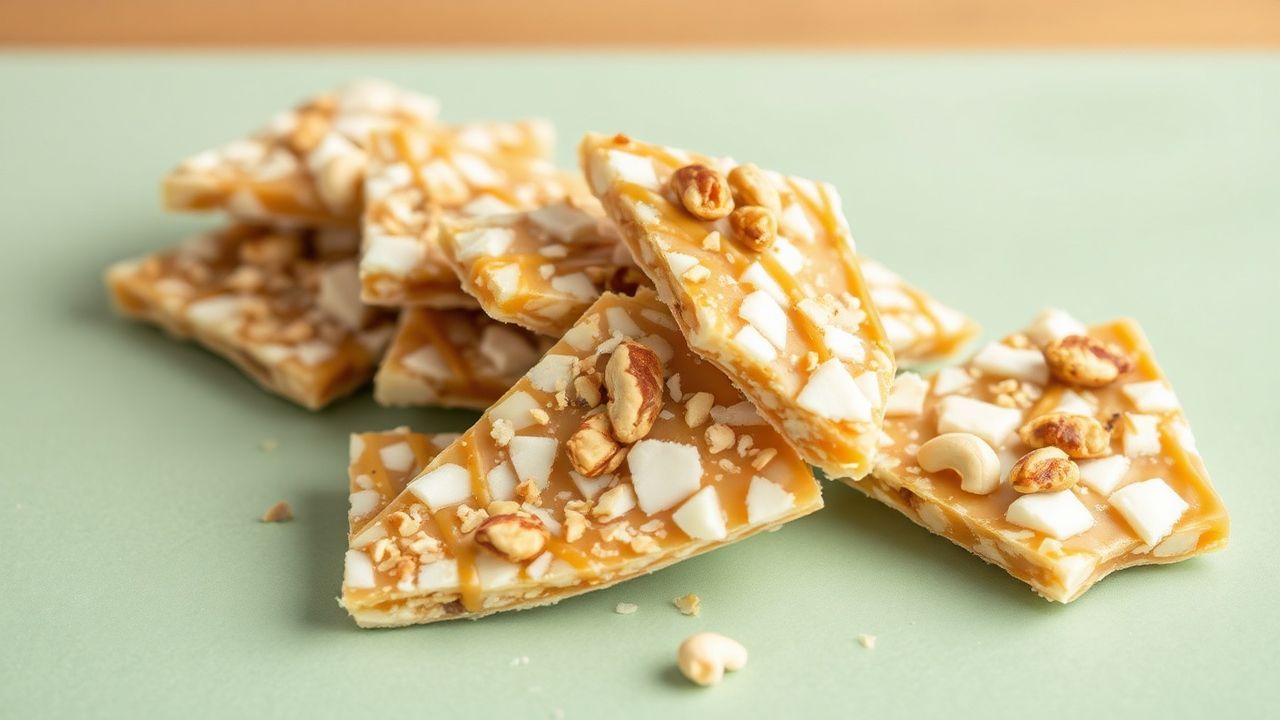
Crunchy Coconut Cashew Brittle brings a crackly, caramel-gloss finish with toasted coconut and buttery cashews. This tropical brittle tastes like a classic candy shop treat, yet it stays approachable for home cooks when you control temperature and timing.
- What Makes Coconut Cashew Brittle So Crunchy?
- Prep and Cook Time
- Yield
- Difficulty Level
- Ingredients
- Instructions
- Expert Insight: How to Get Consistent Hard-Crack Results
- Pro-Caution
- Tips for Success
- Serving Suggestions
- Nutritional Snapshot
- Q&A
- Why is my coconut cashew brittle sticky?
- What’s the best temperature for brittle snap?
- Can I make this without a candy thermometer?
- How do I store brittle so it stays crunchy?
- Is brittle naturally gluten-free and vegan?
- Final Thoughts
- Common Troubleshooting Notes
At a Glance
- Hard-crack timing creates the signature snap.
- Toasting first boosts aroma and prevents bland flavor.
- Even spreading helps every piece break cleanly.
- Low humidity storage keeps brittle crisp.
Start with a simple caramel base made from sugar and corn syrup. Then fold in toasted coconut and cashews, finish with a touch of butter and sea salt, and create aeration with baking soda. You get a brittle that’s sweet, nutty, and crisp enough to satisfy that “snap” moment on the first bite.
For the best results, treat this like a small batch candy process. You only need a thermometer, a heavy pan, and a plan to pour and spread before the mixture sets. If you keep those steps tight, your Crunchy Coconut Cashew Brittle will look glossy, break into shards, and taste fully developed.
What Makes Coconut Cashew Brittle So Crunchy?
Crunchy brittle comes from sugar reaching the hard-crack stage. At this point, the syrup has very little remaining moisture, so it cools into a glassy, crisp candy. If the temperature runs low, the brittle turns sticky and chewy instead of shattering.
To understand the texture, it helps to know how sugar behaves as it heats. Sugar syrups shift from soft stages to glass-like candy when water evaporates. See the background on crystal formation and candy stages at https://en.wikipedia.org/wiki/Sugar.
Toasting Nuts and Coconut for Flavor Depth
Toasting develops nuttiness and removes raw, flat flavors. Cashews roast quickly in a dry skillet, while shredded coconut browns fast and can burn if you pause. Work in small batches and keep the heat medium so you get golden tones without bitterness.
This flavor gain matters because brittle carries its taste through the caramel, not through added fats or cocoa. When your mix includes toasted coconut and cashews, each shard tastes fresh rather than sugary. For broader food science on browning reactions, you can review https://en.wikipedia.org/wiki/Maillard_reaction.
Prep and Cook Time
This recipe fits into a single focused session. Plan a clear counter and line up tools before you start heating sugar, because the pour step moves fast.
- Preparation: 15 minutes
- Cook time: 20 minutes
- Total: 35 minutes
Yield
You’ll get about 24 pieces depending on how thick you spread the candy and how you break it. For consistent shards, aim for a steady thickness across the pan.
Store extra pieces in a dry container. If you live in humid conditions, keep brittle farther from steam from kitchens and dishwashing.
Difficulty Level
Medium—the main challenge is temperature control during caramelization. Once the mixture reaches hard-crack, you must pour and spread quickly.
Use a candy thermometer and keep it calibrated for accuracy. Candy thermometers differ slightly, so if yours reads 300°F, confirm that matches your tool’s behavior for candy stages.
Ingredients
These ingredients create a clean caramel base with nutty, toasted depth. Choose good-quality cashews and fresh shredded coconut for the best aroma.
- 1 cup raw cashew halves
- 3/4 cup unsweetened shredded coconut
- 1 1/2 cups granulated sugar
- 1/2 cup light corn syrup
- 1/4 cup water
- 2 tbsp unsalted butter, cut into cubes
- 1 tsp vanilla extract
- 1/2 tsp baking soda
- 1/4 tsp fine sea salt
Instructions
Read the steps once before you start. Then toast, cook, and pour in sequence so the caramel stays at the correct stage.
For reference on carbohydrate behavior and why syrup stages matter, see https://en.wikipedia.org/wiki/Syrup.
- Toast the nuts and coconut: In a dry heavy skillet over medium heat, toast cashews until fragrant and lightly golden, about 4–5 minutes. Remove to a bowl. Toast shredded coconut, stirring constantly, until golden brown and aromatic, about 2–4 minutes. Set aside.
- Prepare the caramel base: In a medium saucepan, combine sugar, corn syrup, and water. Stir gently over medium heat until the sugar dissolves. Attach a candy thermometer. Boil without stirring until it reaches about 300°F (hard crack stage).
- Incorporate butter and flavors: Remove from heat. Stir in butter, vanilla, and sea salt. The mixture will bubble. Stir briskly until butter melts fully and the caramel looks glossy.
- Add nuts and coconut: Quickly fold in toasted cashews and coconut. Stir just enough to coat everything evenly.
- Activate the brittle’s snap: Stir in baking soda last. This creates aeration, which lightens the texture and supports a crisp break.
- Set to cool: Immediately pour onto a parchment-lined baking sheet or a lightly greased silicone mat. Spread to about 1/4 inch thickness. Work quickly before it thickens.
- Cool and break: Let cool at room temperature for 20–30 minutes. Once set, break into rustic bite-sized pieces.
[TIP]Expert Insight: How to Get Consistent Hard-Crack Results
Use a thermometer for every batch and watch the last 10–15°F closely. Hard crack can happen faster than you expect once the syrup nears the target range. If you frequently overshoot, lower the heat slightly and let the temperature creep up rather than rushing.
Also, keep your pan clean and avoid stirring after boiling begins. Stirring can trap sugar and affect how crystals form as the candy cools. For more on how heat and water content change candy behavior, you can review https://en.wikipedia.org/wiki/Candy.
Pro-Caution
Caramel at hard-crack stage gets very hot and can cause severe burns. Keep kids and pets away from the stove and never taste the syrup while it cooks. Wear oven mitts when moving the pan and pour carefully onto a stable surface.
Tips for Success
These steps reduce the two most common brittle problems: sticky texture and scorching. Small adjustments during toasting and caramel cooking make a big difference in crunch.
- Watch the thermometer: Candy-making depends on precision. Hard crack at ~300°F gives you the glassy, crisp snap.
- Use fresh nuts: Fresh cashews and coconut taste cleaner. Old nuts can smell stale and turn harsh when reheated.
- Uniform spreading: Spread evenly to a consistent thickness so every piece breaks with the same crisp texture.
- Make ahead: Store in an airtight container at room temperature for up to two weeks. Keep it away from humidity to preserve crunch.
If you want a subtle tropical twist without changing the core recipe, consider fine dried pineapple or a light cinnamon note. Keep add-ins small so they don’t add extra moisture that can soften the brittle.
Serving Suggestions
Crunchy Coconut Cashew Brittle looks best when you serve it where its golden caramel and toasted bits can show. Use a wooden board or a clear jar for a clean, candy-shop presentation.
For flavor pairing, brittle works with robust coffee and spiced chai tea. The warm, roasted notes balance the sweetness and salt, so the contrast feels intentional rather than random.
- Garnish shards with a tiny pinch of flaky sea salt for a sweet-salty edge.
- Top vanilla ice cream with broken brittle for a crunchy contrast.
- Fold crushed pieces into homemade granola bars for texture.
- Wrap pieces in parchment for gifting so they stay crisp during travel.
Nutritional Snapshot
Nutrition varies by portion size and thickness. Use the numbers below as a practical estimate for planning snacks.
| Nutritional Info (per serving) | Calories | Protein | Carbs | Fat |
|---|---|---|---|---|
| Coconut Cashew Brittle | 210 kcal | 3 g | 25 g | 12 g |
Because brittle is sugar-forward, consider serving it in smaller portions alongside fruit or dairy. That approach helps you enjoy the flavor while keeping portion control simple.
Q&A
Use these answers to troubleshoot texture and timing. Most brittle issues connect to temperature, moisture, or spreading thickness.
Why is my coconut cashew brittle sticky?
Sticky brittle usually means the caramel didn’t reach the hard-crack stage. Boil a bit longer next time, and avoid stirring once the syrup starts boiling.
What’s the best temperature for brittle snap?
Hard crack happens around 300°F for many home candy recipes. Check your thermometer accuracy and aim for a clear, rapid hardening on cooling.
Can I make this without a candy thermometer?
You can try, but results vary. The thermometer removes guesswork because brittle needs low moisture. If you must test without one, use a reliable candy stage method from trusted sources and keep practice batches small.
How do I store brittle so it stays crunchy?
Store brittle in an airtight container at room temperature. Keep it away from humidity and steam, since sugar candy absorbs moisture quickly.
Is brittle naturally gluten-free and vegan?
This recipe uses sugar, nuts, and dairy-free-friendly ingredients if you avoid butter substitutions that include animal products. Check ingredient labels for cross-contamination, especially if you’re sensitive to gluten.
Final Thoughts
Crunchy Coconut Cashew Brittle delivers that satisfying crack because it rests on controlled caramelization. Toasted coconut and cashews add real aroma, while butter, salt, and baking soda shape the final texture.
Make this once and you’ll learn how quickly sugar shifts at the top end. When you nail the hard-crack stage and pour evenly, your brittle breaks into crisp shards that taste like tropical candy house favorites.
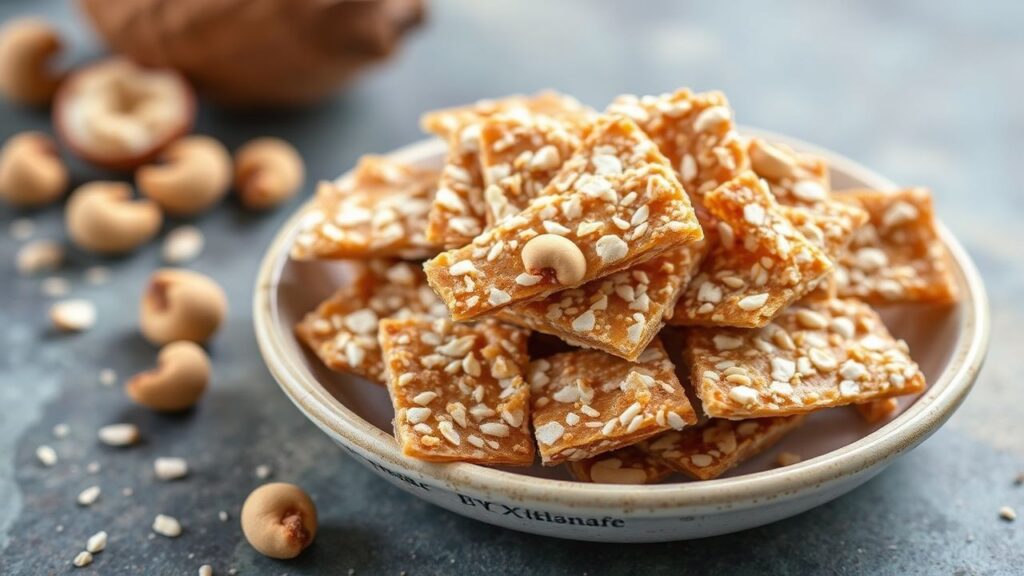
Explore more tropical nut-inspired candy ideas using your pantry staples. For additional background on ingredients and heat effects in cooking, you may find https://en.wikipedia.org/wiki/Food_science useful while you refine your technique.
Common Troubleshooting Notes
If you see grainy caramel, you may have stirred early or had sugar crystallize unevenly. Keep the heat steady, dissolve sugar before boiling, and then avoid unnecessary stirring.
If your brittle is too dark, lower the heat slightly and watch the boiling process. Toasting should enhance flavor, not burn, and caramel should reach stage without scorching on the bottom.
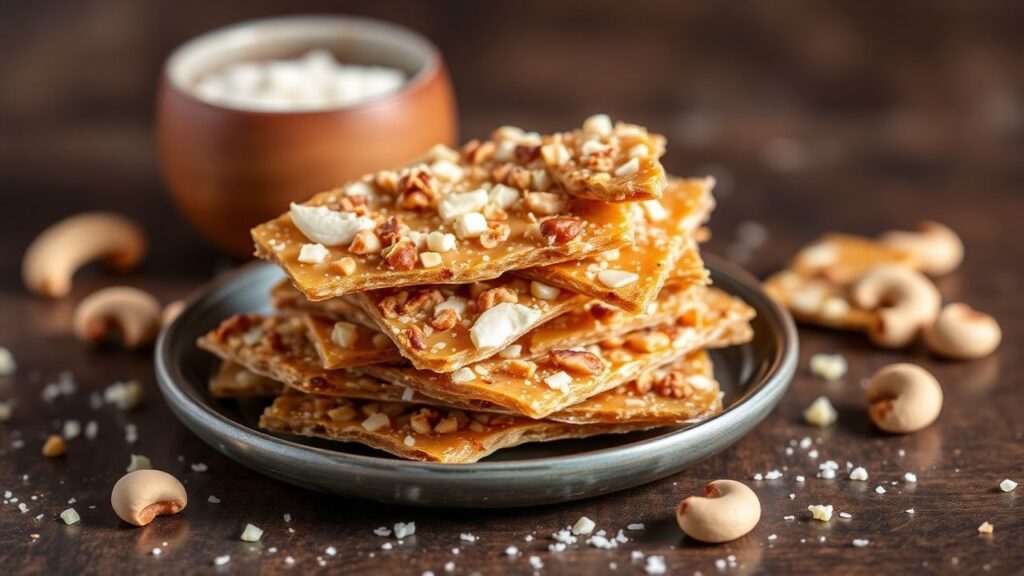
When you plan your pour step, you keep texture on track. If you prepare your tray and spread area before you reach hard crack, you reduce stress and improve consistency.
Enjoy crafting a batch of Crunchy Coconut Cashew Brittle—sweet, nutty, and crisp enough to earn repeat requests at gatherings.
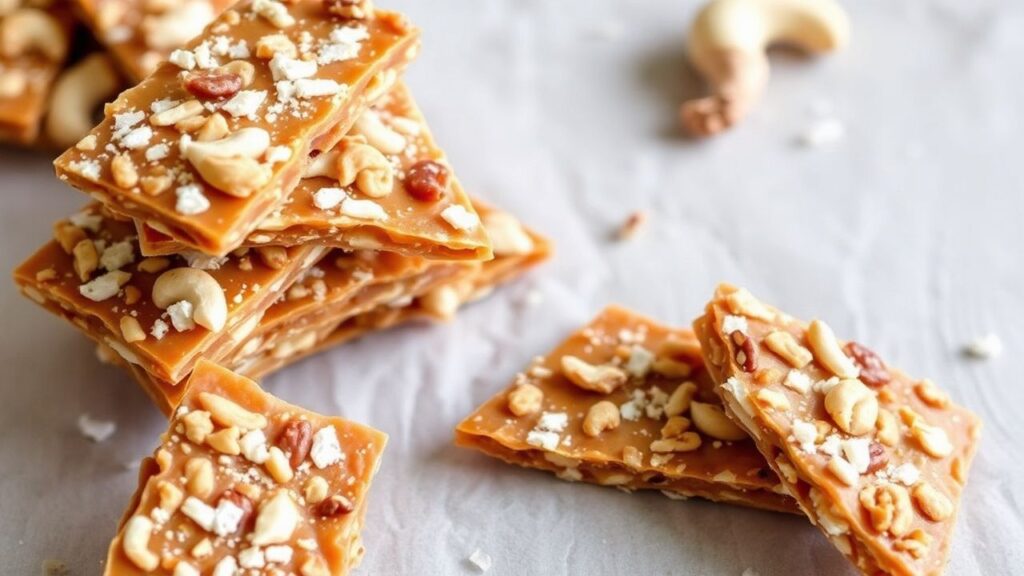
See also: Coconut Cashew Brittle