
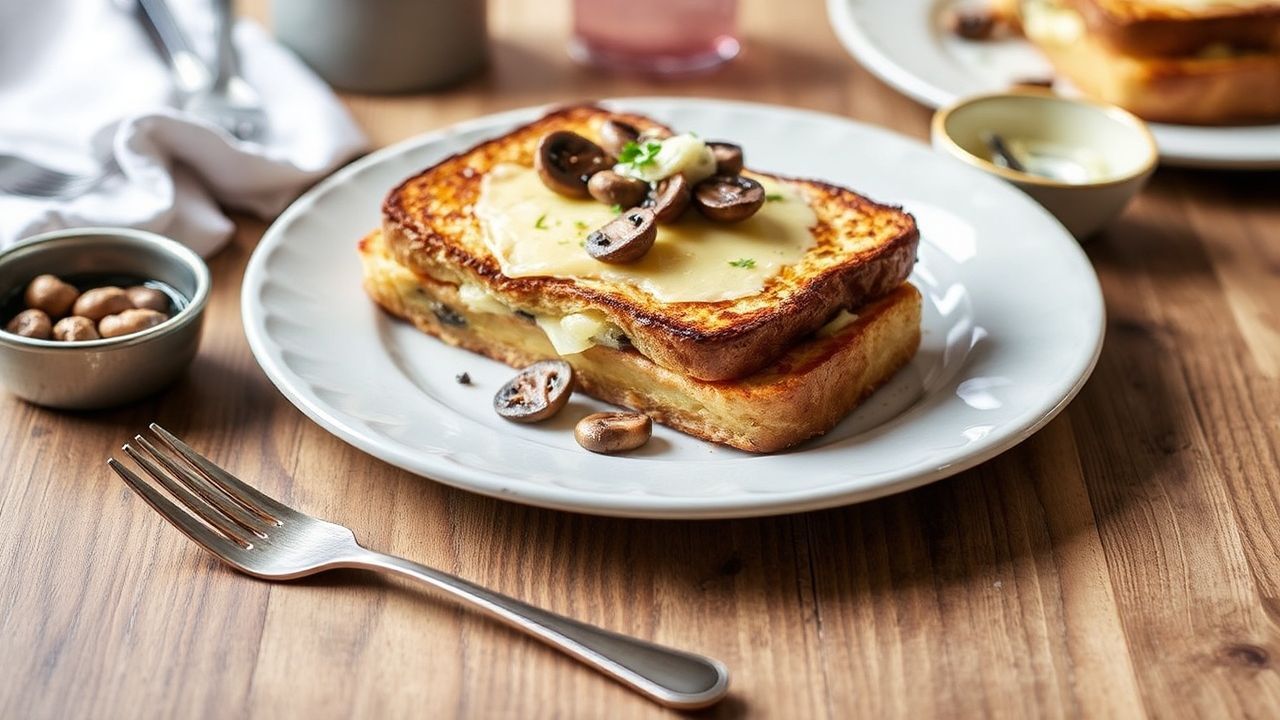
There’s a comforting magic in French toast—the golden, custardy slices that feel familiar yet special. This Savory French Toast with Mushrooms & Gruyère Delight flips the classic sweet direction into a rich brunch main.
- Why Mushrooms and Gruyère Make Savory French Toast Work
- Ingredients for Savory French Toast with Mushrooms & Gruyère Delight
- Step-by-Step Instructions
- 1) Make the Custard
- 2) Sauté the Mushrooms
- 3) Dip the Bread (Short Soak)
- 4) Pan-Cook the French Toast
- 5) Assemble and Melt Gruyère
- 6) Garnish and Serve
- Prep Tips That Save Time (and Protect Texture)
- Serving Suggestions for a Brunch or Dinner Plate
- Nutritional Snapshot (Estimate)
- Q&A: Savory French Toast with Mushrooms & Gruyère Delight
- What makes savory French toast different from the sweet version?
- Which mushrooms work best for this recipe?
- Can I use any type of bread?
- How do I prevent sogginess?
- How can I adapt this for a dairy-free option?
- Final Notes for a Perfect Plate
Instead of syrup and cinnamon, you build flavor from sautéed mushrooms, aromatic herbs, and nutty Gruyère. The result stays creamy inside while crisping on the outside, so each bite delivers real contrast.
At a Glance
- Savory French toast works like a pan-fried custard with umami toppings.
- Mushrooms need proper browning for deeper flavor, not just softening.
- Gruyère melts smoothly and adds a nutty, salty finish.
- Short custard dips prevent sogginess and protect the crust.
Savor this savory French toast with mushrooms & Gruyère delight when you want a meal that tastes restaurant-level but cooks at home. You get earthy mushroom notes, a creamy cheese melt, and a soft, eggy crumb that holds its shape.
This approach follows the same core technique as classic French toast: egg custard soaking plus hot-pan crisping. The difference comes from savory seasoning and a topping that acts like a warm sauce.
Why Mushrooms and Gruyère Make Savory French Toast Work
Mushrooms bring natural glutamates, which intensify savory perception. When you sauté them until browned, you also drive off moisture and create more concentrated flavor.
Gruyère contributes a nutty profile and steady melt. Its texture matters here because it turns the mushroom topping glossy and cohesive rather than dry.
If you want a deeper grasp of why these ingredients hit so hard, review umami and mushroom fundamentals. They explain the flavor chemistry behind your everyday cooking.
For the bread, choose thick slices so the interior can absorb custard without collapsing. Thick brioche or challah gives you a tender crumb that still crisps in the pan.
Custard Seasoning: Keep It Savory from the First Dip
Season the custard like you would for a quiche base. Eggs, milk, Dijon, and thyme create a savory “foundation” that carries through every bite.
Then add black pepper at the custard stage. Pepper spreads evenly in the egg mixture, so you taste it across the whole slice, not just at the edges.
Browning Matters More Than You Think
Early on, mushrooms can look “done” while still steaming. Cook them until they develop color and loosen bits from the pan.
That browning improves both flavor and texture. If you want a science-friendly refresher on browning, read about Maillard reaction.
Ingredients for Savory French Toast with Mushrooms & Gruyère Delight
Use this ingredient list for a balanced plate: custard, mushrooms, and a melted cheese finish. Every item supports texture, taste, or cooking reliability.
For substitutions, keep the ratios similar. You can swap bread, but you should still aim for thick slices with enough structure.
If you want a quick reference for dairy and cheese behavior, see cheese basics. It helps you understand why melt quality varies by type.
Essential Items
- 4 large eggs, lightly beaten
- 1 cup whole milk (or half-and-half for extra creaminess)
- 1 teaspoon Dijon mustard
- 1 teaspoon fresh thyme, chopped
- 8 slices thick-cut brioche or challah bread
- 2 cups mixed mushrooms (cremini, shiitake, and oyster), cleaned and sliced
- 2 tablespoons unsalted butter
- 1 tablespoon olive oil
- 1 cup grated Gruyère cheese
- 2 cloves garlic, minced
- Salt and freshly ground black pepper, to taste
- Fresh parsley, chopped, for garnish
- Optional: cracked red pepper flakes for a subtle heat
Ingredient Notes That Improve Results
Use whole milk for a stable custard. If you use a very light milk, the custard can taste thin and cook less luxuriously.
Pick mushrooms you can slice and brown. Cremini gives earthy depth, shiitake adds a woodsy note, and oyster mushrooms offer a meaty bite.
If you do use pre-shredded cheese, add extra heat time at the end. Cover briefly and watch closely so the topping melts into the mushrooms instead of sitting dry.
Step-by-Step Instructions
Follow these steps in order for the best texture. Each phase builds flavor and prevents sogginess.
Keep your skillet ready for the bread as soon as the mushrooms finish. Timing matters because French toast tastes best while it stays crisp and warm.
1) Make the Custard
In a medium bowl, whisk together the eggs, milk, Dijon mustard, thyme, salt, and pepper until fully combined. The mixture should look smooth and slightly frothy.
Let the custard sit for 2 minutes so the flavors spread. While it rests, slice mushrooms and measure the cheese.
2) Sauté the Mushrooms
Heat olive oil and 1 tablespoon butter in a large skillet over medium heat. Add the minced garlic and cook until fragrant, about 30 seconds.
Add mushrooms and sauté until tender and golden brown, about 7 minutes. Stir often so moisture evaporates and color builds evenly.
Season with salt and pepper, then transfer mushrooms to a bowl. This prevents them from overcooking while you cook the bread.
3) Dip the Bread (Short Soak)
Dip each bread slice into the egg-milk custard. Let it soak for 15–20 seconds per side, then lift and let excess drip off.
Avoid oversaturating. If the slices feel heavy and wet, your crust will soften and your French toast will lose structure.
Expert Insight: For thicker brioche, dip only the first side longer, then flip for a shorter dip. This keeps the center custardy without flooding the pan with extra liquid.
4) Pan-Cook the French Toast
Wipe the skillet if needed, then melt the remaining 1 tablespoon butter over medium heat. Place soaked bread slices in the pan and cook until golden and crisp, about 3–4 minutes per side.
Adjust heat as you go. If butter browns too fast, lower the temperature; if the surface looks pale, increase slightly for stronger caramelization.
5) Assemble and Melt Gruyère
Top each slice with a generous handful of sautéed mushrooms. Sprinkle Gruyère evenly so it reaches the edges and melts into the topping.
Cover the skillet briefly or transfer to a warm oven (350°F / 175°C) for 2–3 minutes. You want a glossy melt, not a dried-out cheese crust.
6) Garnish and Serve
Transfer savory French toast to plates. Garnish with freshly chopped parsley and a pinch of red pepper flakes if you like heat.
Serve promptly for best texture. Crisp edges soften over time, especially once steam builds under a cover.
Prep Tips That Save Time (and Protect Texture)
You can streamline this recipe without sacrificing quality. Focus on prepping components separately so the bread stays ready for crisping.
Plan for the last 20 minutes of the process to run smoothly. That time includes quick sauté finishing, dipping, pan-cooking, and melting cheese.
Make-Ahead Strategy
Sauté mushrooms and prepare the custard mixture the night before. Refrigerate them separately in airtight containers.
In the morning, let custard warm slightly at room temperature. Cold custard can slow soaking and extend cook time.
Batch Cooking Without Drying
If you cook in batches, keep finished slices warm on a sheet pan in a low oven. Use a light cover so the crust stays somewhat crisp.
Re-melt Gruyère at the end. Add mushrooms and cheese after first reheat when possible to restore the creamy finish.
Serving Suggestions for a Brunch or Dinner Plate
Serve savory French toast with mushrooms and Gruyère as a main with a clean, acidic side. This balances richness and keeps flavors bright.
A simple arugula salad works well because it cuts through butter and cheese. Add lemon vinaigrette and toss right before serving.
If you want a reference for salad greens and nutrition basics, see arugula. It helps you choose a peppery balance that complements mushrooms.
Pairing Ideas
- Arugula salad with lemon vinaigrette
- Roasted seasonal vegetables for a hearty plate
- Crème fraîche or herb-infused soft cheese for extra tang
- Fresh orange juice or unsweetened black coffee
For a more upscale touch, add microgreens on top. They bring a fresh aroma that makes the whole dish feel lighter.
Leftovers: How to Reheat for Best Results
Reheat leftovers in a skillet over medium-low heat. This method restores some crispness better than a microwave.
If you use an oven, keep the slices covered lightly and warm gently. Then melt additional Gruyère for 1–2 minutes if needed.
Nutritional Snapshot (Estimate)
This estimate supports planning, not medical use. Exact values vary based on bread size, cheese brand, and how much butter you use.
For a typical serving, plan around 420 kcal with a balance of carbs from bread and protein from eggs and cheese.
| Nutrient | Per Serving |
|---|---|
| Calories | 420 kcal |
| Protein | 18 g |
| Carbohydrates | 38 g |
| Fat | 20 g |
If you want broader context for macronutrients, visit macronutrients. It helps you compare recipes by protein, carbs, and fats.
Q&A: Savory French Toast with Mushrooms & Gruyère Delight
Use these answers to troubleshoot and refine your cook. They focus on flavor, texture, and reliable results.
These guidelines match classic pan-frying and custard logic. You can adapt the recipe while keeping its core technique intact.
What makes savory French toast different from the sweet version?
Sweet French toast relies on sugar-forward custard and syrup. This savory version swaps those flavors for Dijon, herbs, and pepper, then finishes with mushrooms and Gruyère.
You still soak bread and pan-cook it. The topping turns the final dish into a full brunch or light dinner.
Which mushrooms work best for this recipe?
Cremini, shiitake, and oyster mushrooms give the best mix of earthy, woodsy, and meaty textures. Cook them until browned so the topping tastes concentrated instead of watery.
Any good “browning-friendly” mushroom works. Choose varieties you can slice and sauté quickly.
Can I use any type of bread?
Thick-cut bread works best because it holds custard without falling apart. Brioche or challah deliver a tender crumb that crisps nicely.
For a rustic option, try sourdough or a sturdy country loaf. Avoid very thin sliced sandwich bread; it soaks too fast.
How do I prevent sogginess?
Dip briefly and let excess custard drip off. Then cook on medium heat until the surface turns golden and crisp.
If your pan runs too hot, the outside browns before the center warms. If heat runs too low, the bread steams and softens.
How can I adapt this for a dairy-free option?
You can swap plant-based milk for the custard. Use a dairy-free cheese that melts well so the topping becomes cohesive.
Also taste as you go. Dairy-free cheeses vary, so you may need extra salt or pepper to match the original savory balance.
Final Notes for a Perfect Plate
Savory French toast with mushrooms and Gruyère brings comfort and depth into one pan. When you brown the mushrooms and dip the bread briefly, you get crisp edges and a creamy center.
Make it for weekend guests, or build it as a weekday treat when you want something warm and flavorful. Each step stays simple, but the result tastes carefully composed.
If you enjoy learning food mechanics, explore French toast history and brown butter techniques for extra nuance. Those references can sharpen your instincts for browning and flavor layering.
See also: Savory French Toast