
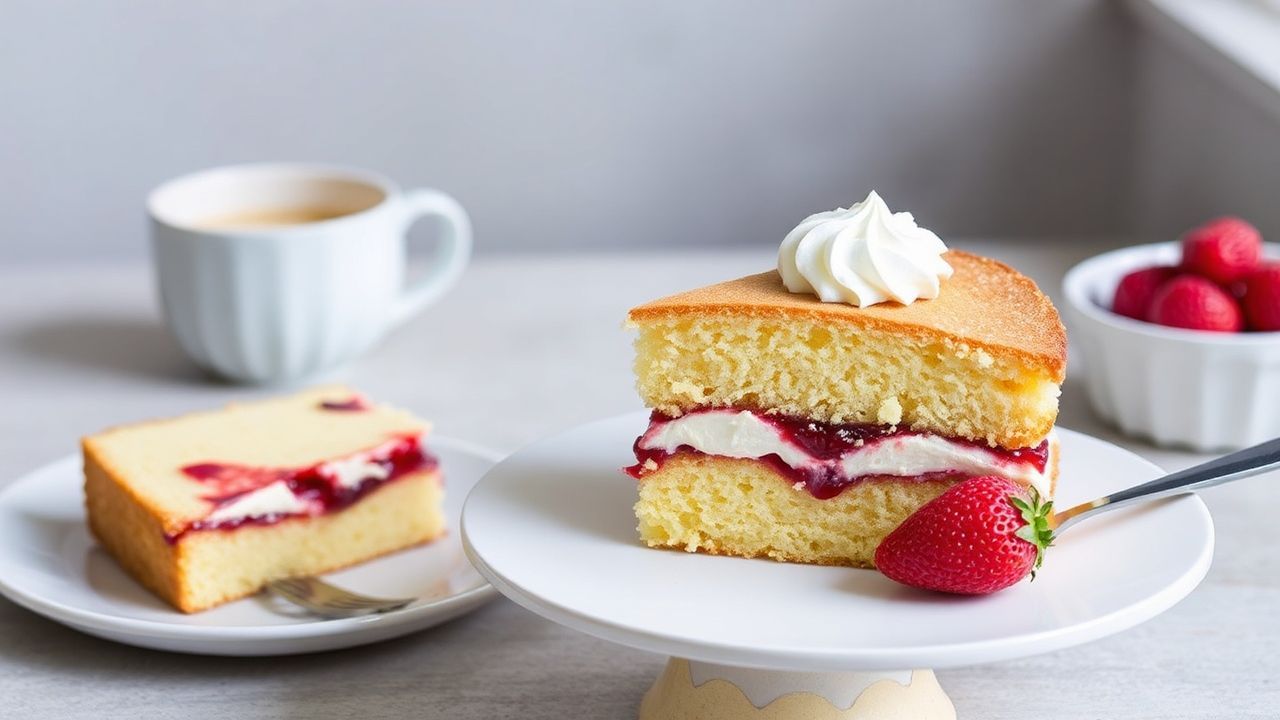
There’s something timeless about the Victoria sponge cake, a classic British bake that shows up at afternoon teas, birthdays, and celebrations. Two soft sponge layers cradle strawberry jam and billowy cream for a slice that tastes both simple and special.
- Prep and Cook Time
- Yield
- Difficulty Level
- Ingredients
- Instructions
- Tips for Success
- Serving Suggestions
- FAQ
- What exactly is a Victoria sponge cake?
- What makes the Victoria sponge so special?
- What are the essential ingredients?
- Can I use other types of jam besides strawberry or raspberry?
- How do I store a Victoria sponge cake?
- Can I make it ahead of time?
- Future Outlook
At a Glance
- Victoria sponge uses equal-style ingredients for a light, tender crumb.
- Whisking and folding protect air, so the cake rises evenly.
- Jam and cream balance sweetness with a bright, fruity hit.
- Serve fresh for best texture and flavor.
Origins matter because they explain the cake’s spirit: it’s made for tea-time and built for everyday joy. The result should feel airy, springy, and delicate, not heavy or dry. If you bake it well, each bite delivers that classic jam-and-cream harmony.
In this guide, you’ll learn the key techniques, timings, and troubleshooting tips for a reliable Victoria sponge cake. You’ll also get practical advice on jam choice, cream stability, and storage so your cake tastes great on day one and day two.
Victoria sponge cake is more than a sweet tradition. It’s a well-loved British tea cake known for two shallow round layers and a filling of jam plus cream. Many bakers associate its identity with Queen Victoria and the Victorian era, while modern recipes follow the same core method: cream the fat and sugar, then fold in dry ingredients gently for a fine crumb.
To understand the crumb, focus on how cakes trap air during mixing and baking. For helpful background on baking science, see cake. For the role of leavening, review leavening agents so your rise stays consistent.
Prep and Cook Time
Set yourself up for success with clear timing. When you plan the prep and bake window, you reduce stress and keep your sponge texture intact. Prepping also helps you avoid overmixing while you wait for oven heat.
Planning: 20 minutes, Cooking: 25 minutes, Cooling: 30 minutes. Total time lands at about 1 hour 15 minutes from start to finish, depending on your oven.
- Planning: 20 minutes
- Cooking: 25 minutes
- Cooling: 30 minutes
- Total: 1 hour 15 minutes
Yield
This recipe makes enough for 8 classic slices. The layers stay thin and elegant, which makes the cake ideal for tea plates and dessert tables.
If you want thicker slices, you can cut fewer portions, but the cake still serves best when chilled briefly before slicing. Pair it with tea or fruit for a simple, crowd-friendly finish.
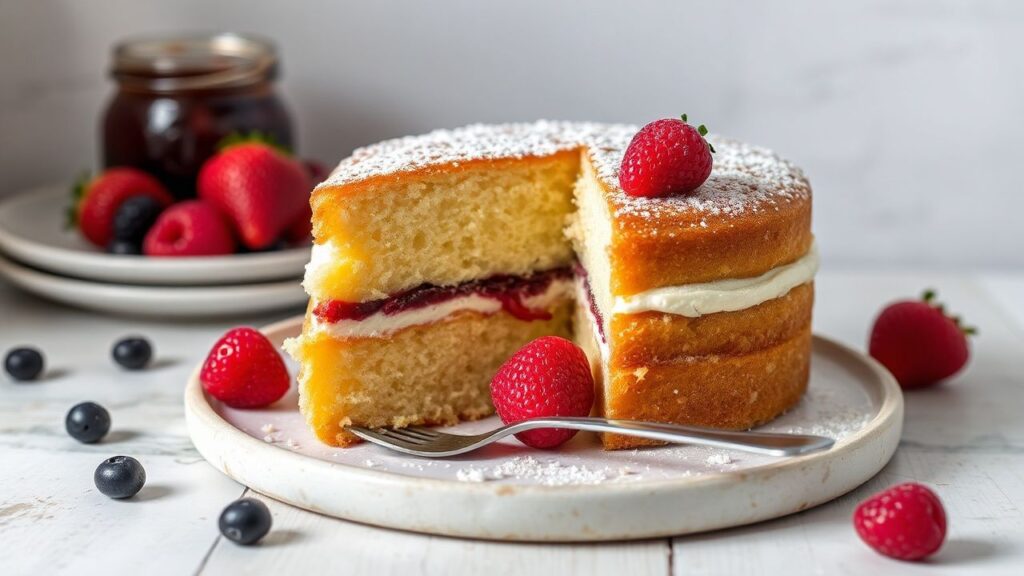
Difficulty Level
Level: Easy to Medium. You don’t need advanced pastry skills, but you do need gentle mixing and accurate baking time.
Most failures come from rushing the mix, skipping room-temperature ingredients, or overfolding. Keep your hands light, and your Victoria sponge cake will reward you.
Ingredients
Use fresh, room-temperature ingredients for best results. Room-temperature butter creams faster, and room-temperature eggs mix without curdling the batter.
For filling, choose a jam you enjoy straight from the jar. Since jam sets softly, a high-quality strawberry or raspberry flavor keeps the overall taste bright.
- 1 cup (225g) unsalted butter, softened
- 1 cup (225g) caster sugar
- 4 large eggs, at room temperature
- 2 cups (240g) self-raising flour, sifted
- 2 tsp baking powder
- 2 tbsp whole milk
- 1 tsp pure vanilla extract
- ¾ cup (240ml) strawberry or raspberry jam, preferably high-quality
- 1 cup (240ml) double cream, whipped to soft peaks
- Powdered sugar, for dusting
Instructions
Follow these steps in order so the batter stays stable. Baking works like a schedule: you build air during mixing, then you “lock” that structure in the oven.
Before you start, set out tools: two 8-inch (20cm) round tins, parchment paper, a mixer, a spatula, and a cooling rack. That preparation keeps your process smooth.
- Preheat your oven to 350°F (180°C). Grease and line two 8-inch (20cm) round cake tins with parchment for easy release.
- Cream butter and caster sugar until pale and fluffy, about 3-4 minutes with an electric mixer. This step helps create a fine sponge structure.
- Add eggs one at a time, beating well after each addition. If the batter looks unstable, add a tablespoon of flour to help bind.
- Sift self-raising flour and baking powder. Fold dry ingredients gently into the wet mixture. Stop as soon as you see no dry flour.
- Stir in vanilla extract and milk to keep the crumb tender and balanced.
- Divide batter evenly between the two tins, then smooth the tops so both layers rise at the same pace.
- Bake for 22-25 minutes until a toothpick comes out clean and the sponge springs back when lightly pressed. Avoid opening the oven door early.
- Cool in tins for 10 minutes, then move to a wire rack. Cooling stops steam from softening the crumb too much.
- Assemble when cool: spread jam on one layer, then add whipped cream on top and sandwich with the second layer.
- Finish and serve by dusting powdered sugar over the top for a classic look.
For extra background on what drives cake texture, you can review chemistry of cooking and baking. These help explain why gentle mixing and correct heat matter.
Tips for Success
Small details create big differences in sponge cakes. Use these tips to protect the airy crumb and keep your jam layer neat.
Expert Insight:
Also check your ingredients before mixing. Fresh baking powder and properly measured flour help the cake rise with a light structure instead of a heavy, tight crumb.
Pro-Caution:
Now focus on practical swaps. If self-raising flour runs out, use plain flour plus a reliable baking powder dose, but keep the measurement exact. For jam, pick one with fruit character so the flavor stays bold against the cream.
- Use room-temperature ingredients for smoother mixing and better rise.
- When folding flour, use a slow, gentle motion to avoid deflating air.
- Choose high-quality jam with real fruit for stronger flavor.
- For fluffiness, keep mixing times short and consistent.
- For best texture, assemble just before serving when possible.
- For convenience, bake sponge layers ahead and assemble the next day.
Serving Suggestions
Serve your Victoria sponge cake slightly chilled for tidy slices, especially when filled with cream. For tea, pair it with black tea like English breakfast or Earl Grey for a classic British feel.
For a modern touch, add a thin smear of lemon curd alongside the jam layer, or garnish with fresh berries. Keep decorations minimal so the sponge, jam, and cream remain the main event.
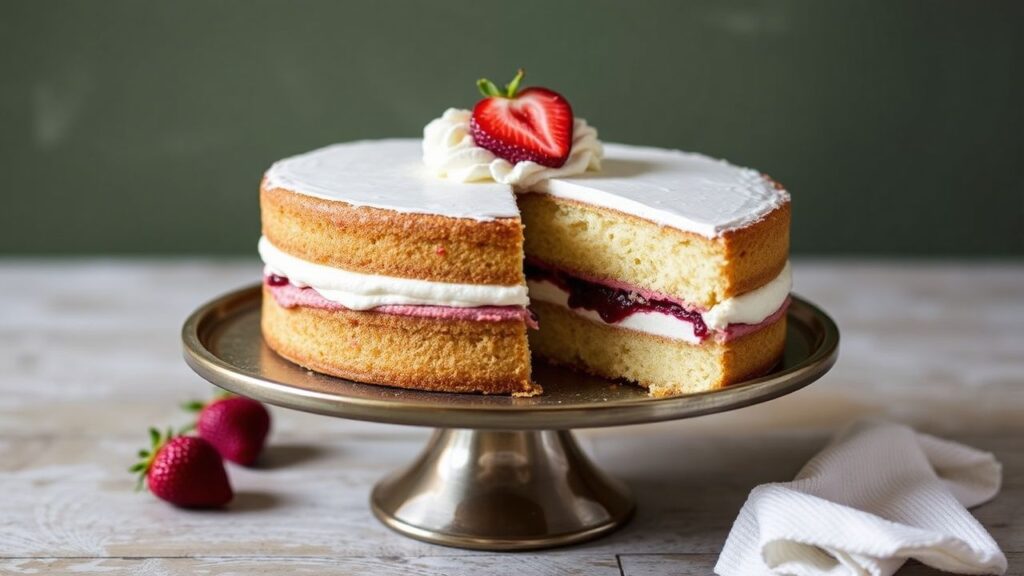
Nutrition Facts per Slice
This nutrition estimate assumes the full recipe is cut into 8 portions. Values vary based on butter brand, jam sugar content, and cream thickness.
Use it as a practical guide, not a medical measure.
| nutrient | Amount |
|---|---|
| Calories | 320 kcal |
| Protein | 4 g |
| Carbohydrates | 40 g |
| Fat | 15 g |
If you enjoy traditional cake making, you may also like learning the basics behind butter and how fats affect texture. Understanding cream can also help you choose the right whip stage for clean filling.
For readers who like variety, you can explore another British bake such as a lemon drizzle cake style by adjusting citrus zest and simple syrup. Keep your focus on texture and moisture so your cake stays tender.
FAQ
These answers cover the questions most home bakers ask right after the first bake. Use them to fine-tune your Victoria sponge cake for consistent results.
If you still feel unsure, test one small change at a time. That method helps you learn what improves your sponge.
What exactly is a Victoria sponge cake?
A Victoria sponge cake is a classic British tea cake made from two sponge layers filled with jam and cream. The cake often follows a straightforward “cream butter and sugar, then bake” method that creates a light crumb.
Many recipes keep the sponge height moderate so the filling stays balanced. For broader context, see Victoria sponge.
What makes the Victoria sponge so special?
The magic comes from balance: a tender sponge with mild sweetness, plus a jam layer that adds fruit brightness. When whipped cream stays soft and smooth, each forkful tastes fresh rather than cloying.
In practice, it’s the mixing and folding that matter most. They preserve air so the sponge feels springy instead of dense.
What are the essential ingredients?
Most versions use flour, butter, sugar, and eggs as the base. For the filling, you typically use strawberry or raspberry jam and whipped double cream.
If you’re learning the structure of sponge cakes, you can review cake and sponge cake concepts to connect technique with results.
Can I use other types of jam besides strawberry or raspberry?
Yes. You can use apricot, cherry, or blackcurrant jam as long as the flavor works with cream. Pick jam that tastes good on its own, because it will be one of the loudest flavors in the cake.
Also consider jam texture. Very runny jam can soak into the sponge quickly, so choose a jam that spreads easily without flooding.
How do I store a Victoria sponge cake?
Store the assembled cake in the fridge because it contains cream. Use an airtight container to reduce drying, and let the cake sit out for 10-15 minutes before serving for a softer bite.
For best quality, eat within about 2 days. If you bake the sponge layers ahead, wrap them well and assemble closer to serving time.
Can I make it ahead of time?
Yes. Bake the sponge layers, cool them completely, and wrap them tightly. Keep them at room temperature for a short window, then assemble with jam and cream when you’re ready.
This approach protects sponge texture and prevents the filling from making the cake soggy.
Future Outlook
The best Victoria sponge cake stays true to its simple formula: light sponge, jam you love, and cream you whip carefully. When you nail those basics, the cake becomes a dependable showstopper for any tea table.
As you bake more variations, you’ll notice small shifts in flavor and texture based on jam thickness, cream whip stage, and oven accuracy. Keep your method steady, then experiment with fruit flavors and gentle decoration.
Next time you want a classic dessert, focus on one goal: a sponge that springs back and a filling that tastes fresh. That’s how a humble cake becomes a true tradition you can repeat with confidence.
See also: Victoria sponge