
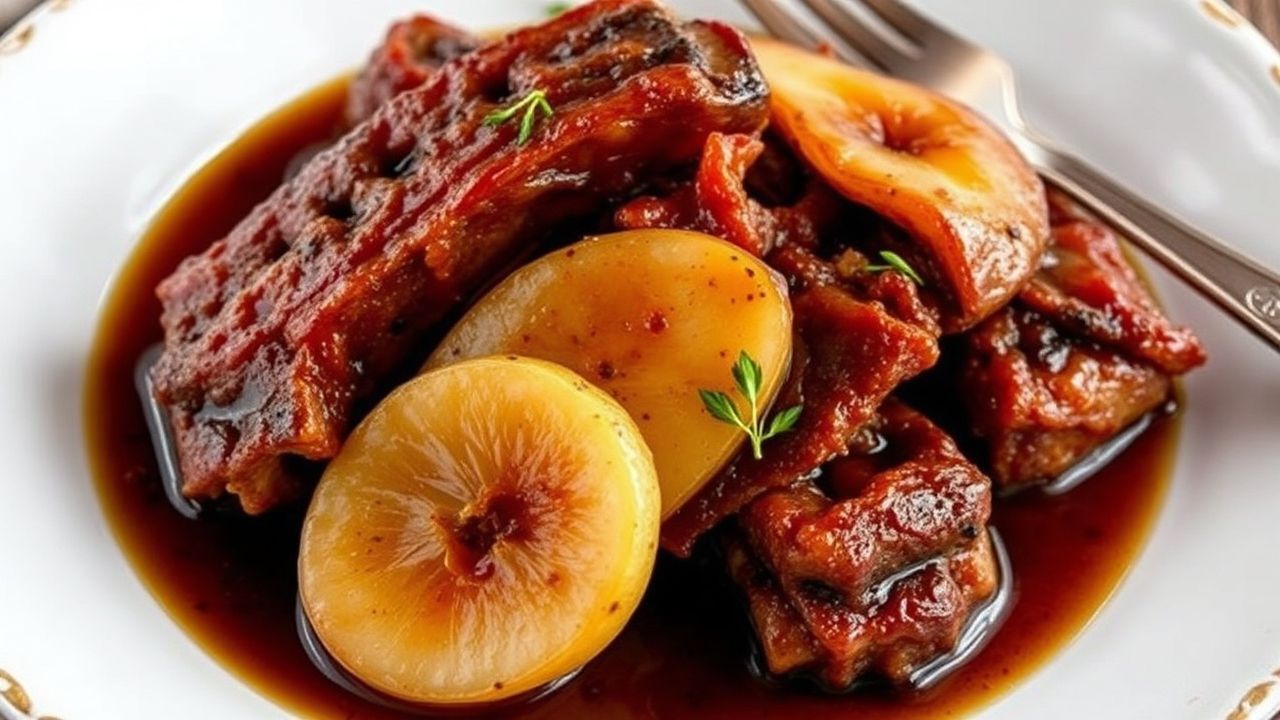
Rich, tender braised beef ribs are pure comfort food. The sweet pear and soy marinade adds a balanced contrast—gentle fruit sweetness with deep savory umami—so every bite tastes both familiar and elevated.
- Prep and Cook Time
- Yield and Difficulty
- Ingredients
- Instructions
- Q&A
- What makes beef ribs the ideal choice for this sweet pear and soy marinade?
- How does sweet pear improve the marinade?
- Why braising instead of grilling or roasting?
- Can I use bottled pear juice instead of fresh pears?
- How long should the ribs marinate for best flavor?
- In Summary
At a Glance
- Pear + soy creates a sweet-savory glaze that clings during braising.
- Low, slow cooking breaks down collagen for fall-off-the-bone tenderness.
- Drying + searing builds a caramelized crust and richer sauce.
- Reduce the braising liquid to concentrate flavor before serving.
Sweet pear softens the sharp edge of soy, and soy adds savory depth that fruit alone can’t provide. Together, they turn short ribs into a glossy, restaurant-style main dish you can cook at home.
Below, you’ll find a proven method for tender braised beef ribs in a sweet pear and soy marinade, plus timing, ingredient swaps, and success tips. Use this guide for weeknight planning, or for a weekend meal that impresses without stress.
Tender, fall-apart ribs come from heat control and patience. A short sear adds color, while braising does the real work—gentle moisture plus time transforms tough connective tissue into silky texture.
Focus: tender braised beef ribs in sweet pear and soy marinade—designed for a balanced sweet-savory profile and a sauce that tastes richly layered, not one-note.
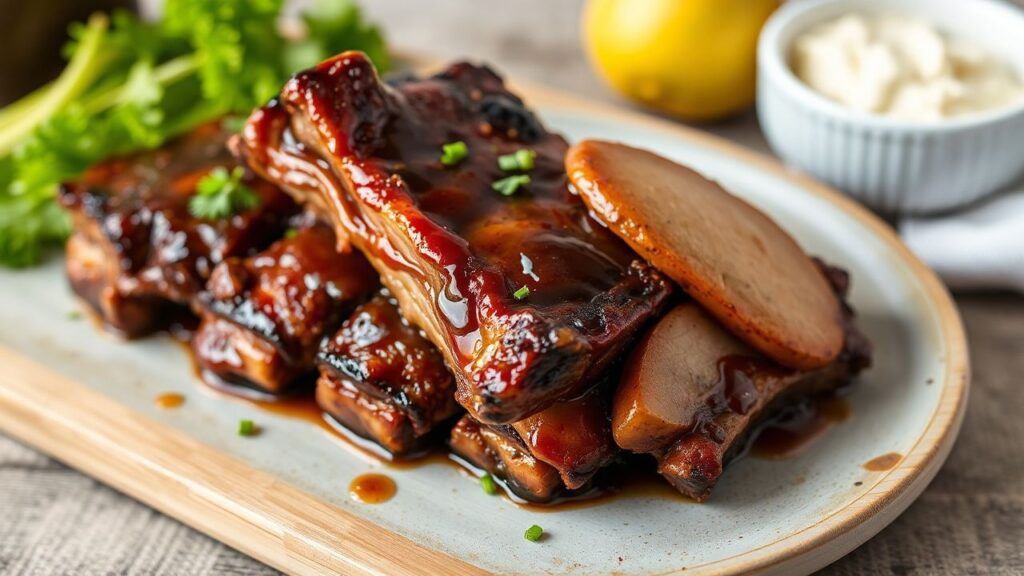
Tender Braised Beef Ribs in Sweet Pear & Soy Marinade bring together ripe pear sweetness and soy sauce umami for a slow-braised glaze. Pears add natural sugars and subtle fruit aroma, while soy sauce delivers salt, glutamates, and savory complexity that carries through the braise. Slow braising matters because it lets collagen convert into gelatin over time, improving both tenderness and mouthfeel.
Prep and Cook Time
Plan ahead, then cook with steady, low heat. The flavor builds during marinating and finishes during gentle braising.
Planning: 30 minutes (plus 8 hours marinating)
Cook Time: 3 to 3 ½ hours
Total Time: About 12 hours (including marinating)
Yield and Difficulty
This recipe suits both dinners and entertaining. You get enough sauce to coat ribs well and still have extra for serving.
Serves: 6 hungry guests (or 4 with generous seconds)
Difficulty: Medium—ideal for home cooks ready to master slow-braising timing.
Ingredients
Use bone-in short ribs for the best texture. Bone-in cuts usually carry more flavor, and the fat distribution helps the sauce taste rich.
Core Ingredients
– 4 lbs beef short ribs, bone-in, trimmed
– 2 ripe Asian pears, peeled and grated
– ¾ cup low-sodium soy sauce
– ¼ cup mirin (or omit and add a small splash of rice vinegar plus extra honey to taste)
– 3 tablespoons honey
– 5 garlic cloves, minced
– 2-inch piece of fresh ginger, grated
– 2 stalks green onions, sliced
– 1 teaspoon toasted sesame oil
– 1 teaspoon freshly ground black pepper
– 2 cups beef broth
– 2 tablespoons vegetable oil (for searing)
– Sesame seeds and finely sliced scallions (garnish)
For background on the flavor source behind soy-based sauces, see soy sauce. For the science of collagen breakdown during slow cooking, collagen explains why braising works so well for tough cuts.
Instructions
Follow the steps in order. If you change the sequence, you may lose crust or end up with a thinner sauce.
1) Prepare the marinade
In a mixing bowl, combine grated pears, soy sauce, mirin, honey, garlic, ginger, sesame oil, and black pepper. Whisk until smooth. The pear should look evenly distributed, not clumped.
2) Marinate the ribs
Place the ribs in a resealable bag or shallow dish. Pour marinade over them and coat all sides. Refrigerate for at least 8 hours or overnight for best results.
3) Sear the ribs
Remove ribs and pat dry. Heat vegetable oil in a heavy pot or Dutch oven over medium-high heat. Sear ribs in batches until browned on all sides, about 3–4 minutes per side.
4) Reduce marinade and build sauce
Strain reserved marinade through a fine sieve to remove solids. Pour it into the pot, add beef broth, and bring to a simmer. Scrape browned bits from the bottom—those flavors anchor the finished sauce.
5) Braise gently
Return ribs to the pot. Nestle them so they sit partially submerged. Add sliced green onions on top, cover tightly, and reduce heat to low. Braise for 3 to 3 ½ hours until fork-tender and falling away from the bone.
6) Finish the sauce
Transfer ribs to a warm plate. Simmer braising liquid uncovered over medium heat to reduce and thicken, stirring occasionally. Taste and adjust seasoning carefully; soy can vary in salt level.
7) Serve
Spoon the glossy pear-soy sauce over ribs. Finish with sesame seeds and scallions for crunch and fresh aroma.
Why this flavor profile works: sweet fruit sugars caramelize as the sauce reduces, while soy adds savory depth that stays after reduction. For more on fermentation and how soy products contribute to umami, read umami and fermentation.
Tips for success
Small technique choices decide whether your ribs taste flat or restaurant-level. Use these points to protect tenderness and build a sauce you’ll want to spoon twice.
- Choosing the cut: Use bone-in short ribs with good marbling. Lean cuts often dry during long cooking.
- Marinate with patience: Give the pears time to gently tenderize and perfume the meat. Longer marinating improves flavor depth.
- Searing technique: Patting the ribs dry helps browning instead of steaming. Browning creates flavor compounds.
- A slow, gentle braise: Keep heat low. Collagen conversion happens over time, not at a rolling boil.
- Make-ahead: Flavor improves after resting. Reheat low and add a splash of broth if the sauce thickens too much.
For guidance on proper cooking temperatures and safe simmering behavior, you can review simmer. For a quick view on how heat changes meat texture during cooking, see meat.
When you reduce, your goal is thicker, not scorched. If the sauce looks dark too fast, lower the heat and add a small splash of broth to slow the reduction.
Serving Suggestions
Serve these ribs with something that soaks up the sauce. The pairing matters because pear-soy glaze tastes best when every forkful includes a bit of liquid.
Try steamed jasmine rice for classic balance. Or choose mashed potatoes if you want extra comfort and a thicker, spoon-friendly bite.
For color and contrast, garnish with sesame seeds and scallions. If you like heat, add a few chili slices on top right before serving.
Side ideas: roasted bok choy or other quick greens help cut the richness. You can also serve a fresh cucumber salad for crunch and acidity, which pairs well with sweet-savory sauces.
For general guidance on rice as a neutral base, see jasmine rice. For the role of greens and vegetables in balancing rich dishes, browse vegetables.
| Nutrient | Per Serving (approx.) |
|---|---|
| Calories | 480 kcal |
| Protein | 38 g |
| Carbohydrates | 12 g |
| Fat | 28 g |
Q&A
These answers help you avoid common issues, like sauce that tastes too salty or ribs that don’t reach fork-tender. Use them as a quick troubleshooting guide.
Also, keep in mind that soy sauce brands vary. Always taste at the end and adjust seasoning gently.
What makes beef ribs the ideal choice for this sweet pear and soy marinade?
Beef short ribs bring rich flavor and enough connective tissue to break down during braising. That collagen conversion turns tough texture into tender bite, and it also helps the meat hold onto the pear-soy glaze.
How does sweet pear improve the marinade?
Asian pears add natural sweetness and fruity aroma, plus they help tenderize over time. Their juice mixes with soy for a balanced profile—sweet enough to round out salt, savory enough to keep the dish savory, not dessert-like.
Why braising instead of grilling or roasting?
Braising uses low heat and moisture to soften tough cuts. That method reduces the risk of drying out while still letting the sauce reduce into something glossy and concentrated.
Can I use bottled pear juice instead of fresh pears?
Yes, high-quality pear juice works if you keep it relatively unsweetened. Fresh pears often give a brighter aroma and better texture, but juice still delivers sweet-fruit flavor for the braise.
How long should the ribs marinate for best flavor?
For best results, marinate at least 4 hours. Overnight delivers deeper flavor, especially because the soy and pear blend needs time to penetrate and mellow together.
In Summary
Tender braised beef ribs in sweet pear and soy marinade combine slow-cooking technique with a sweet-savory sauce that clings to every slice. You get comforting comfort-food texture, plus a glaze that tastes layered and bright.
Cook low and steady, sear well, reduce the braising liquid, and finish with fresh garnish. With those choices, your ribs turn into a centerpiece dish that still feels approachable.
If you want the best results next time, plan the marinating window first. Then follow the braise timing closely—fork-tender tenderness depends on time and gentle heat, not shortcuts.
See also: braised beef ribs