
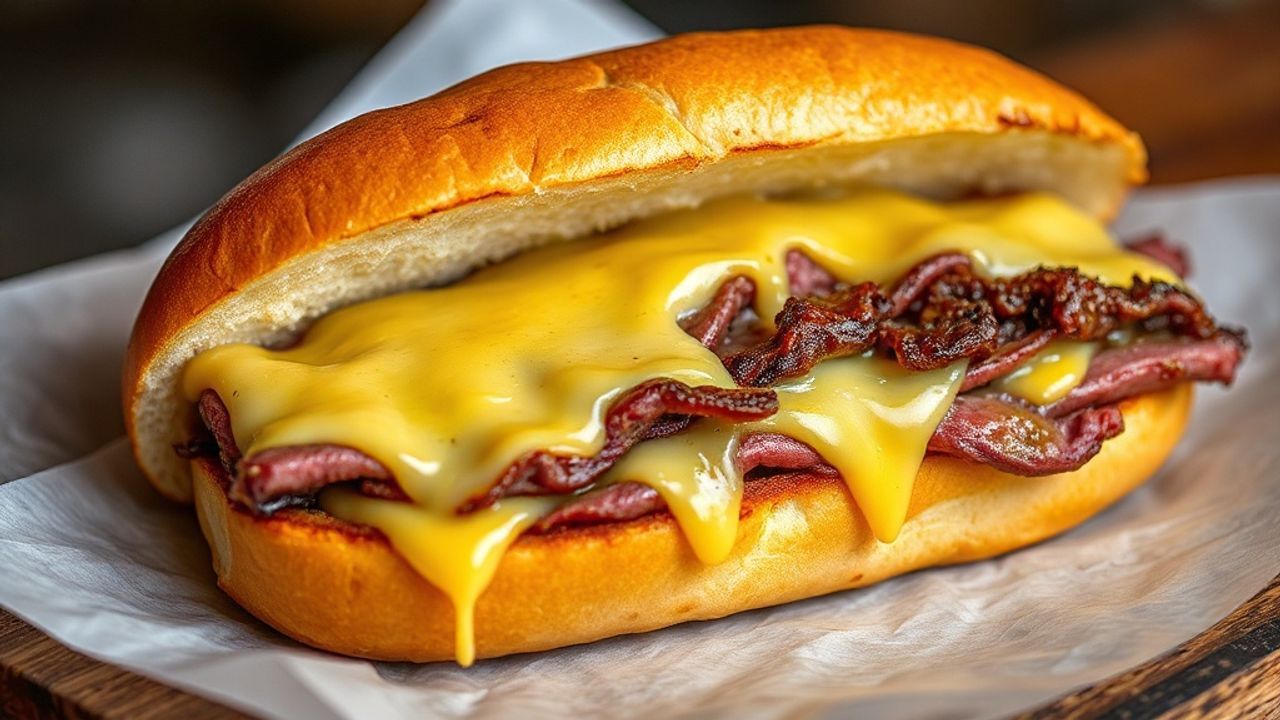
The Philly cheesesteak is a benchmark for sandwich technique and ingredient balance. For historical and regional context, consult Philadelphia to understand how bread, beef, and melting cheese shaped the sandwich.
- Philly cheesesteak: Choosing the Ideal Cut of Beef
- Philly cheesesteak: Crafting the Ultimate Cheese Blend
- Philly cheesesteak: Selecting and Preparing the Roll
- Philly cheesesteak: Layering, Searing and Safety
- Ingredients & Instructions for a Classic Philly cheesesteak
- Chef’s Notes & Tips for Success
- Serving Suggestions and Nutrition
- FAQ
- Key takeaway: Thin, well-marbled ribeye and rapid, high-heat searing deliver ideal texture and juiciness.
- Key takeaway: Use highly meltable cheese plus a lightly toasted roll to maximize cohesion and mouthfeel.
- Key takeaway: Layer meat, cheese, then minimal veg to avoid sogginess and preserve bite.
- Key takeaway: Work in batches and control pan temperature to maintain consistent sear and flavor.
Philly cheesesteak: Choosing the Ideal Cut of Beef
Select the right beef to set the foundation for texture and flavor. Ribeye’s intramuscular fat lubricates each bite; review the cut on ribeye steak for details on marbling and preferred cooking traits.
Buy beef chilled and slice very thin across the grain to mimic the traditional mouthfeel. If ribeye is unavailable, choose a well-marbled top sirloin or thin-cut chuck and paper-slice or ask the butcher for deli-thin cuts.
Philly cheesesteak: Crafting the Ultimate Cheese Blend
Cheese defines flavor and controls texture. Use provolone for balanced flavor and American-style cheese for a clingy, gooey melt; consult the general information on cheese to understand melting points and moisture content.
Combine fresh-sliced provolone with a thin layer of mild American for both flavor and stretch. Use freshly sliced or freshly shredded cheese instead of heavily processed pre-packaged slices to preserve clean melt and superior mouthfeel.
Philly cheesesteak: Selecting and Preparing the Roll
The roll holds the sandwich and must handle heat and juices without collapsing. Traditional Amoroso-style rolls or similar long Italian hoagie rolls work best; read about the hoagie style on hoagie for background on crumb structure and regional differences.
Lightly butter and toast the cut side for a shallow crisp that contrasts the melty filling. Avoid dense, heavy breads; they dilute the sandwich profile and reduce the signature balance of meat, cheese, and bread.
Philly cheesesteak: Layering, Searing and Safety
Sear beef quickly at high heat to develop light browning without overcooking. Use a thin film of neutral oil, work in small batches to avoid temperature drop, and flip or toss slices so each piece contacts hot metal briefly for a caramelized edge.
After searing, return any cooked vegetables to the pan, spread the meat flat, and top with cheese so heat melts it evenly. For safe handling and proper holding, maintain cooked beef above 140°F (60°C) if holding briefly and refrigerate leftovers promptly; reference basic food safety principles on food safety.
Do not overcrowd the pan; overcrowding causes steaming instead of searing and yields limp, gray meat. Fry in batches, and rest briefly on a warm tray between batches to preserve sear and temperature.
Ingredients & Instructions for a Classic Philly cheesesteak
Below are measured ingredients and a clear sequence to reproduce an authentic outcome. Follow order, temperature cues, and timing to control texture and flavor clarity.
Ingredients
Gather the components so assembly is immediate after cooking. Quick, efficient assembly preserves melt and prevents sogginess.
- 1 lb thinly sliced ribeye steak, chilled for easier slicing
- 4 long Italian or Amoroso-style rolls
- 8 oz provolone, thinly sliced
- 4 oz mild American (optional)
- 1 large onion, thinly sliced
- 1 green bell pepper, thinly sliced (optional)
- 2 tbsp unsalted butter, divided
- Neutral cooking oil (vegetable or canola)
- Salt and freshly ground black pepper to taste
Instructions
Work in a sequence that keeps heat, texture, and timing consistent. Use short, decisive steps and monitor pan temperature closely.
- Chill and slice: Partially freeze the ribeye for 20–30 minutes, then slice very thinly across the grain.
- Sauté vegetables: Melt 1 tbsp butter with a splash of oil over medium heat. Cook onions until translucent or lightly caramelized, then remove.
- High-heat sear: Increase to medium-high, add oil, then quickly sear beef in batches until edges just brown; season lightly with salt and pepper.
- Combine: Return veggies to the pan with beef; spread meat flat and top with cheese. Cover briefly to encourage a uniform melt.
- Toast rolls: Butter cut roll interiors lightly and toast until golden.
- Assemble: Transfer hot, cheesy meat into rolls so cheese flows across the beef and anchors the filling.
- Serve: Press gently and serve piping hot to highlight melt, texture, and aroma.
Chef’s Notes & Tips for Success
Use minimal seasoning on the beef to let its natural flavor shine; salt and pepper applied just before searing are sufficient. Keep sear times short and temperatures high to lock moisture in thin slices.
Prepare caramelized onions ahead to save time and speed assembly. Reheat leftover beef gently with a splash of water or stock to restore juiciness and avoid dry reheated meat.
- For controlled melting, cover the pan for 30–60 seconds after applying cheese.
- Omit peppers for a more traditional profile, or add sparingly for sweetness and color.
- Use a serrated knife to slice the roll cleanly without crushing its crumb.
Serving Suggestions and Nutrition
Pair a Philly cheesesteak with crisp fries, dill pickles, or a light slaw to cut richness. A cold lager or soda balances fat and salt, while a simple green salad refreshes the palate between bites.
Nutritional values change with roll and cheese choices; a typical serving using the listed ingredients runs around 600–700 kcal. For further recipe variations, see our internal guides on Philly cheesesteak and explore sandwich recipes for side pairings and portion control.
| Nutritional Information (per serving) | Calories | Protein | Carbs | Fat |
|---|---|---|---|---|
| Philly Cheesesteak | 650 kcal | 45 g | 40 g | 35 g |
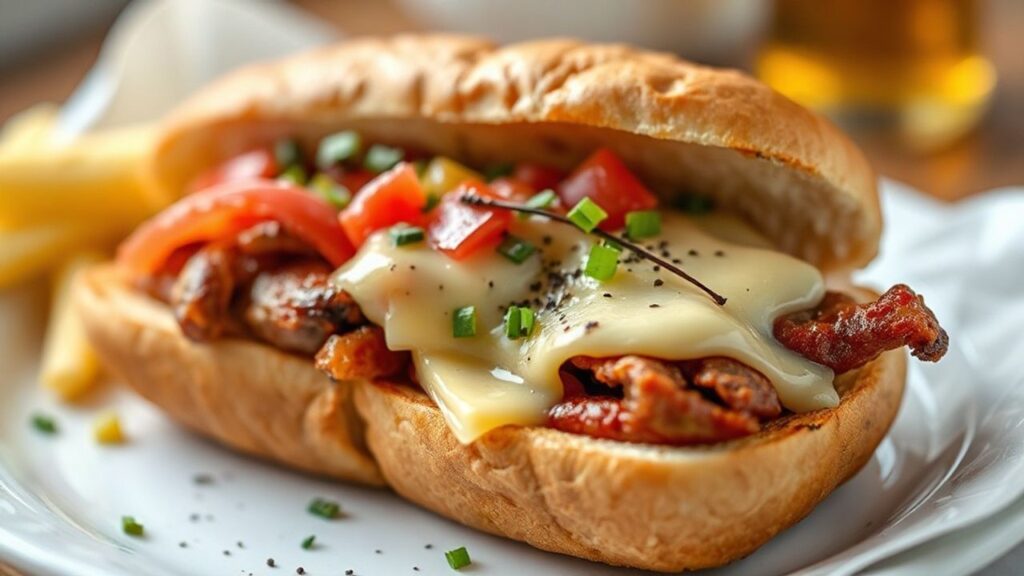
FAQ
What makes a Philly cheesesteak authentic?
Authenticity hinges on three elements: thinly sliced beef, a highly meltable cheese, and a soft hoagie-style roll. The specific balance and immediate assembly while the cheese is hot create the classic sandwich profile.
Which cut of beef yields the best texture?
Ribeye yields the best texture because of its marbling, which keeps slices juicy under flash searing. If ribeye is unavailable, choose a well-marbled substitute and slice thinly to mimic the quick-cook, tender result.
Is Cheez Whiz necessary?
Cheez Whiz is traditional for many fans and gives a distinctive creamy stretch. However, a quality provolone plus mild American produces a close, pleasing melt that many cooks prefer for cleaner flavor.
How do I prevent a soggy sandwich?
Toast the roll lightly, add vegetables sparingly, and assemble immediately while the cheese is hot. Drain excessive pan juices before transferring the filling into the roll to retain structural integrity.
Can I prepare parts ahead of time?
Yes. Caramelized onions and sliced cheese store well for 24–48 hours refrigerated. Cooked beef will keep but reheat gently to avoid drying; for best texture, assemble just before serving.
Mastering the Philly cheesesteak requires precise technique, quality ingredients, and disciplined timing. Apply these focused steps and adjustments to craft consistent, melty, and deeply satisfying sandwiches.
See also: Philly cheesesteak
See also: Philly cheesesteak