

7 Scientific Secrets for Perfect Snickerdoodle Cookies
Snickerdoodle Cookies deliver a balance of soft interior and crisp, crackled exterior when you control ingredients and technique precisely. This guide explains the measurable science behind each choice so you can reproduce perfect snickerdoodles every time.
- Snickerdoodle Cookies: The Ingredient Science
- Snickerdoodle Cookies: Flour, Gluten and Texture
- Snickerdoodle Cookies: Mixing and Dough Handling
- Snickerdoodle Cookies: Recipe, Yields and Timings
- Snickerdoodle Cookies: Baking Temperature, Crust and Crinkle
- Snickerdoodle Cookies: Cinnamon Sugar and Flavor Balances
- Snickerdoodle Cookies: Chef’s Notes and Troubleshooting
- Snickerdoodle Cookies: Nutritional Snapshot
- FAQ
- Control fat and temperature: Butter temperature governs spread and chew.
- Leavening chemistry: Cream of tartar plus baking soda creates the crinkle and subtle tang.
- Cinnamon-sugar coating: Surface sugar and spice affect texture and caramelization.
- Measure by weight: Consistent results come from scale-based measurements.
Snickerdoodle Cookies: The Ingredient Science
The classic snickerdoodle formula depends on a few specific reagents: flour, butter, sugar, eggs, cream of tartar and baking soda. Each ingredient plays a defined role in structure, flavor and texture.
For example, cream of tartar provides acidity that reacts with baking soda to generate carbon dioxide during baking. That gas inflates the dough and contributes to the characteristic crinkled top.
Cream of tartar and leavening
Cream of tartar is an acid salt that lowers pH and stabilizes air pockets created during creaming. The acid-base reaction with baking soda produces rapid gas release at oven temperatures, aiding rise and surface cracking.
Use the recipe’s recommended amounts: too little acid reduces rise and crinkle; too much makes the cookie unbalanced and overtly tangy. Rely on precise measurement to keep chemistry predictable.
Snickerdoodle Cookies: Flour, Gluten and Texture
All-purpose flour supplies structure through gluten networks formed when water and agitation combine wheat proteins. Gentle mixing limits gluten development and preserves tenderness.
To adjust chewiness, alter hydration or mixing intensity slightly. For a nuttier, denser bite, replace up to 20% of white flour with whole wheat, keeping the rest of the formula unchanged.
Read more about how wheat proteins behave on the gluten page if you want technical context on protein development and dough handling.
Snickerdoodle Cookies: Mixing and Dough Handling
Start by creaming room-temperature butter with sugar until pale and aerated; the trapped air creates lift and lightness in the final cookie. Beat for 3–4 minutes at medium speed for consistent aeration.
Add eggs one at a time to stabilize the emulsion, then fold in dry ingredients until just combined. Overmixing develops gluten and yields a tough texture; stop when no dry streaks remain.
Butter temperature and aeration
Butter should be softened to about 65–68°F (18–20°C). At that temperature it holds air when beaten but still melts reliably in the oven. If butter is too warm, dough spreads excessively; if too cold, aeration suffers and cookies become dense.
If your kitchen is warm, chill the butter slightly and use a paddle attachment to maintain control. Weigh ingredients for repeatability across batches.
Snickerdoodle Cookies: Recipe, Yields and Timings
Readiness: 15 minutes prep | Chill: 30 minutes | Bake: 10–12 minutes. This timing produces a set edge with a soft center when using a calibrated oven.
Yield: Approximately 24 cookies. For consistent sizes, portion with a 1.5-inch scoop or weigh dough balls at ~28–30 g each.
Ingredients
- 2 3/4 cups (about 345 g) all-purpose flour, sifted
- 2 teaspoons cream of tartar
- 1 teaspoon baking soda
- 1/2 teaspoon fine sea salt
- 1 cup unsalted butter, softened
- 1 1/2 cups granulated sugar, divided
- 2 large eggs, room temperature
- 2 teaspoons pure vanilla extract
- 3 tablespoons ground cinnamon, divided
Instructions
- Preheat oven to 375°F (190°C). Line baking sheets with parchment paper.
- Whisk flour, cream of tartar, baking soda and salt in a bowl until even.
- Cream butter and 1 cup sugar until light and fluffy (3–4 minutes).
- Add eggs one at a time, then mix in vanilla.
- Fold dry ingredients in until just combined; avoid overmixing.
- Chill dough 30 minutes; this firms fat and controls spread.
- Mix remaining 1/2 cup sugar with 3 tbsp cinnamon for the coating.
- Roll dough into 1.5-inch balls and coat in cinnamon sugar.
- Place balls 2 inches apart on sheets. Gently press each once for a uniform crackle.
- Bake 10–12 minutes until edges are set and centers remain soft. Cool 5 minutes on sheet, then transfer to racks.
Snickerdoodle Cookies: Baking Temperature, Crust and Crinkle
Oven temperature controls both Maillard reactions and sugar caramelization. A hotter oven yields rapid set of the edge and a soft interior; too hot and the surface will brown before internal structure forms.
For predictable color and crinkle, calibrate your oven with a thermometer and aim for 375°F (190°C). Rotate sheets halfway if your oven has heat variance.
How the crinkle forms
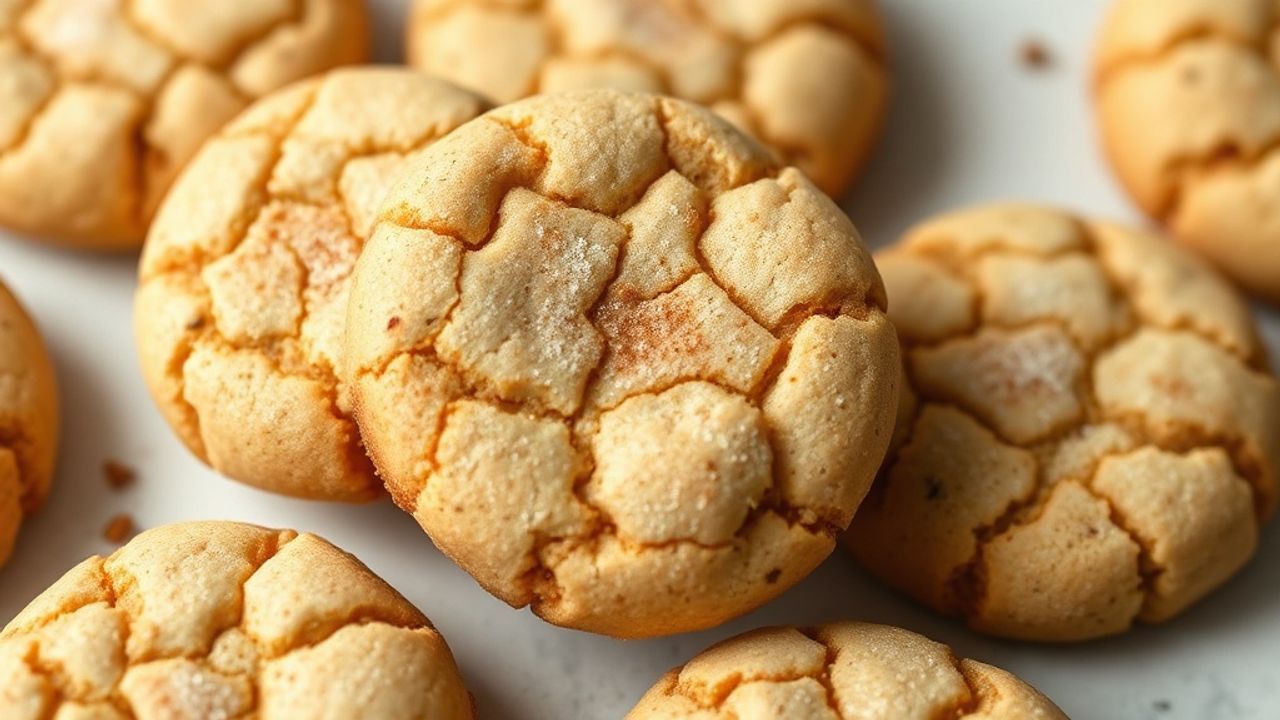
The visible crackle is a sync between rapid gas expansion and sugar drying at the surface. As bubbles expand, the sugar-encrusted surface stretches and fractures, producing the classic pattern.
Consistent dough ball size and even coating of cinnamon sugar help create uniform cracking across the batch.
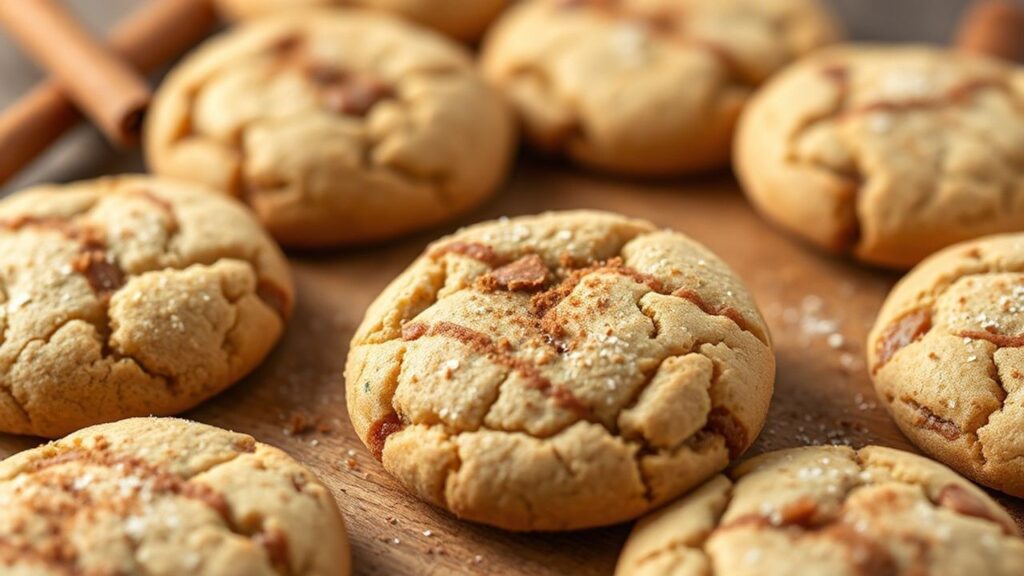
The coating also contributes to texture through partial caramelization. The thin sugar layer crisps at the surface while the interior remains moist and tender.
Chilling between batches can rescue dough that becomes warm during handling. If dough spreads too much mid-bake, reduce oven temperature by 10°F and bake a test cookie to adjust.
Snickerdoodle Cookies: Cinnamon Sugar and Flavor Balances
Cinnamon provides aromatic phenolic compounds that pair with the sugar’s caramel notes. Adjust the cinnamon level gradually; an extra tablespoon or two intensifies spice without disrupting structure.
For a stronger sensory hit, increase cinnamon to 4 tablespoons and reduce surface sugar by 1–2 tablespoons. Small changes alter perception significantly, so adjust in measured steps.
Snickerdoodle Cookies: Chef’s Notes and Troubleshooting
If cookies spread too thin, check butter temperature and increase chilling time. Re-chill scooped dough for 10–15 minutes to firm the fat before baking.
If the interior is dry, reduce bake time by 1–2 minutes or lower the temperature by 5–10°F. Track results and adjust by small increments to preserve the desired chew.
Snickerdoodle Cookies: Nutritional Snapshot
Per cookie estimates (approximate): Calories: 110; Protein: 1.2g; Carbohydrates: 17g; Fat: 4.5g. These values will vary with portion size and ingredient swaps.
To reduce fat or calories, replace up to 25% of butter with unsweetened applesauce, but expect a slightly different crumb and chew. Small formulation changes shift texture predictably when you understand the underlying roles.
FAQ
How does cream of tartar affect snickerdoodle cookies?
Cream of tartar lowers pH and reacts with baking soda to produce carbon dioxide, aiding rise and creating the classic crinkled top. It also contributes a mild tang that balances sweetness.
Why does my dough spread too much when baked?
Excess spread usually means fat is too warm or the dough lacked chilling. Verify butter temperature, chill the dough longer, and ensure accurate flour measurement by weight to reduce spread.
Can I make snickerdoodle cookies chewier?
Yes. Increase brown sugar slightly or reduce baking time by 1–2 minutes. You can also incorporate a small percentage of bread flour to increase chew through higher protein content, but test in small batches.
What causes the crackled top?
The crackle forms when internal gas expansion stretches the sugar-coated surface; the drying sugar then fractures. Proper leavening ratios and an even coating maximize crinkle formation.
How should I store snickerdoodle cookies to retain texture?
Store in an airtight container at room temperature with a slice of bread to maintain softness, or separate layers with parchment to preserve the crackled surface. Refrigeration can dry the cookies out, so avoid unless necessary.
For foundational context on cookies and baking reactions, consult the general cookie overview and the cinnamon entry for spice background. These resources clarify the technical concepts referenced above.
See also: Snickerdoodle Cookies