
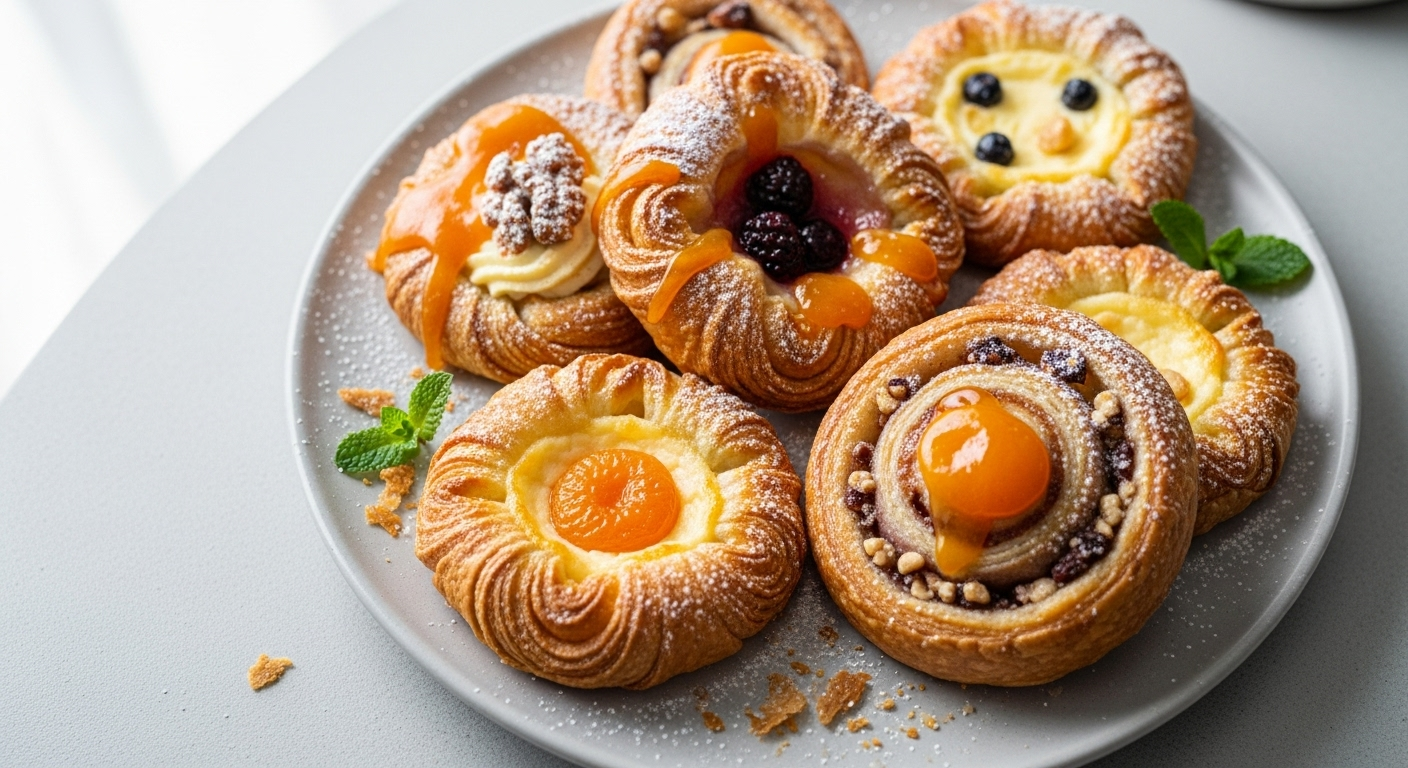
Few culinary creations manage to dance so gracefully between artistry and precision as the Danish pastry. With its golden, flaky layers that whisper tales of buttery indulgence, the Danish is more than just a breakfast treat-itS a testament to centuries of craftsmanship and scientific mastery. In “Flaky Delight: The Art and Science of Danish Pastries,” we peel back the delicate layers of this iconic pastry,exploring how time-honored techniques and exacting science come together to create that perfect harmony of texture,flavor,and aroma. join us on a journey through ovens and rolling pins, where patience meets pastry, and every fold reveals a story worth savoring.
Flaky Delight Danish pastries owe their breathtaking texture and buttery layers to the intricate process of dough lamination. This culinary technique, rooted in centuries-old baking traditions, transforms simple dough into a multi-layered masterpiece. Each fold and roll creates a delicate lattice of fat and dough that expands during baking, resulting in an irresistible, crisp flakiness that melts on your tongue.
Prep and Cook Time
- Readiness: 3 hours (including chilling and resting)
- Active Cooking: 20-25 minutes
- Total: Approximately 3 hours 30 minutes
Yield
yields 12 perfectly flaky Danish pastries, ideal for sharing or a delightful indulgence over several days.
Difficulty Level
Advanced – requires patience and precision but promises a spectacular reward.
Ingredients
- 2 ½ cups all-purpose flour, sifted
- 1 tbsp granulated sugar
- 1 tsp fine sea salt
- 1 packet (7g) active dry yeast
- ¾ cup whole milk, warm (about 110°F)
- 2 large egg yolks, at room temperature
- 1 tsp pure vanilla extract
- 1 cup unsalted butter, cold and cubed for lamination
- For fillings: traditional almond paste, cream cheese, or fruit preserves
- 1 egg for egg wash
- Optional: coarse sugar for topping
instructions
- Activate the yeast: In a small bowl, combine warm milk with yeast and a pinch of sugar. Let it sit for 5-10 minutes until frothy, signaling yeast activation.
- Mix the dough: In a large bowl, whisk flour, sugar, and salt. Create a well and add the frothy yeast mixture, egg yolks, and vanilla extract. Mix gently until combined. Knead lightly on a floured surface until smooth but slightly sticky, about 5 minutes.
- First rest: Place dough in a lightly greased bowl, cover with plastic wrap, and refrigerate for at least 1 hour, allowing gluten to relax.
- Prepare the butter block: Pound chilled butter cubes between parchment paper into a flat, even square roughly 7×7 inches. Keep chilled but pliable.
- Lamination begins: Roll out dough into a 10×10 inch square. place the butter block in the center and fold dough edges over to encase it completely, forming a butter packet.
- roll and fold: Roll the packet into a long rectangle approximately 20×10 inches. Execute a classic “letter fold” (fold one-third over the center, than fold the opposite third over it). Chill dough for 30 minutes.
- Repeat folds: repeat rolling and folding two more times, chilling 30 minutes after each fold.This process creates delicate layers essential to flaky delight.
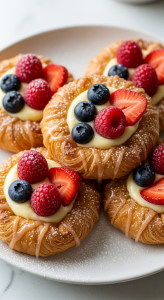
- Shape and fill: Roll the laminated dough to about ¼ inch thickness. Cut into 4-inch squares or desired shapes. Add your chosen filling-whether a luscious almond paste, tangy cream cheese, or vibrant fruit preserves.
- Proof: Place filled pastries on baking sheets lined with parchment paper and let them rise for 45 minutes to 1 hour, until puffy but not overproofed.
- egg wash and bake: Preheat oven to 400°F (205°C). Brush pastries gently with beaten egg. Sprinkle coarse sugar if desired for shine and crunch.Bake for 20-25 minutes, rotating halfway, until golden and flaky.
- cool: Transfer to wire racks to cool slightly-this prevents sogginess and preserves that signature crisp exterior.
Tips for Success
- Keep all ingredients cold during lamination to ensure distinct layers and prevent butter melting into the dough.
- Use a sharp knife or pizza cutter for clean edges when shaping pastries.
- Don’t rush the resting and chilling steps; patience is key to flaky delight.
- Experiment with fillings: try cardamom-spiced apple or tangy lemon curd for innovative twists.
- Make-ahead tip: Freeze shaped,unbaked pastries on trays,then store in airtight bags.Bake directly from frozen, adding 5 extra minutes baking time.
Baking Techniques That Elevate Texture
Maintaining a consistent oven temperature prevents uneven baking that coudl compromise texture. Preheating the oven fully ensures the pastries puff properly. Rotating trays mid-bake promotes uniform browning and flakiness. Keep an eye for the golden hue-the hallmark of a perfect Danish.
Serving Suggestions
Present your creations on rustic wooden boards or elegant porcelain platters. Garnish with fresh berries,a dusting of powdered sugar,or a drizzle of warm honey or chocolate glaze to highlight both sweet and savory profiles. pair your danish pastries with a robust cup of coffee or a delicate herbal tea for an enhanced sensory experience. for brunch, serve alongside a fresh fruit salad or creamy yogurt to balance richness.
| Nutrient | Per Pastry |
|---|---|
| Calories | 320 kcal |
| Protein | 6 g |
| carbohydrates | 30 g |
| Fat | 18 g |
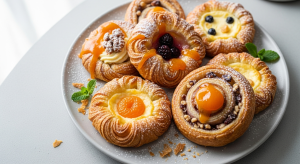
Explore more about traditional European pastries and advanced lamination techniques in our Ultimate Guide to Puff Pastry.For further reading on the science behind lamination, visit king Arthur Baking’s Guide to Puff Pastry.
Q&A
Q&A: Flaky Delight – The Art and science of Danish Pastries
Q1: What exactly makes a Danish pastry a Danish pastry?
A Danish pastry, or simply “Danish,” is a delightful symphony of buttery, flaky layers folded meticulously with dough, often filled or topped with sweet or savory ingredients. Its defining characteristic is the laminated dough technique-multiple layers of dough and butter folded together to create that irresistible, airy crunch coupled with tender softness inside.originating in Denmark but heavily influenced by Austrian baking traditions, it’s a true testament to cultural culinary alchemy.
Q2: Why is the texture of a Danish so unique compared to other pastries?
The magic lies in the lamination process. Think of it as a dough-butter sandwich, rolled and folded multiple times-usually three to four folds. Each fold creates thin layers of butter separated by dough. When baked, the water in the butter turns to steam, puffing the dough layers apart and creating that signature flaky, airy structure-crispy outside, soft inside. This dance between butter and dough is a delicate art and science combined.
Q3: How meaningful is butter quality in making the perfect Danish?
Butter quality is paramount. Since butter forms the majority of the fat layers, using high-fat, fresh, European-style butter with a rich flavor profile ensures optimal flakiness and taste. Inferior butter with lower fat content can lead to greasy, weak layers, or in worse cases, dough collapse. The butter must also be cold but pliable to laminate nicely without melting or breaking through the dough.
Q4: can you describe the typical fillings and toppings for Danish pastries?
Danish pastries are incredibly versatile-a canvas for both sweet and savory artistry. Common sweet fillings include cream cheese, almond paste, custard, fruit preserves (like raspberry or apricot), and fresh fruits topped with glazes or powdered sugar. Savory variations might feature spinach and feta, smoked salmon and dill, or ham and cheese. The toppings enhance texture and flavor, from crunchy sliced almonds to glossy fruit glazes.
Q5: What are some common challenges bakers face when making Danish pastries?
Maintaining the perfect dough temperature and consistency is a perennial challenge. too warm, and butter melts into the dough, ruining lamination.Too cold, and the dough becomes brittle and hard to work with. Time management is critical-resting periods allow the gluten to relax and the butter to chill; skipping these can lead to tough, dense pastries. mastering the folding technique takes practice-improper folds mean uneven layering and disappointing texture.
Q6: How do modern bakers innovate on traditional Danish pastry recipes?
Today’s bakers merge tradition with creativity-experimenting with global flavors like matcha,passion fruit,or chili-chocolate fillings,and option flours for gluten-free options. Some infuse savory herbs or artisanal cheeses, while others play with shapes and presentation, such as cruffins (croissant-muffin hybrids) inspired by danish lamination. Technology also aids precision in temperature control and dough handling, elevating consistency without losing artisanal soul.
Q7: Why has the Danish pastry remained so popular worldwide?
Its enduring allure lies in its perfect balance of indulgence and craftsmanship. The interplay of crisp, tender layers with luscious fillings tantalizes all senses. Moreover, its adaptability allows it to suit local tastes, holidays, and trends-making it a timeless, globally loved treat. Whether enjoyed with morning coffee or as an elegant dessert, the Danish pastry continues to evoke warm comfort and refined pleasure.
This Q&A captures the tasty complexity and artistry behind the humble yet extraordinary Danish pastry, blending creative insight with scientific precision to celebrate a flaky delight beloved around the world.
In Retrospect
As the final layer of butter melts away into delicate,golden folds,the Danish pastry stands as a testament to centuries of craftsmanship-where art meets science in every flaky bite. From its humble origins to its modern-day reinventions,this pastry is more than just a treat; it’s a festivity of technique,patience,and passion. So the next time you savor a Danish, take a moment to appreciate the intricate dance of ingredients and skill that transforms simple dough into flaky delight-a culinary masterpiece baked to perfection.