

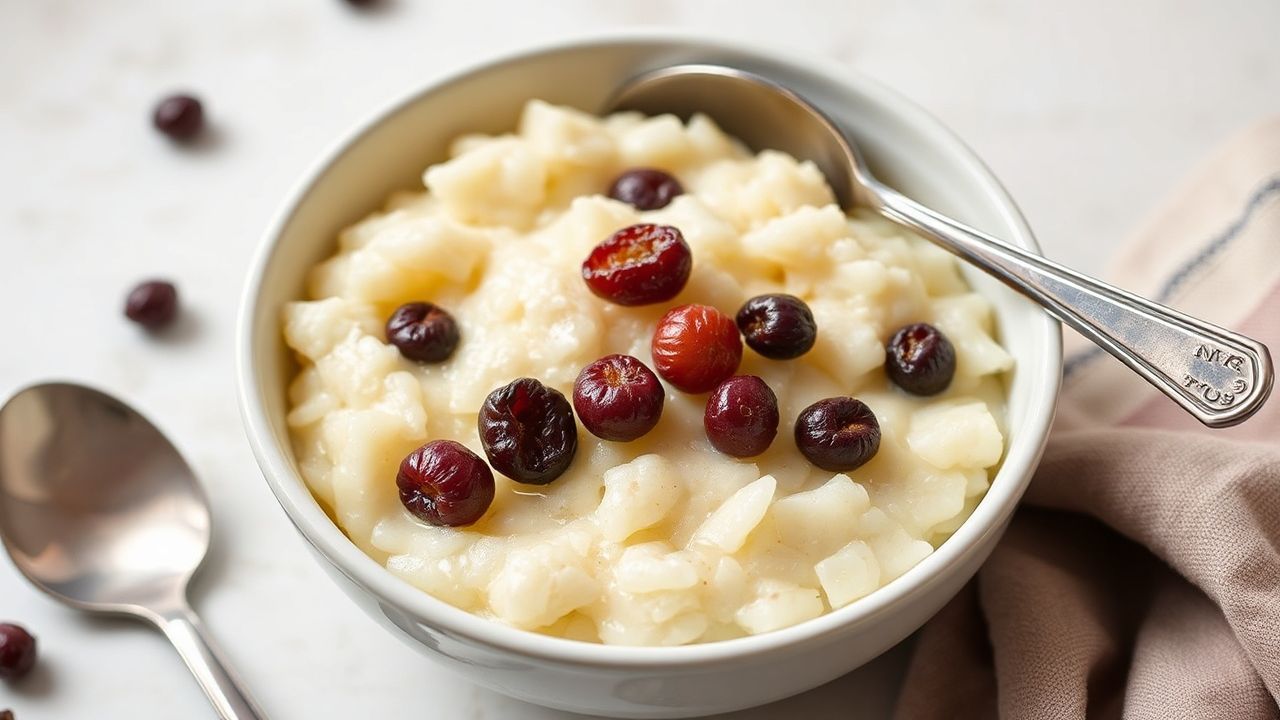
Old-Fashioned Rice Pudding with Raisins: Creamy, Cozy & Timeless
Old-fashioned rice pudding with raisins delivers a soft, creamy bowl of comfort. The slow-simmered rice turns silky, while the raisins add sweet bursts that feel familiar and earned.
- History and Charm of Old-Fashioned Rice Pudding
- Why Raisins Work So Well in Rice Pudding
- Prep and Cook Time
- Yield and Difficulty Level
- Ingredients for Old-Fashioned Rice Pudding with Raisins
- Instructions
- Chef’s Notes and Tips for Success
- The Sweet Harmony of Raisins and Spices
- Serving Suggestions and Storage
- Q&A: Old-Fashioned Rice Pudding with Raisins
- What makes old-fashioned rice pudding with raisins a timeless dessert?
- How do I achieve the best texture for traditional rice pudding?
- Why are raisins a perfect addition to this classic dessert?
- Can I adapt this recipe for lactose-free or dairy-free diets?
- How can I prevent rice pudding from getting too thick or too runny?
- Insights and Conclusions
- Texture control: short-grain rice + steady stirring create a velvety set.
- Flavor balance: cinnamon and nutmeg add warmth without overpowering the milk.
- Raisin timing: fold in at the end for plump fruit and clean sweetness.
- Make-ahead benefit: the pudding thickens and flavors deepen overnight.
Old-fashioned rice pudding with raisins has held its place because it uses basic pantry ingredients. It also cooks in a predictable way, which helps you nail the creamy texture. If you want a dessert that tastes like home, this one delivers.
In many households, rice pudding doubles as a gentle “stretch” dessert. You can serve it warm, chill it for a firmer bite, or spoon it into bowls for a simple family gathering. Few classics match that kind of flexible comfort.
History and Charm of Old-Fashioned Rice Pudding
Rice pudding appears across many regions, because rice behaves well in milk. As it simmers, the starches thicken the liquid into a custard-like base. You can find similar traditions described in sources such as rice pudding.
Raisins fit naturally into this style of dessert. They hold their shape while softening, so you get both sweetness and texture. That balance keeps the dish interesting from the first spoonful to the last.
Why Raisins Work So Well in Rice Pudding
Raisins add concentrated sweetness and a chewy bite that contrasts with creamy rice. When the fruit warms in the pudding, it absorbs some liquid and softens evenly. This behavior aligns with how dried fruit rehydrates, which is also discussed in raisins.
The spices matter, too. Cinnamon and nutmeg pair with sweet dairy because they create an aromatic “warm” note without adding much acidity. For deeper flavor, keep spices modest and focus on slow cooking.
Choosing the Right Rice for Creaminess
Use short-grain rice for the creamiest results. It releases starch faster and forms a thicker, smoother texture during simmering. If you try long-grain rice, you often get a looser, firmer bite instead.
You can think of rice texture as a starch-and-water story. Starch thickens the milk as it cooks, which gives rice pudding its signature spoonable body. For background on rice grain types, see rice.
How Slow Cooking Builds the Custard-Like Base
Old-fashioned rice pudding relies on low, steady heat and frequent stirring. Stirring prevents scorching and helps the grains cook evenly. It also encourages starch release, which leads to that custard-like mouthfeel.
A gentle simmer also helps the milk stay stable. If the heat runs too high, milk can separate and the pudding can taste “cooked.” Keep it calm and consistent.
Prep and Cook Time
This recipe fits busy schedules because the active work stays short. Most of the time goes into hands-off simmering and occasional stirring.
- Preparation: 10 minutes
- Cooking: 50 minutes
- Total Time: 1 hour
Yield and Difficulty Level
You’ll get a generous batch that serves a small family or a group dessert table. It holds up well for leftovers, too.
Yield: Serves 6 generous portions
Difficulty Level: Easy
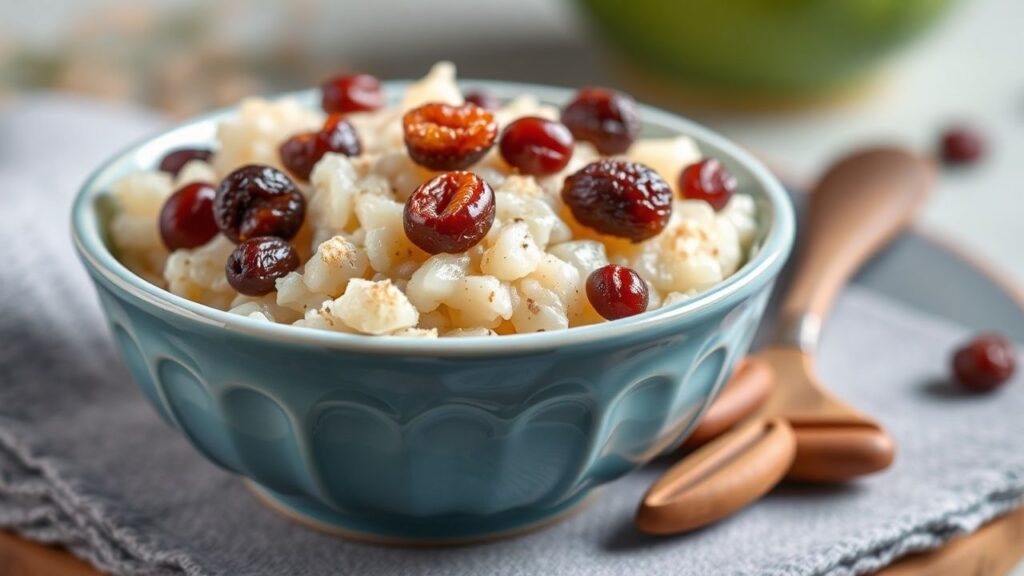
Ingredients for Old-Fashioned Rice Pudding with Raisins
Gather your ingredients first. When everything sits measured and ready, the cooking stage feels easier and less stressful.
All amounts below match the classic creamy style and give a balanced sweetness.
- 1 cup short-grain rice, rinsed
- 4 cups whole milk (for creamier texture, you may substitute 1 cup with heavy cream)
- ¾ cup granulated sugar
- 1 teaspoon vanilla extract
- ½ teaspoon ground cinnamon
- ¼ teaspoon ground nutmeg
- ½ cup golden raisins
- Pinch fine sea salt
- 2 tablespoons unsalted butter
Optional for serving: extra nutmeg, a few toasted almonds, or a small drizzle of honey.
Instructions
Follow each step in order. This keeps the rice cooking evenly and prevents the pudding from turning gritty or too thin.
- Toast the Rice: In a heavy-bottomed saucepan, melt the butter over medium heat. Add the rinsed short-grain rice and sauté gently for 3–4 minutes, until the grains smell toasty. This step boosts nutty flavor and reduces sticking.
- Warm the Milk: Gradually pour in the milk. Warming it first is optional, but it helps maintain an even simmer from the start.
- Simmer with Patience: Bring to a gentle simmer over medium-low heat. Stir frequently with a wooden spoon so the rice doesn’t settle on the bottom. Cook 40–45 minutes, until the pudding looks thick and creamy.
- Sweeten and Spice: Stir in sugar, salt, vanilla, cinnamon, and nutmeg. Continue cooking for 5 minutes, so spices bloom in the warm milk.
- Infuse with Raisins: Fold in golden raisins. Let the pudding cook for 1–2 minutes, so raisins soften without losing shape.
- Final Touch and Cooling: Remove from heat and cool slightly. The pudding will thicken as it rests. Stir once more before serving for a smooth spoonable texture.
After cooking, judge consistency with one practical method. Lift a spoon and draw a line across the surface. If the line holds and slowly closes, your pudding is ready.
Also note that thickness changes as it cools. If you serve immediately, expect a softer set. If you chill, plan for a thicker, spoon-fork dessert style.
Chef’s Notes and Tips for Success
Use these notes if you want more consistent results. They help you avoid the two most common problems: a pudding that’s too thin or one that tastes cooked.
Small adjustments can also improve flavor depth and texture.
- Rice choice: short-grain rice gives the best creamy texture. Long-grain rice stays firmer.
- Stir strategy: stir often but gently. Focus on bottom scraping to prevent scorching.
- Make-ahead: cook it a day early for deeper flavor. Refrigeration also thickens it naturally.
- Loosen if needed: if chilled pudding feels too tight, stir in a splash of warm milk.
- Diet-friendly idea: you can try plant milks designed for cooking, but texture may vary. Choose unsweetened and watch simmer time.
- Finish optional: a spoon of whipped cream adds a lighter mouthfeel.
The Sweet Harmony of Raisins and Spices
Golden raisins bring fruity sweetness that stands up to warm dairy. Cinnamon and nutmeg add a gentle “baked dessert” aroma that feels classic. For spice and culinary background, see cinnamon and nutmeg.
That harmony matters because rice pudding needs balance. Too much sugar can mask the creamy rice flavor. Too many spices can push the dessert into “spice cake” territory.
Keep your spice amounts tight and let the milk do the heavy lifting. Then the raisins stay the star for that familiar, timeless bite.
Serving Suggestions and Storage
Serve warm for a soft, comforting spoon dessert. Add a light garnish so the aroma meets your first bite.
For chilled servings, the pudding becomes thicker and tastes even more mellow.
- Serve warm in bowls and finish with a pinch of nutmeg.
- Top with toasted almonds for crunch, or a small drizzle of honey for floral sweetness.
- Pair with chai or spiced tea to match the spice notes.
- Store covered in an airtight container in the refrigerator up to 3 days.
- Reheat gently on the stovetop or microwave, stirring often to restore creaminess.
If you reheat, use low power and stir every 20–30 seconds. This prevents thick edges from overcooking while the center warms.
| Nutritional Details (Per Serving) | Amount |
|---|---|
| Calories | 280 kcal |
| Protein | 6 g |
| Carbohydrates | 48 g |
| Fat | 6 g |
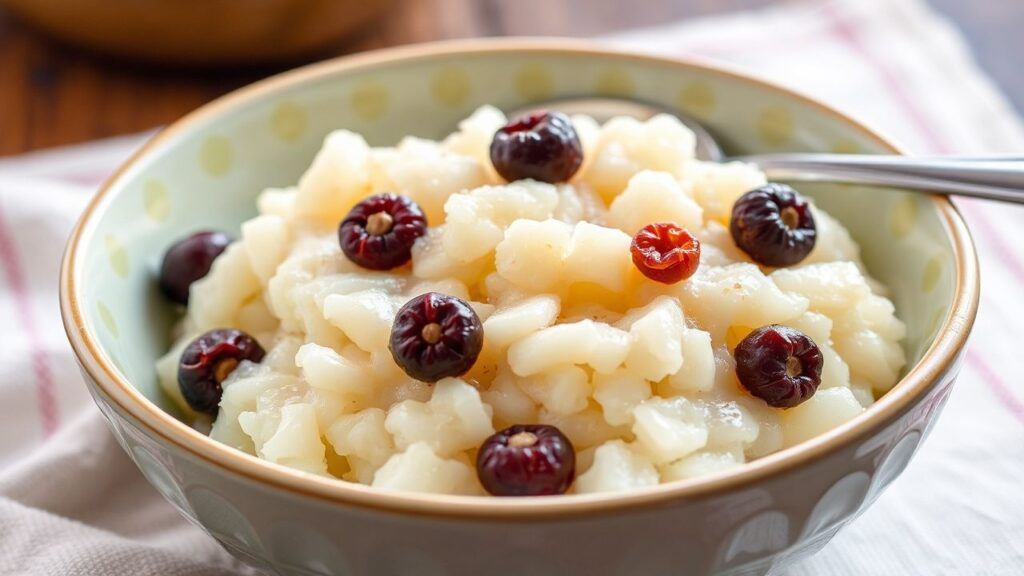
Explore more classic comfort desserts like custard-style recipes if you enjoy this creamy family of textures. For broader reading on rice-based dishes, see custard for the science of thick dairy desserts.
If you want historical context on rice and cereal-based meals, browse rice dishes. It helps connect why rice pudding became a practical, lasting dessert across cultures.
Q&A: Old-Fashioned Rice Pudding with Raisins
This Q&A covers the questions most cooks ask when making old-fashioned rice pudding with raisins. Use these answers to adjust texture, sweetness, and serving style with confidence.
What makes old-fashioned rice pudding with raisins a timeless dessert?
It tastes familiar because the method stays simple: rice simmered in milk becomes creamy and naturally thick. Raisins add sweet depth and a gentle chew, so each spoonful feels interesting but still comforting.
How do I achieve the best texture for traditional rice pudding?
Slow-simmer short-grain rice in milk and stir often. Starch release during simmering creates a smooth thickness. If the pudding seems thin, keep it on a gentle simmer a few extra minutes.
Why are raisins a perfect addition to this classic dessert?
Raisins bring concentrated sweetness and a chewy contrast to soft rice. When warmed in the pudding, they rehydrate slightly and become plump without turning rubbery. That balance works especially well with cinnamon and nutmeg.
Can I adapt this recipe for lactose-free or dairy-free diets?
You can substitute milk, but texture can change. Use a dairy-free milk labeled for cooking and choose unsweetened versions when possible. Expect to fine-tune simmer time and thickness.
How can I prevent rice pudding from getting too thick or too runny?
Cook on low heat with frequent stirring. For too-thick pudding, stir in warm milk to loosen. For too-thin pudding, simmer uncovered briefly to evaporate extra liquid and thicken the base.
Old-fashioned rice pudding with raisins stays reliable because it follows a clear cooking logic: starch thickens, spices bloom, and raisins soften. When you keep heat gentle and stirring consistent, you get a dessert that feels warm, nostalgic, and truly classic.
Insights and Conclusions
When the last spoonful disappears, you understand why this recipe survives. The creamy rice, the sweet warmth of cinnamon, and the plump raisins create comfort in every bite.
This dessert also rewards planning. Make it ahead, reheat gently, and enjoy the richer flavor that develops after chilling. Whether you serve it warm or cold, old-fashioned rice pudding with raisins offers a timeless kind of sweetness.
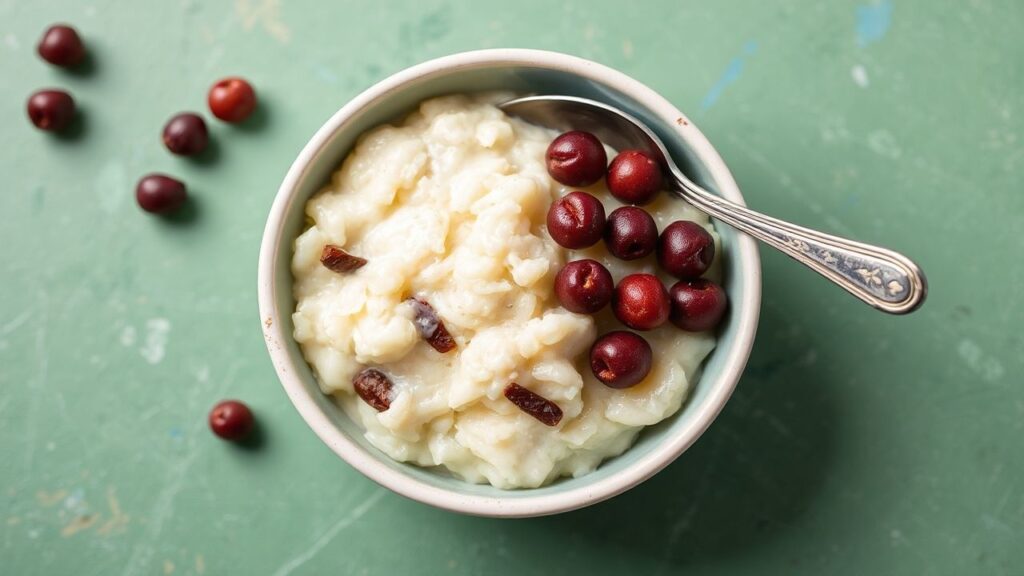
See also: old-fashioned rice pudding