
Perfecting New York-Style Cheesecake: Master the Creamy Recipe (Step-by-Step)
Few desserts match the comfort and prestige of New York-style cheesecake. It earns its reputation for a dense, creamy filling and a crisp, buttery crust. When you bake it with the right texture targets and cooling steps, you get a slice that stays silky and smooth.
- Why This New York-Style Cheesecake Works
- Prep and Cook Time + Serving Plan
- Ingredients for a Classic New York-Style Cheesecake
- Step-by-Step Instructions (No Cracks, No Dry Center)
- 1) Make and Bake the Crust
- 2) Mix the Filling Base
- 3) Add Eggs Gently
- 4) Combine Dairy and Stabilize
- 5) Bake in a Water Bath
- 6) Bake, Then Cool Gradually
- Cooling, Chilling, and Serving for the Best Texture
- Tips for Success and Troubleshooting
- Nutritional Notes
- FAQ: New York-Style Cheesecake Recipe Questions
At a Glance
- Room-temperature dairy prevents lumps and helps the batter bake evenly.
- Low-and-slow baking reduces cracks while keeping the center creamy.
- Water-bath control helps the texture set without drying the filling.
- Chill time matters as much as bake time for the classic New York finish.
In the sections below, you’ll follow a reliable process to make a true New York-style cheesecake. You’ll learn ingredient prep, mixing limits, bake timing, and how to cool so the top looks as good as it tastes. Use this method as your base recipe, then adapt flavors to match your kitchen.
Why This New York-Style Cheesecake Works
New York-style cheesecake relies on full-fat dairy and careful mixing for a thick, creamy filling. The tang from sour cream (or similar dairy) balances the richness and keeps the flavor sharp. If you use chilled ingredients or overmix, you often trap extra air and risk cracks.
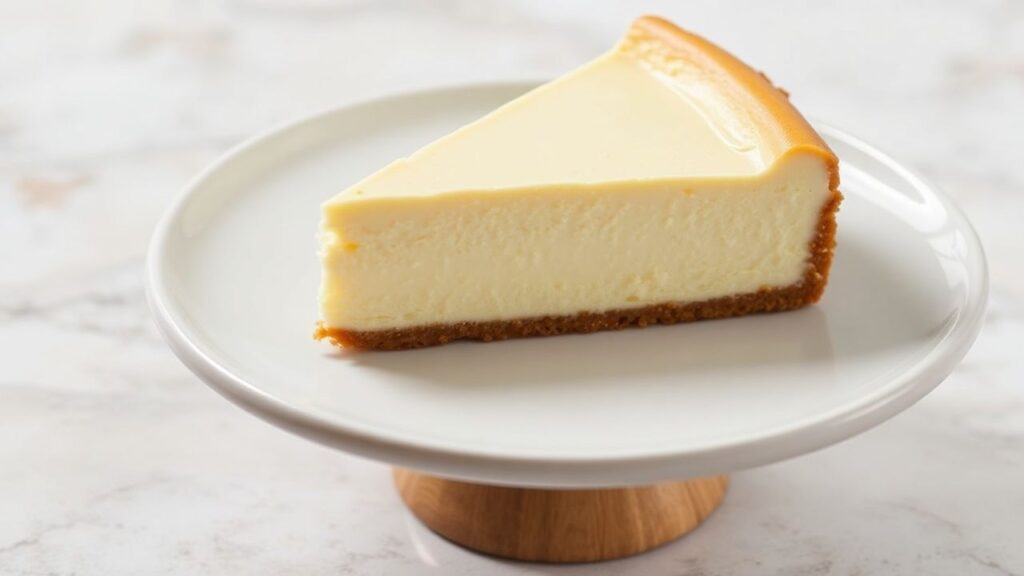
The crust adds the classic contrast you expect from a restaurant-style slice. A graham cracker base with melted butter bakes into a firm, slightly crisp layer. That snap matters because it holds up once the cake cools and chills.
For background on dairy chemistry and texture, see cream cheese and sour cream. These basics help explain why the batter sets differently at lower temperatures.
To understand how heat affects proteins and moisture, review baking. Cheesecake needs gentle heat so the center sets slowly while staying moist and creamy.
Prep and Cook Time + Serving Plan
Timing keeps you in control from the first bake to the final slice. Plan for a long chill since cheesecake continues to set in the fridge. If you rush this step, the texture can feel soft or slightly loose.
Here are realistic ranges that match a typical home oven and a 9-inch springform pan. If you use a deeper pan or a different brand of cream cheese, watch the jiggle and adjust bake time.
- Preparation Time: 30 minutes
- Bake Time: 60–75 minutes
- Cooling and Chilling: 6 hours (overnight best)
Yield: 8–10 generous servings
Difficulty Level: Medium. You need patience, precise mixing, and a careful cooling plan.
Ingredients for a Classic New York-Style Cheesecake
Measure ingredients before you start so you don’t scramble mid-batter. New York-style cheesecake depends on consistency, not guesswork. Stick to full-fat dairy for the signature richness.
Use room-temperature cream cheese and eggs for a smooth batter. When fats and proteins mix evenly, you reduce lumps and promote even setting.
For the Crust
- Graham cracker crumbs: 1 1/2 cups (about 10 full sheets), finely crushed
- Unsalted butter: 5 tablespoons, melted
- Granulated sugar: 2 tablespoons
- Ground cinnamon (optional): 1/4 teaspoon
For the Cheesecake Filling
- Full-fat cream cheese: 4 (8-ounce) packages, softened to room temperature
- Granulated sugar: 1 1/4 cups
- Vanilla extract: 1 teaspoon pure
- Eggs: 3 large, room temperature
- Sour cream: 2/3 cup, room temperature
- Heavy cream: 2/3 cup, room temperature
- Cornstarch: 2 tablespoons
For additional reading on sugar’s role in structure and moisture, use sugar. For dairy standards and fat impacts, see dairy product.
Step-by-Step Instructions (No Cracks, No Dry Center)
Follow each step in order. Cheesecake rewards process control more than complex techniques. Keep mixing gentle, bake at a moderate temperature, and cool slowly.
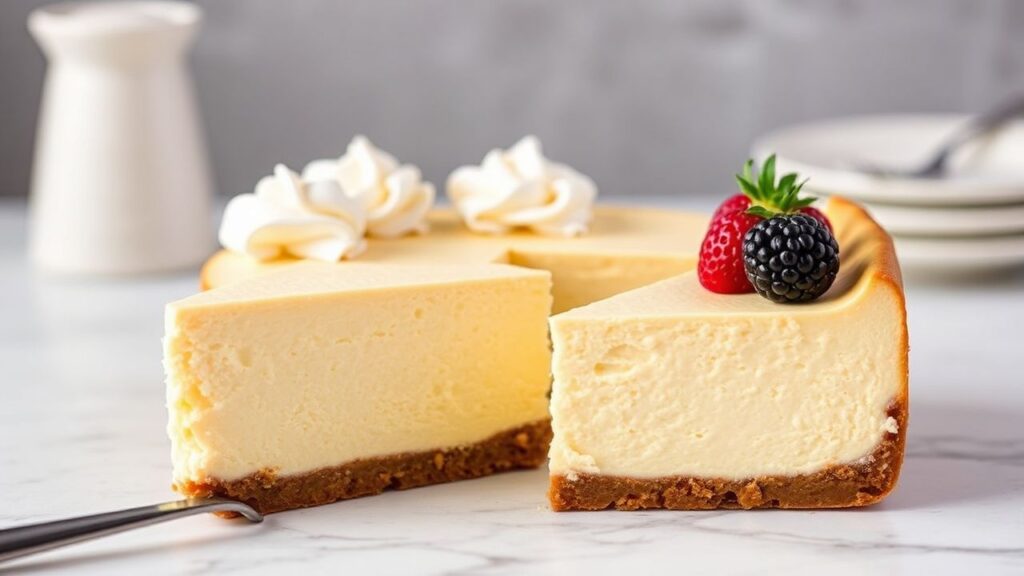
If you do these steps well, the cheesecake should wobble like set gelatin in the center. Then it firms as it chills, which creates that dense, creamy New York texture.
1) Make and Bake the Crust
Preheat your oven to 350°F (175°C). Combine graham cracker crumbs, melted butter, sugar, and optional cinnamon in a bowl. Mix until the crumbs look like damp sand.
Press the crust firmly into the bottom of a 9-inch springform pan. Bake for 10 minutes, then set aside to cool slightly. A warm filling on a cool crust helps the layers stay distinct.
2) Mix the Filling Base
Beat softened cream cheese on medium speed until smooth and lump-free. Scrape the bowl edges to avoid hidden pockets that turn into dense bites. This step builds the smooth mouthfeel you want in a New York-style cheesecake.
Add sugar gradually and mix until incorporated. Then mix in vanilla and stop as soon as the batter looks uniform. Overmixing at this stage can add air that later shows up as surface defects.
3) Add Eggs Gently
Add eggs one at a time, mixing on low speed. Mix only until each egg disappears into the batter. The goal stays simple: blend, don’t whip.
Why low speed? Air bubbles expand in the oven and can create cracks as the cake cools. If you want the science behind egg proteins, review egg on Wikipedia for a clearer picture.
4) Combine Dairy and Stabilize
Mix in sour cream and heavy cream on low speed until smooth. Add cornstarch last and stir gently to distribute it evenly. Cornstarch helps stabilize the filling so the center stays creamy instead of soupy.
For general baking structure, see cornstarch. Stabilizers often reduce texture surprises when you bake for a longer time at lower heat.
5) Bake in a Water Bath
Wrap the springform pan tightly with aluminum foil to prevent leaks. Place the wrapped pan inside a larger roasting pan. Pour boiling water into the roasting pan until it reaches halfway up the sides of the springform pan.
Steam creates gentler, more even heat around the cheesecake. That control helps prevent drying and reduces cracking. If you care about heat transfer concepts, you can review conduction.
6) Bake, Then Cool Gradually
Bake at 325°F (160°C) for 60–75 minutes. The edges should look set, while the center should jiggle slightly when you shake the pan. Avoid opening the oven during the bake to stop temperature swings.
When the bake finishes, turn off the oven and crack the door slightly. Let the cheesecake cool inside for about 30 minutes, then remove it and cool at room temperature. This slow temperature change keeps the top smooth.
Cooling, Chilling, and Serving for the Best Texture
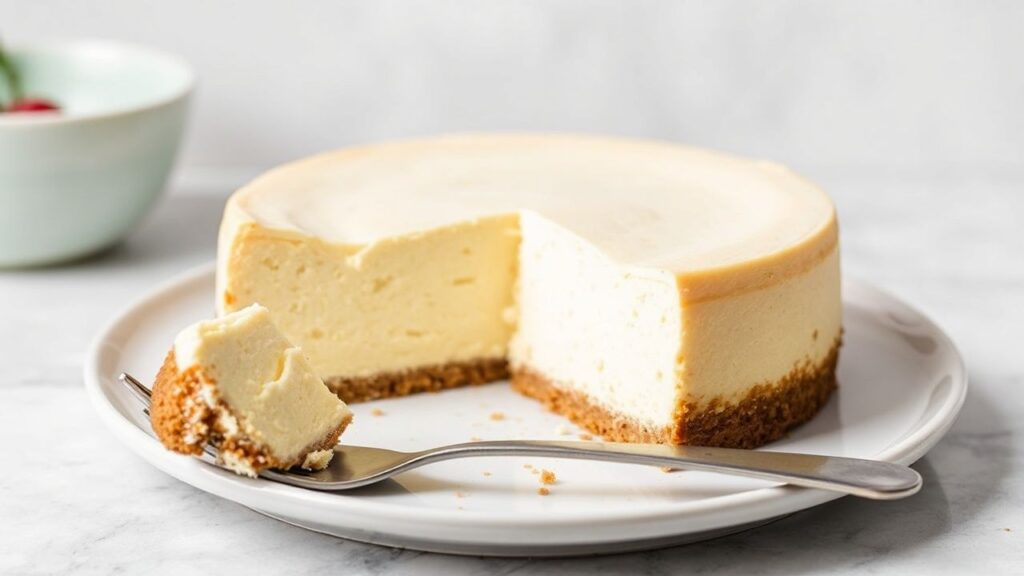
Cooling and chilling transform a baked custard into a sliceable cheesecake. After you cool the cake on a rack for about 1 hour, refrigerate it uncovered for at least 4 hours. Overnight chilling gives the best flavor and the cleanest set.
Before serving, run a thin knife along the edge to release the springform ring. For clean slices, wipe the knife after each cut and keep the cheesecake cold. Warm knives melt the surface and smear the crust.
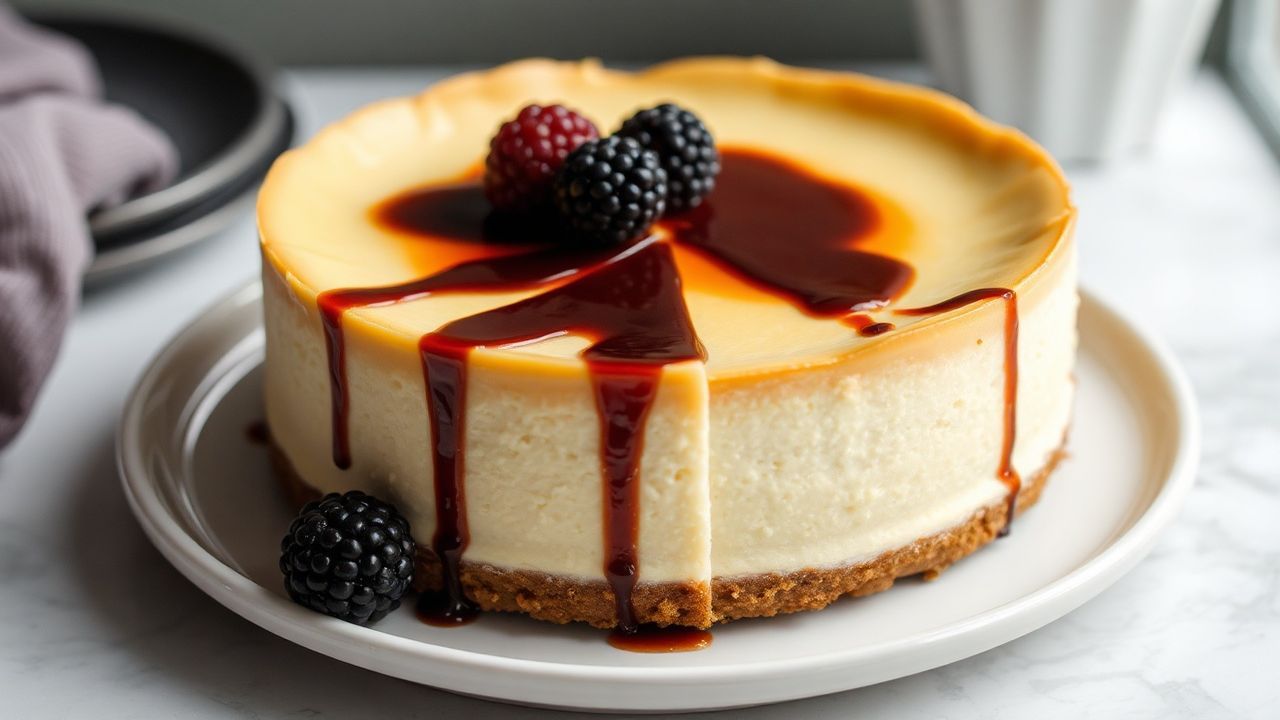
When you serve, keep the topping simple so it doesn’t hide the cheesecake flavor. Fresh berries, a fruit compote, or lightly sweetened whipped cream work well. The crust should taste buttery and crisp, while the filling stays dense and creamy.
If you want variations, use flavor add-ins that won’t break the classic balance. Lemon zest adds brightness, while almond extract pairs well with vanilla. Keep the additions small so the cheesecake still tastes like a New York-style classic.
Serving Ideas That Match the Classic Style
Top each slice with raspberries or strawberries for color and acidity. If you make a blueberry compote, simmer until thick so it doesn’t soak into the crust. A thin caramel drizzle adds sweetness without turning the cake heavy.
Pair the slice with coffee or black tea. The bitterness of espresso or the clean finish of tea helps balance the richness of full-fat dairy. If you serve dessert for guests, plan a chilled plate to keep the texture firm.
Tips for Success and Troubleshooting
Small choices create big results in New York-style cheesecake. Start with room-temperature ingredients and mix slowly. Then rely on a gentle bake and a careful cooling routine.
If you want fewer surprises, set your expectations before you begin. Cheesecake improves after rest, and the center often looks softer than you think right after baking. It firms up in the fridge.
Prevent Lumps and Overmixing
Soften cream cheese fully before mixing. If it still feels cool and firm, beat longer to smooth it out. A lump-free batter avoids grainy texture and keeps every bite creamy.
Use low speed for eggs and dairy. Stop mixing when the batter looks glossy and uniform. This approach protects structure and reduces risk during the bake.
Use the Water Bath Correctly
Water-bath prep should feel tight and secure. If foil leaks, water can seep into the crust and cause soggy spots. Check that the roasting pan sits stable on the oven rack before you pour the water.
Also, pour boiling water carefully to avoid splashing. Splashes can burn hands and may disturb the position of the pan. Plan for safe handling while keeping heat steady.
Fix Cracks (If They Happen)
Cracks don’t automatically mean ruined cheesecake. Many cracks stay shallow and can get covered with sour cream topping or fruit. A thin sour cream layer spreads easily and adds tang.
If you prefer a classic look, chill the cake fully and use a topping that matches the flavor profile. Berries and compote hide lines while adding moisture on top. For more about custard behavior, see custard.
Nutritional Notes
Nutrition varies based on brands and portion size. The figures below provide a reasonable estimate for one slice of a typical 9-inch cheesecake. If you want precise values, calculate using your exact ingredient labels.
Remember, cheesecake stays rich because of the fat content in cream cheese, sour cream, and heavy cream. A larger slice increases calories quickly, so keep portions in mind for balance.
| Nutrient | Per Serving (1 slice) |
|---|---|
| Calories | 430 kcal |
| Protein | 7 g |
| Carbohydrates | 32 g |
| Fat | 29 g |
FAQ: New York-Style Cheesecake Recipe Questions
What makes a New York-style cheesecake different from other cheesecakes?
New York-style cheesecake uses a higher amount of cream cheese and often includes sour cream and heavy cream. That combination creates a dense, creamy filling with a tangy flavor. Lighter styles may add more air and bake differently, so the texture won’t match.
Why do my eggs cause cracks or a dry center?
Cracks often come from air in the batter or fast temperature changes. If you whip the eggs or mix too aggressively, trapped air expands and stresses the filling as it bakes and cools.
Do I really need a water bath for this recipe?
A water bath helps regulate oven heat and keeps moisture around the cheesecake. That gentler environment reduces drying and can lower the risk of cracking. If you skip it, expect a higher chance of a drier center and a more uneven top.
How long should I chill New York-style cheesecake before serving?
Chill at least 4 hours so the filling sets fully. Overnight chilling gives the best texture and flavor balance. It also improves slice quality because the cheesecake firms in the fridge.
Can I freeze a New York-style cheesecake?
Yes, you can freeze it. Wrap the cake well to prevent freezer odors and ice crystals. Thaw overnight in the refrigerator so the filling stays creamy rather than watery.
See also: New York-style cheesecake