

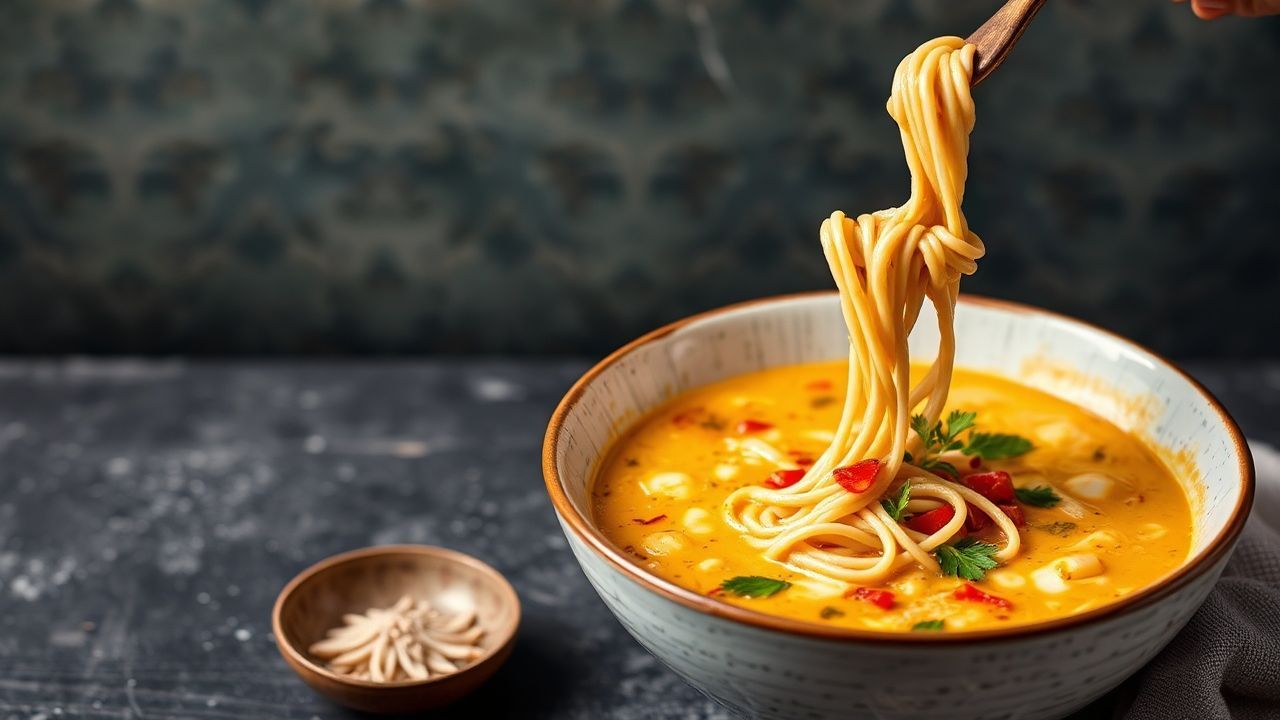
Creamy Curry Laksa delivers a rich, coconut-based curry broth that clings to noodles and wakes up your palate with herbs and citrus. This recipe keeps the flavor layered: toasted curry paste, gentle simmering, then fast bowl assembly for peak texture. If you want restaurant-style results at home, follow the steps and timing below.
- Creamy Curry Laksa: Prep, Cook Time, and Yield
- Difficulty Level and Equipment Notes
- Ingredients for Creamy Curry Laksa (Serves 4)
- Instructions: How to Make Creamy Curry Laksa
- Tips for Success: Texture, Flavor, and Make-Ahead
- Serving Suggestions: Build for Maximum Freshness
- Nutritional Snapshot (Estimated)
- FAQ: Creamy Curry Laksa
At a Glance
- Toasted paste builds depth before the broth goes in.
- Low simmer protects coconut milk from splitting and graininess.
- Rinse noodles to control starch and keep a springy bite.
- Layer fast so sprouts and herbs stay fresh, not limp.
Malaysian laksa sits within the wider world of Southeast Asian noodle soups shaped by trade routes and street-food culture. In this style, coconut milk gives a smooth mouthfeel while spice paste sets the aromatic foundation. You also get contrast from bean sprouts, herbs, and lime.
The word “creamy” here comes from cooking technique, not from shortcuts. When you toast the paste and simmer gently, fat and flavor compounds distribute evenly through the broth. That balance helps the soup taste full without becoming heavy.
If you want a reference point for how laksa is categorized, read more about laksa. For background on the science behind stable mixtures, see emulsion. Those concepts explain why coconut curry feels cohesive when handled correctly.
Creamy Curry Laksa: Prep, Cook Time, and Yield
Plan 20 minutes for prep and 45 minutes for cooking, plus time to soak noodles. If you handle paste first, your workflow stays calm. You’ll also avoid last-minute rushing when toppings go in.
This timing works well for home kitchens and keeps texture on track. Once the broth simmers, you can prep toppings and set up your bowl station. Then you can assemble quickly for best noodle bite and freshest herbs.
Quick Timing Targets
- 20 minutes prep (aromatics + paste base)
- 45 minutes cook (toast + simmer)
- 5–7 minutes noodle soak
- 3–5 minutes assemble per batch
This recipe makes 4 servings. Each serving should get a generous ladle of broth so noodles stay coated. If you plan leftovers, store broth separately from noodles to prevent softening.
When you reheat, warm the broth slowly and stir often. Then re-cook or refresh noodles before assembling bowls. This method keeps your curry laksa tasting fresh instead of soggy.
Difficulty Level and Equipment Notes
Set the difficulty to Medium. You do a few distinct steps: blend aromatics, toast the paste, then simmer the coconut broth. None of these require special gear beyond a blender or food processor.
A blender makes paste smooth, but a food processor works just as well. The key is consistent particle size so the curry paste toasts evenly. That even toasting helps the broth taste rounded rather than sharp or one-dimensional.
For a broader explanation of why aroma and flavor compounds behave differently in cooking, you can review stock. For ingredient context on dried spices and their role in curry builds, see spice.
When you shop for paste components, prioritize fresh aromatics when possible. Lemongrass and galangal contribute citrusy, floral notes that keep the soup from tasting flat. If you substitute, do it intentionally and adjust to taste.
Ingredients for Creamy Curry Laksa (Serves 4)
Use fresh aromatics where you can, especially lemongrass and galangal. If you cannot find galangal, ginger can fill in, but the aroma shifts. That shift matters, so taste as you cook.
Rice vermicelli works best because it absorbs broth and holds a tender bite. If you switch to egg noodles, cook until just tender, then rinse to remove extra starch. That small control step helps curry coating and prevents mushiness.
For general background on noodles and how they handle heat, check noodle. This supports your timing choices and explains why overcooking ruins texture in soups.
- 2 tablespoons vegetable oil
- 4 dried red chilies, soaked and deseeded
- 1 stalk lemongrass, finely sliced (white part only)
- 3 cloves garlic, peeled
- 1 inch fresh galangal, peeled and chopped
- 1 medium onion, roughly chopped
- 1 teaspoon ground turmeric
- 1 teaspoon coriander powder
- 1 teaspoon cumin powder
- 1/2 teaspoon white pepper
- 200 ml coconut milk (fresh or canned, no additives if possible)
- 700 ml chicken or vegetable stock
- 150 g rice vermicelli noodles
- 150 g cooked chicken breast, shredded (optional)
- 1 cup bean sprouts, rinsed and drained
- Fresh coriander leaves for garnish
- 2 boiled eggs, halved (optional)
- Lime wedges for serving
- Salt to taste
Instructions: How to Make Creamy Curry Laksa
Start by building the curry paste. Strong paste flavor comes from grinding aromatics and toasting them until the kitchen smells warm and savory. That step sets your broth up for depth before coconut milk goes in.
Next, simmer coconut milk with stock gently. Coconut-based soups can split if you boil hard. A low simmer keeps the broth smooth, glossy, and creamy rather than grainy.
For a practical reference on how culinary liquids change under heat, you can also review stock. It helps you understand why gentle simmering matters for flavor extraction and texture.
- Prepare the spice paste: In a food processor, blend soaked dried red chilies, lemongrass, garlic, galangal, and onion into a smooth paste. Add a splash of water only if blending stalls.
- Sauté the paste: Heat vegetable oil in a large pot over medium heat. Add the paste and stir-fry until fragrant and oil starts to separate, about 7–8 minutes. Stir often to prevent scorching.
- Toast ground spices: Add turmeric, coriander powder, cumin, and white pepper. Stir well for about 2 minutes to bloom the spices.
- Build the broth: Pour in coconut milk gradually, stirring to combine. Then add stock. Bring to a gentle simmer and cook on low heat for 25–30 minutes.
- Cook noodles: Soak rice vermicelli in warm water according to package directions (usually 5–7 minutes). Drain well.
- Prevent mushiness: Rinse drained noodles briefly with cold water, then drain again. This helps control starch release.
- Adjust seasoning: Taste the broth and add salt. For more heat, adjust chili paste or add chili flakes.
- Assemble: Divide noodles into bowls. Ladle hot curry broth over noodles. Top with shredded chicken (optional), bean sprouts, and halved eggs (optional).
- Garnish and finish: Add coriander leaves. Serve with lime wedges so each person balances richness with acidity.
When you taste, focus on balance in this order. First check coconut richness, then check spice warmth, then finish with lime brightness. If heat seems sharp, mellow it with more coconut milk.
If the broth tastes muted, it usually needs more toasted paste flavor, not just extra salt. That’s why timing in the sauté stage matters so much. Taste early, then adjust before serving.
Tips for Success: Texture, Flavor, and Make-Ahead
Make creamy curry laksa consistently by controlling three variables. First, toast the paste until aromatic and slightly oily. Second, simmer low to keep coconut milk stable. Third, rinse noodles to manage starch.
If heat feels sharp, add a little more coconut milk and stir until smooth. If flavor feels muted, toast the paste a bit longer next time. That small change often fixes the overall taste more than adding more salt.
Swap proteins based on what you enjoy. Vegetarian versions work well with firm tofu or tempeh and vegetable stock. If you want extra umami, use it sparingly and taste so it doesn’t overpower lemongrass and coconut.
To plan ahead, store broth in the fridge and reheat gently. Assemble noodles and toppings fresh to protect crunch and aroma. This keeps each bowl bright, not tired.
Serving Suggestions: Build for Maximum Freshness
Serve creamy curry laksa in deep bowls so broth stays hot and noodles don’t spill. Build the bowl in layers: noodles first, broth second, then proteins and crisp toppings. This order keeps noodles coated while sprouts and herbs stay lively.
For extra crunch, add bean sprouts right before serving. Keep coriander and herbs cool until the last moment. Lime should stay on the side so guests can adjust brightness without diluting the broth.
To understand what makes citrus-forward flavors feel refreshing, you can read about lime. It supports the logic behind balancing fat-rich coconut with acidity. That contrast reduces the “heaviness” perception.
Pairing can stay simple. A light, salty side helps the spice and coconut richness reset your palate between spoonfuls. Choose something crunchy or cool, like a cucumber salad, to keep the meal balanced.
Nutritional Snapshot (Estimated)
Nutrition varies based on the exact stock, coconut milk brand, and protein portion. Use the estimate below as a planning reference for a single serving. If you reduce oil or choose lighter coconut milk, your numbers will shift.
This estimate assumes the full noodle amount, typical shredded chicken, and measured garnishes. For accurate totals, calculate with your ingredient labels. Still, the serving gives you a realistic sense of energy distribution.
| Nutrient | Per Serving |
|---|---|
| Calories | 480 kcal |
| Protein | 28 g |
| Carbohydrates | 45 g |
| Fat | 18 g |
FAQ: Creamy Curry Laksa
What makes Creamy Curry Laksa taste uniquely flavorful?
It comes from toasted curry paste plus coconut milk that cooks gently. Lemongrass and galangal add a fresh, aromatic profile that prevents the soup from tasting one-note. When you toast spices and simmer low, the flavor compounds distribute evenly through the broth.
That even distribution also helps the broth coat noodles rather than separating. If you follow the timing steps, you get a layered bite: spice first, coconut richness next, then herb brightness.
How do I get a creamy texture without making the broth heavy?
Use coconut milk and simmer it on low heat after mixing. A gentle simmer keeps the mixture smooth and helps the curry coat noodles lightly. High heat can make coconut look grainy and feel heavier than it should.
Also, rinse the noodles briefly after draining. That controls starch release, so the broth clings without turning pasty. The result feels creamy, not thick and sticky.
Which noodles work best for creamy curry laksa?
Rice vermicelli works for most home cooks because it absorbs broth flavor and stays tender. The key is timing: soak until just tender, drain well, then rinse briefly with cold water.
If you use egg noodles, avoid overcooking. Undercook slightly, then rinse and assemble soon. In soup, noodles keep cooking from residual heat.
What toppings should I use for the best balance?
Start with bean sprouts for crunch and coriander for freshness. Add a protein like shredded chicken, tofu, or prawns based on your preference. Lime also matters because acidity lifts rich coconut curry.
Keep toppings dry and fresh until serving. That preserves contrast, which drives the classic laksa experience: rich broth, bright top, and clean finishing tang from lime.
Can I make Creamy Curry Laksa vegetarian?
Yes. Use vegetable stock and skip meat, then add firm tofu, mushrooms, or tempeh for body. Coconut milk still provides the creamy mouthfeel that anchors the broth.
Taste while you season, since vegetarian broths often need careful balancing. If you want umami, use it in small amounts and let lime and herbs bring brightness.
See also: Creamy Curry Laksa