

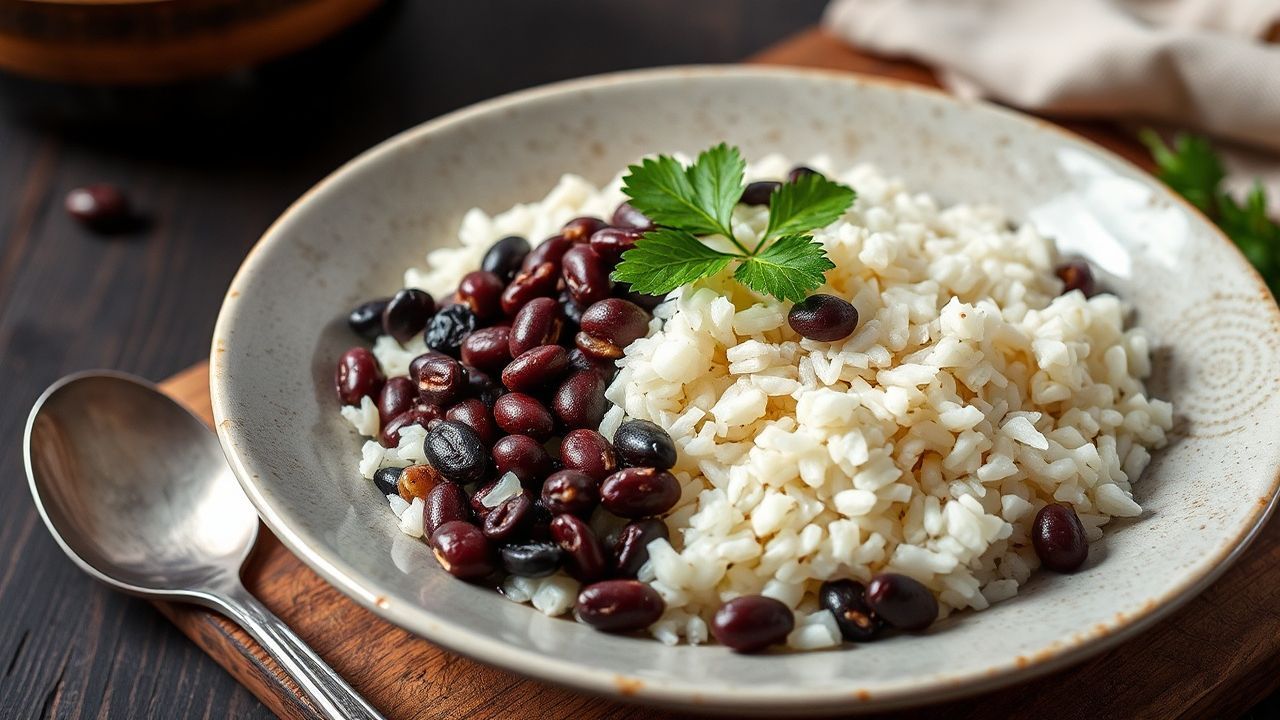
When you want a meal that feels homey, filling, and fast to repeat, savory black beans and rice delivers. The flavor comes from slow-simmered beans, fragrant aromatics, and a rice cooking method that soaks up the broth.
- Prep and Cook Time
- Yield
- Difficulty Level
- Essential Ingredients for Achieving Deep,Authentic Flavors
- Step-by-Step Techniques to Perfect Your Savory black Beans and Rice
- Creative Variations and Pairings to Elevate Your Dish
- Tips for Success
- Q&A
- What makes savory black beans and rice taste so good?
- How can I elevate a basic black beans and rice recipe?
- Can I make this dish vegan and gluten-free?
- Which rice works best with black beans?
- How do I store and reheat leftovers for best texture?
- Future Outlook
In many regions, this dish shows up at weeknight dinners and holiday tables alike. It also works for meal prep because the flavors improve after a day in the fridge.
At a Glance
- Layer flavor: sauté aromatics, toast spices, then simmer beans.
- Cook rice with broth so grains taste rich, not plain.
- Finish smart: add lime or vinegar at the end for bright balance.
- Serve flexibly: bowls, wraps, sides, and meal-prep lunches.
At its core, savory black beans and rice is simple. You use pantry staples, build a sauce from onion, garlic, and spices, and then let time do the heavy lifting.
For cultural context, black beans and rice connect to long-standing Latin American and Caribbean food traditions. You’ll see similar bean-and-grain pairings across the Caribbean and the Americas, shaped by local ingredients and migration history. For a helpful overview, read about black beans.
Another reason this dish endures is nutrition. Beans add fiber and plant protein, and rice provides steady energy. The combination also helps you feel full longer, especially when you use a broth-based cooking liquid.
Choose this recipe when you want a comforting staple that tastes complex without complicated steps. With small tweaks—spice level, acidity, and garnish—you can change the entire mood of the bowl.
To understand why beans thicken the cooking liquid, it helps to know how legumes behave during simmering. As beans soften, they release starches that naturally create a light sauce. See legumes for background on plant foods and their structure.
Start with dried beans if you want deeper texture. Use canned beans when you need speed, and adjust simmer time to avoid watery flavor. Either way, your goal stays the same: make the rice taste like it belongs in the bean pot.
Savory black beans and rice have long been a cherished dish across Latin America, the Caribbean, and many family kitchens worldwide. This pairing reflects practical cooking: inexpensive ingredients, strong flavor, and a method that stretches meals for many people. The real payoff comes when the rice absorbs the seasoned bean broth and every bite tastes cohesive.
When you toast spices before simmering, you wake up volatile oils that smell warm and fragrant. Then, when you simmer beans until tender, you build the base for the rice. That’s why the dish tastes hearty even when the ingredients list stays straightforward.
Prep and Cook Time
Getting this timeline right helps you cook with confidence. Start the beans first, then work on the aromatics and spices while the pot warms up.
For best results, plan hands-on time for sautéing and rinsing, then let simmer time do the work. If you use canned beans, the schedule shortens significantly, but your flavor steps stay the same.
- Readiness Time: 15 minutes
- Cook Time: 45 minutes
- Total Time: 1 hour
Yield
This recipe makes enough for a family meal plus leftovers. You’ll get bold flavor even after reheating.
If you serve at a gathering, plan smaller portions and add side salads or toppings. The dish scales well because the ratio of broth to rice stays stable.
Serves: 4 generous portions
Difficulty Level
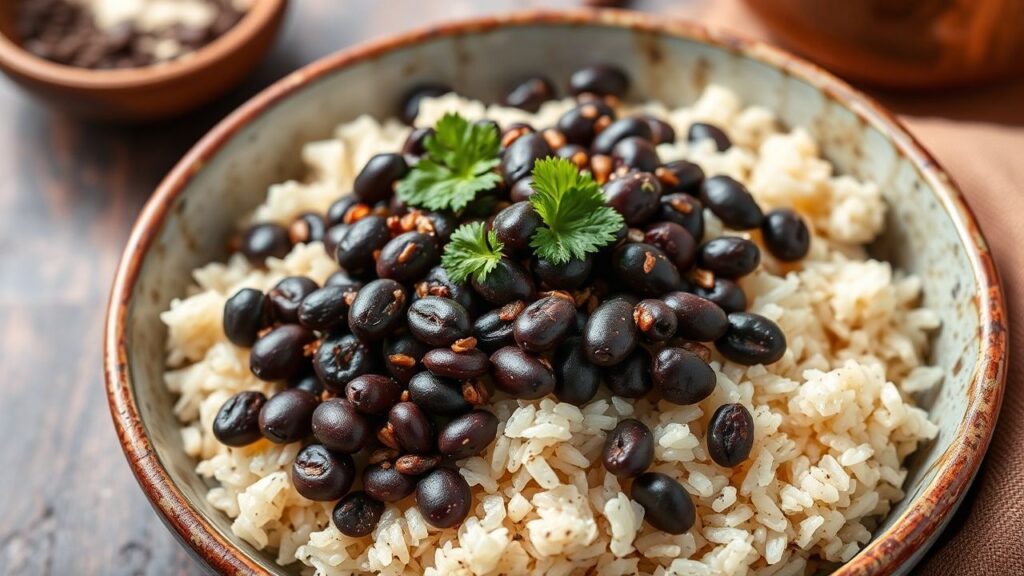
This is an easy recipe for beginners. You don’t need special gear beyond a heavy pot and a small saucepan.
Even if you’ve never cooked dried beans, you can follow the steps closely. Focus on simmer tenderness, not on exact minute counts.
Difficulty: Easy
Essential Ingredients for Achieving Deep,Authentic Flavors
Flavor starts before the beans hit the pot. Use fresh aromatics, toast the spices, and choose a broth you like to drink.
For a richer bean sauce, avoid plain water when possible. Broth adds salt, minerals, and savory depth so the rice tastes seasoned.
- 1 cup dried black beans, soaked overnight and rinsed
- 1½ cups long-grain white rice, rinsed until water runs clear
- 1 medium yellow onion, finely diced
- 3 cloves garlic, minced
- 1 small green bell pepper, finely diced
- 2 tablespoons olive oil (or vegetable oil)
- 1 teaspoon ground cumin
- 1 teaspoon smoked paprika
- 2 bay leaves
- 4 cups vegetable broth (low sodium preferred)
- Salt and freshly ground black pepper, to taste
- 1 tablespoon apple cider vinegar (optional, for brightness)
- Fresh cilantro, chopped for garnish
- 1 lime, cut into wedges for serving
To pick a good rice, look for grains that remain separate after simmering. Long-grain rice works best for a fluffy texture, while short-grain varieties tend to turn creamier.
For general background on rice types and cooking behavior, review rice. Understanding grain starch helps you avoid mushy results and undercooked centers.
That brief toasting step matters because ground spices release aroma faster when the pot is hot and the surface is dry. After that, the simmering liquid spreads those flavors through the beans and into the broth.
If you want extra depth, choose smoked paprika that tastes balanced instead of harsh. The goal is a smoky warmth, not bitterness.
Step-by-Step Techniques to Perfect Your Savory black Beans and Rice
This section keeps you on track from simmer to serving. Read through once, then cook step-by-step so you don’t miss timing cues.
Throughout the process, aim for tender beans and rice that stays distinct. When both textures match, the dish feels restaurant-quality.
- Prepare the beans: Soak dried black beans overnight in cold water. Drain and rinse before cooking to reduce cooking time and improve digestibility.
- Sauté the aromatics: In a large, heavy-bottomed pot, heat the olive oil over medium heat. Add onion, bell pepper, and garlic. Sauté until softened and fragrant, about 5 minutes.
- Season the base: Stir in cumin and smoked paprika, toasting gently for 30–60 seconds until fragrant.
- Cook the beans: Add soaked black beans, bay leaves, and vegetable broth. Bring to a boil, then reduce to low and simmer covered for 30–40 minutes until beans are tender.
- Prepare the rice: While beans simmer, rinse the rice. Cook in a separate saucepan with 2½ cups water and a pinch of salt. Simmer covered until absorbed, then rest off heat for 5 minutes.
- Combine and finish: Remove bay leaves. If using apple cider vinegar, stir it in now. Fold cooked rice into the bean mixture and adjust salt and pepper.
- Rest before serving: Let the pot sit off heat for 5 minutes. Then fluff and serve so flavors settle into the grains.
Creative Variations and Pairings to Elevate Your Dish
Once your base recipe works, you can steer the dish toward different flavor profiles. Variation keeps meal prep exciting and reduces “boredom cooking.”
Choose one main change at a time: spice, smokiness, herbs, or add-ins. That way, you preserve the signature bean-and-rice identity.
- Spicy kick: Add diced jalapeños or a pinch of cayenne with the aromatics.
- Smoky depth: Add chipotle powder or extra smoked paprika after toasting spices.
- Herbal notes: Stir in chopped oregano or thyme near the end of simmering.
- Vegetable boost: Fold in sautéed zucchini or roasted sweet potato just before serving.
- Protein pairing: Serve with grilled chicken or pan-seared tofu for added protein.
- Garnishes: Top with avocado slices, radish, or a spoon of vegan sour cream.
Pairings matter because they change texture and freshness. A crunchy salad cools the heat, while citrus brightens rich beans.
For a quick science-y reminder of why acid improves savory dishes, see acid. Used at the end, lime and vinegar cut heaviness and sharpen aroma.
Serving Suggestions
Plate savory black beans and rice in a shallow bowl so the sauce clings to the grains. Add cilantro and a light dusting of smoked paprika for color and aroma.
Serve with lime wedges on the side. Guests can add brightness to match their taste, especially if you made the spice level mild.
Pair the bowl with a fresh salad, such as citrus avocado or lightly dressed greens. For crunch, add toasted pumpkin seeds or pepitas on top right before eating.
This dish also pairs well with fried plantains or grilled vegetables. The sweet-salty contrast makes the meal feel complete without extra complexity.
Tips for Success
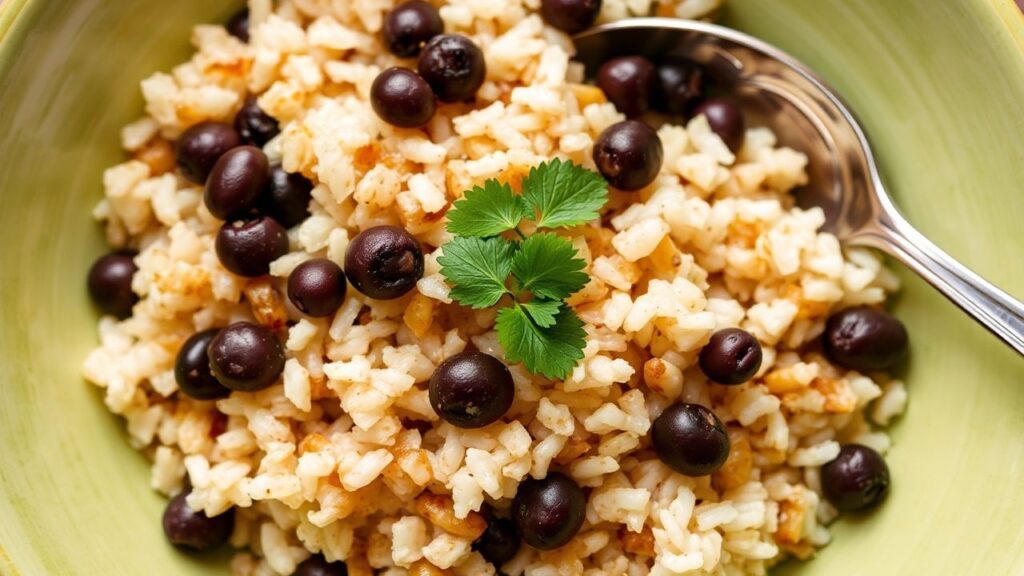
Small adjustments fix common problems fast. When something feels off—texture, seasoning, or thickness—apply a targeted fix instead of starting over.
Use these cues while the pot is still warm. You can correct seasoning and consistency before the dish cools and sets.
- Beans too firm? Simmer longer, adding broth or water gradually.
- Create a thicker sauce: Mash a few beans against the pot’s side, then fold in rice.
- Use canned black beans: Rinse 2 cans well. Simmer with aromatics and spices for 15–20 minutes, then combine with rice.
- Enhance rice texture: Toast rinsed rice briefly in oil with aromatics before adding water.
- Make ahead: Cook beans and rice separately, then combine right before serving for the best texture.
Q&A
If you still have questions, these answers focus on the most common cooking decisions. You’ll learn how to adjust texture, flavor strength, and rice type.
Use these notes as a troubleshooting guide. Then make the recipe yours with toppings and spice changes.
What makes savory black beans and rice taste so good?
The flavor comes from layered seasoning: sautéed aromatics, toasted spices, and a simmered bean broth. When you fold rice into that seasoned liquid, the grains absorb flavor instead of staying bland.
How can I elevate a basic black beans and rice recipe?
Start with better broth and toast cumin plus smoked paprika until fragrant. Then add a finishing acid (lime or apple cider vinegar) after cooking so the dish tastes bright, not flat.
Can I make this dish vegan and gluten-free?
Yes. Black beans and rice are naturally vegan. Rice is gluten-free, but always check any broth or spice blends for hidden gluten.
Which rice works best with black beans?
Long-grain white rice gives a fluffy, separate texture. Brown rice adds chew and nuttiness, but it needs longer cooking time and may require extra water.
How do I store and reheat leftovers for best texture?
Store in sealed containers for up to 3–4 days. Reheat gently with a splash of water or broth, then stir and rest 2 minutes before serving so the rice reabsorbs moisture.
For a helpful general reference on legumes, beans, and grains as food staples, you can also explore grain and legume.
Future Outlook
Savory black beans and rice remain a dependable staple because they fit real schedules and real budgets. Home cooks can keep the base recipe steady and still create variety with spice, herbs, and toppings.
As more people cook for convenience and nutrition, this dish keeps winning. It balances comfort with plant-forward protein, and it reheats well for meal prep.
When you learn the method—toast spices, simmer beans until tender, cook rice to absorb flavor—you gain a repeatable template. Then you can adapt it to your kitchen style without losing the heart of the dish.
So next time you crave a meal that tastes bold but stays manageable, let savory black beans and rice guide your weeknight cooking. Start with the base, adjust the heat, finish with lime, and enjoy a bowl that feels both familiar and freshly made.
See also: savory black beans