

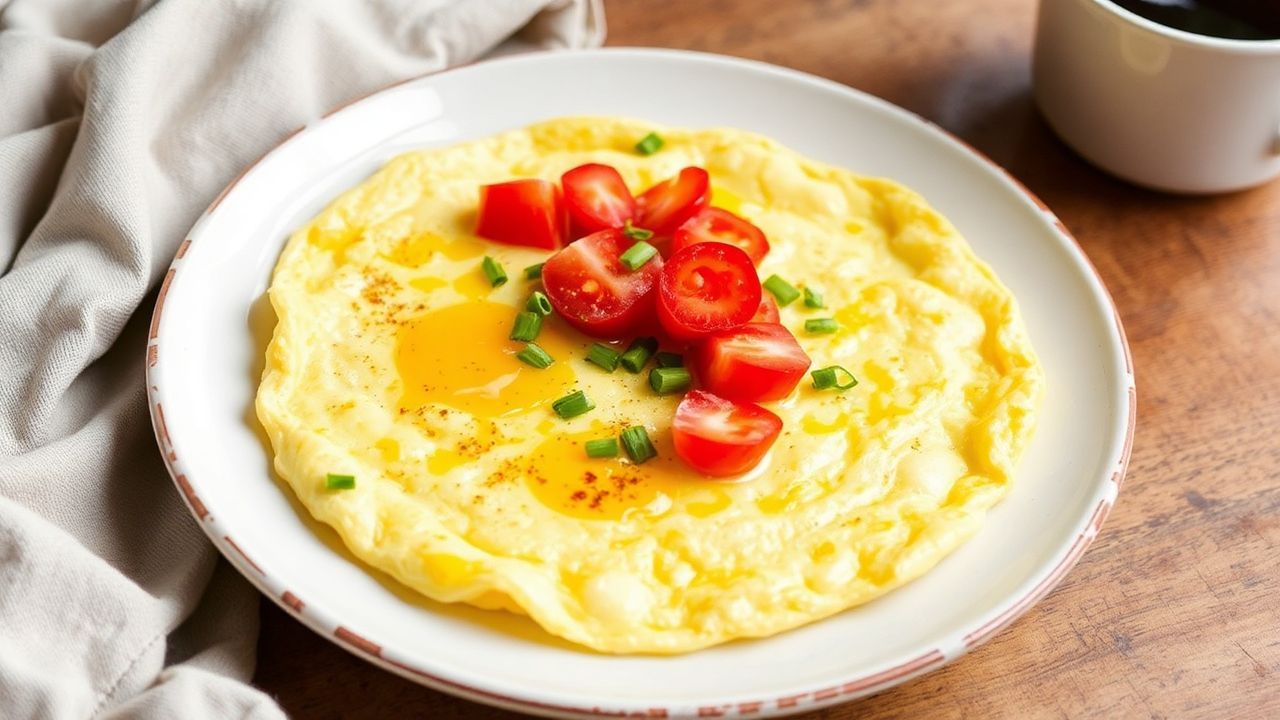
Fluffy 5-minute omelette masterpieces start with one goal: air in the eggs, then gentle heat to set it. With the right whisking and timing, you can make a tender, light omelette that tastes rich but cooks fast. This guide shows the exact steps for fluffy omelette results every time.
- Why a Fluffy Omelette Works in 5 Minutes
- Prep & Cook Time
- Yield & Difficulty Level
- Ingredients for the Best Fluffy Omelette
- Instructions: How to Make a Fluffy Omelette Masterpiece
- Tips for Success (That Make Fluffiness Predictable)
- Serving Ideas That Keep the Omelette Light
- Nutritional Snapshot (Approximate)
- Q&A: Fluffy Omelette Masterpiece
- What is the secret behind a perfectly fluffy omelette?
- How can I cook a fluffy omelette quickly without sacrificing texture?
- What fillings keep a fluffy omelette light?
- Can I make a fluffy omelette without dairy?
- How do I know when the omelette is done?
- Why did my omelette turn rubbery?
- FAQ
- Whisk hard for foam that lifts the curds.
- Use low-medium heat to prevent dryness and browning.
- Stop early so the top stays soft and glossy.
- Fold fast to keep the center silky.
There is something magical about a fluffy omelette—a delicate cloud of eggs that feels light on the fork. In about five minutes, you can turn basic pantry ingredients into a breakfast that tastes buttery and clean. Whether you cook daily or only on weekends, you can master the technique and get repeatable results.
Why a Fluffy Omelette Works in 5 Minutes
A fluffy omelette depends on two linked factors: emulsion and protein setting. Eggs trap air when you whisk, and that air expands as heat moves through the mixture. At the same time, egg proteins coagulate and form curds that hold the structure. If you understand both, you can cook quickly without rubbery eggs.
Heat control matters more than people think. When the pan runs too hot, the outside sets immediately and squeezes moisture out of the curds. When you cook on low-medium heat, the omelette sets evenly and stays tender in the center. For background on egg proteins and how they change with cooking, see egg.
Prep & Cook Time
You can plan this meal like a timer exercise. Start with a preheated pan and a bowl ready, then follow the steps in order. You’ll finish quickly because each action takes a short, measurable window.
Preparation: 3 minutes
Cooking: 2 minutes
Total Time: 5 minutes
Yield & Difficulty Level
This recipe makes 1 serving, perfect for one hungry breakfast. If you cook for two, double the ingredients and use a slightly larger pan for even cooking.
Difficulty: Easy. You need no advanced equipment, but you do need a calm, low-heat approach.
Ingredients for the Best Fluffy Omelette
Use fresh eggs and room-temperature ingredients when possible. Room-temperature eggs whisk faster and mix more evenly with milk, which helps foam spread through the mixture. For milk and dairy behavior in cooking, you can also reference milk.
Core ingredients
• 3 large eggs, at room temperature
• 2 tablespoons whole milk (or cream for extra softness)
• Salt, a pinch
• Freshly cracked black pepper, to taste
• 1 tablespoon unsalted butter
Optional flavor boosters
• Chopped chives
• Shredded cheddar
• Halved cherry tomatoes
• Sautéed mushrooms
Instructions: How to Make a Fluffy Omelette Masterpiece
Follow these steps in sequence. Each one protects the foam and guides the egg proteins into a soft set. The result should look like gentle curds, not browned scramble.
1) Whisk aggressively.
In a bowl, beat the eggs with milk, salt, and pepper until the mixture turns lighter and slightly frothy. This aeration gives you a fluffy omelette texture because the trapped air spreads through the batter. For a general overview of mixing and texture changes, see whisk.
2) Heat the pan with care.
Set a non-stick skillet over medium-low heat and melt the butter. Swirl to coat the surface evenly. Choose a pan with a thick base so the temperature stays stable from edge to center.
3) Pour and wait.
Pour in the egg mixture and let it rest undisturbed for about 20–30 seconds. You should see the edges begin to set while the center still looks loose.
4) Stir gently for texture.
Use a silicone spatula and stir slowly, pulling eggs from the edges toward the middle. This forms soft curds while you keep foam intact for lift. If you stir too much, you’ll lose the smooth dome and end up with smaller, tougher curds.
5) Stop before it dries.
When the omelette is mostly set but still slightly runny on top, add your fillings. Remove from direct heat if your pan runs hot. You want carryover cooking to finish the top after you fold.
6) Fold and serve immediately.
Fold the omelette in half and slide it onto a warm plate. Serve at once so the center stays creamy, not overcooked.
Tips for Success (That Make Fluffiness Predictable)
Fluffiness becomes predictable when you control four variables: whisking time, pan temperature, stirring level, and timing. Use these tips and you’ll avoid the most common failure points.
Whisking technique
Whisk until the mixture looks lighter and foamy. An electric hand mixer works, but even a balloon whisk works if you whisk long enough. For best results, aim for a consistent texture with no streaks of unblended egg.
Cookware choice
Use a non-stick pan that’s 8–10 inches wide for this portion. A wide surface lets eggs spread thin, so they set faster without overcooking. If you only have a small pan, the omelette will cook thicker and you may need a shorter rest time.
Milk vs. cream: Milk adds tenderness, but cream can feel richer. Don’t add too much liquid because excess moisture can thin the curds. Keep the ratio close to the ingredient list for a stable set.
Make-ahead trick
You can pre-measure ingredients and prep fillings in advance. For the eggs, you can whisk up to about one hour ahead, cover, and refrigerate. Whisk again quickly before cooking so the mixture stays uniform.
Serving Ideas That Keep the Omelette Light
Serve with fresh toppings that add contrast without adding sogginess. Chives, parsley, and a little feta can lift flavor and keep the bite clean. If you add tomatoes, pat them dry so they don’t release extra juice.
Pair with crusty sourdough or a crisp green salad. For ideas on how fats and flavor compounds affect taste, explore butter and fat.
Flavor Boosters and Toppings
Fresh herbs like basil, tarragon, and parsley add bright notes that complement egg richness. Roasted red peppers, sun-dried tomatoes, and caramelized onions bring sweetness and depth. Add them in small amounts so the omelette stays light.
For a protein-forward option, try smoked salmon or sautéed spinach. Soft cheeses like goat cheese can melt into the curds without overwhelming the texture. When you choose fillings, aim for balanced flavor and quick cooking.
Nutritional Snapshot (Approximate)
Nutrient values vary by brand and portion, but this gives a practical estimate for one serving. Keep in mind that add-ins change calories and protein fast.
Approximate per serving
| Nutrient | Amount per Serving |
|---|---|
| Calories | 250 kcal |
| Protein | 18 g |
| Carbohydrates | 2 g |
| Fat | 19 g |
Because cooking is fast, small ingredient changes matter. If you use extra cheese or add heavy fillings, your omelette will still be fluffy, but it may taste richer and weigh more on the plate.
If you want to understand why egg texture changes during heating, the protein coagulation process helps. For a general chemistry reference, review protein. It explains why proteins firm up when heat crosses the right threshold.
Q&A: Fluffy Omelette Masterpiece
Use these quick answers to troubleshoot your technique. Most problems come from heat level, whisking, or timing, and each fix is simple.
What is the secret behind a perfectly fluffy omelette?
The secret is strong whisking to trap air, plus medium-low heat to set proteins slowly. You also need to stop early so carryover heat finishes the top. Aim for foam and a soft, glossy finish.
How can I cook a fluffy omelette quickly without sacrificing texture?
Preheat the pan, then pour and wait only briefly so the edges set first. Stir gently once the edges firm, then fold as soon as the omelette looks set but still slightly runny on top. This keeps it creamy instead of dry.
What fillings keep a fluffy omelette light?
Use fillings that cook fast and release minimal extra moisture. Herbs, small amounts of cheese, sautéed mushrooms, and lightly cooked tomatoes work best. For drier add-ins, pat them dry before adding.
Can I make a fluffy omelette without dairy?
Yes. Replace milk with a small amount of water or a non-dairy alternative that behaves well under heat. Whisk thoroughly to keep aeration. Stay conservative with liquid so the curds set smoothly.
How do I know when the omelette is done?
Look for set edges and a center that holds together but still looks soft. The top should stay slightly glossy and creamy. If the omelette browns, you cooked too hot or too long.
Why did my omelette turn rubbery?
Rubbery eggs usually come from high heat or over-stirring. Cook on medium-low, stir gently, and remove from heat early. Serve right away for the best texture.
FAQ
Here are a few extra questions that cover common beginner issues. Use them to refine your routine and get the same fluffy results each morning.
Do I need a specific pan for the best fluffy omelette?
No, but a non-stick skillet with a thick base helps. Thick bottoms hold a steady temperature so you can cook fast without hot spots. A pan that’s too small will make the omelette thicker and harder to set evenly.
Should I season the eggs before or after cooking?
Season before cooking so salt dissolves and distributes through the mixture. Salt also supports flavor clarity, so the omelette tastes balanced even with simple fillings.
Can I double the recipe for two servings?
Yes. Double the eggs and ingredients, then use a wider pan to keep the layer thin. If you overcrowd a small skillet, the center will take longer to set and the outside may overcook.
What’s the best way to fold without tearing?
Use a flexible silicone spatula and fold once the omelette holds together. If it looks too loose, cook 10–15 seconds more on low. If it sticks, lower the heat and add a touch more butter.
What should I do if my foam disappears while cooking?
It usually means you didn’t whisk long enough or the pan ran too hot. Whisk until frothy and cook on medium-low. Gentle stirring also helps keep the trapped air from collapsing.
To conclude: You can make a fluffy omelette masterpiece in five minutes when you whisk for lift and cook with calm, steady heat. Follow the timing steps, fold quickly, and serve immediately for a tender, silky center. When you repeat the process, you’ll turn breakfast into a reliable skill.
See also: Fluffy omelette