

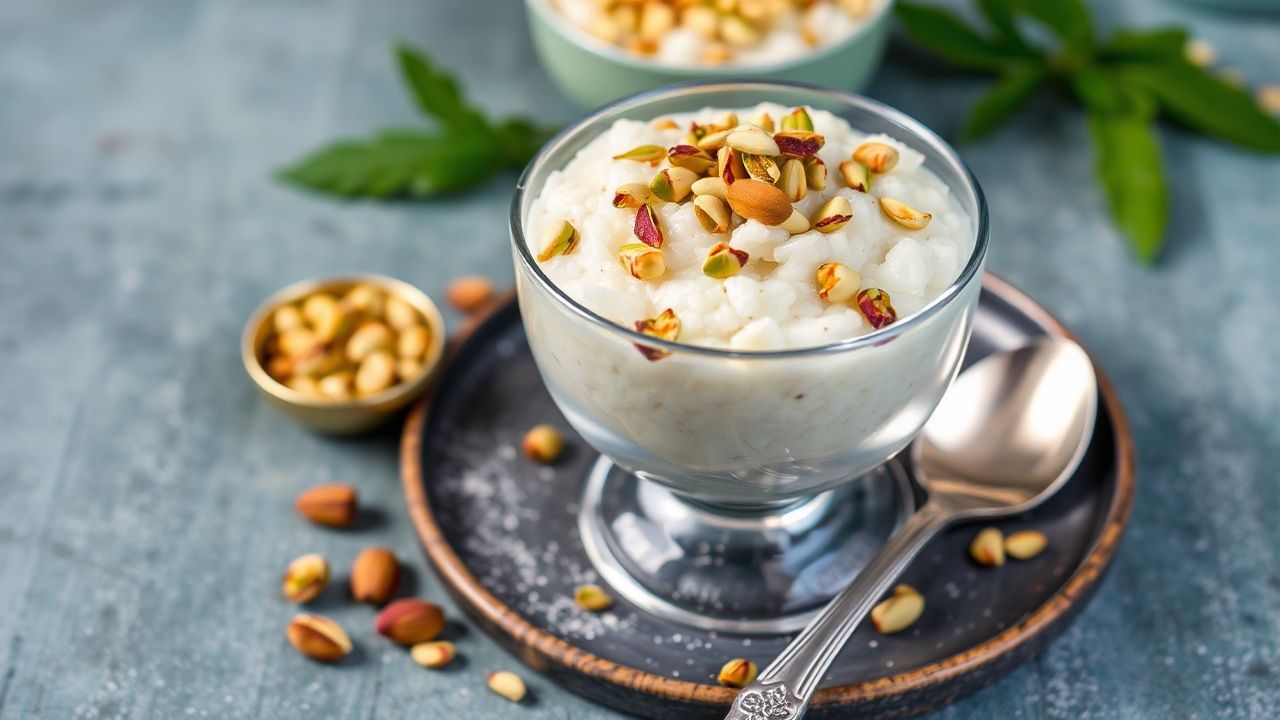
Cardamom rice pudding topped with crunchy pistachios is a classic comfort dessert that tastes refined and feels indulgent. The warm fragrance of cardamom blends into creamy rice while pistachios add a toasted, nutty crunch. This balance makes it ideal for both weeknight sweetness and special gatherings.
- Why Cardamom Changes Rice Pudding
- Prep Overview and Timing
- Ingredients for Cardamom Rice Pudding with Pistachios
- Step-by-Step Instructions
- 1) Toast the pistachios
- 2) Cook the rice with milk and cardamom
- 3) Simmer and thicken
- 4) Add sugar and salt
- 5) Finish with vanilla and optional floral water
- 6) Texture adjustments
- 7) Chill or serve warm
- 8) Garnish with pistachios
- Tips for Success (Texture, Aroma, and Consistency)
- Serving Suggestions and Pairings
- Nutritional Snapshot
- FAQ
At a Glance
- Flavor: Cardamom adds floral, citrusy warmth to creamy rice.
- Texture: Toasted pistachios provide a satisfying crunch.
- Method: Simmer slowly and stir often to reach a velvety finish.
- Make-ahead: Chilling deepens flavor; add pistachios right before serving.
Aromatic spices turn rice pudding from simple to memorable. When you cook the rice gently and let the dairy thicken, the pudding becomes spoon-coat smooth without tasting heavy. Then the pistachios deliver contrast—soft dessert, crisp topping.
Cardamom rice pudding topped with crunchy pistachios also fits many cultural tables. Rice pudding appears across several regions, and cardamom often shows up in desserts for its distinct aroma. If you want a dessert that feels both familiar and distinctive, this one delivers.
Why Cardamom Changes Rice Pudding
Cardamom brings bright aroma and a lightly sweet, spicy character. It pairs naturally with dairy because its essential oils bloom during warm cooking. For background on the spice itself, see cardamom.
Proper cardamom technique matters. Crushing pods before cooking releases oils, but removing pods later keeps heat gentle. If you use ground cardamom, add it near the end to preserve the fresh floral note.
Rice pudding relies on starch release from rice to create creaminess. Short-grain rice typically releases starch well, which helps you avoid a watery result. For more on rice varieties, you can reference rice.
Prep Overview and Timing
Good rice pudding starts with planning. You need time for simmering and for gentle thickening, plus a short cooling window before serving. With the right timing, you avoid both scorching and undercooked rice.
Use this schedule to stay on track. Keep heat at a steady medium-low so the dairy thickens without breaking. Stir frequently once the mixture starts to reduce.
Prep, cook, and total time
- Preparation: 15 minutes
- Cooking: 45 minutes
- Total time: 1 hour
Servings
Plan for about 6 moderately sized portions. If you serve in smaller cups, you can stretch it to 7–8 servings. This recipe works well for potlucks because it holds up after chilling.
Ingredients for Cardamom Rice Pudding with Pistachios
Gather ingredients before you start. When everything sits within reach, you stir with focus and maintain steady heat. That support improves texture and reduces sticking.
Focus on dairy quality and nut freshness. Whole milk and a touch of cream give the pudding its silky body. For a quick primer on pistachios, see pistachio.
Ingredient list
- 1 cup short-grain rice, rinsed and drained
- 4 cups whole milk
- 1 cup heavy cream
- 3/4 cup granulated sugar
- 4 green cardamom pods, lightly crushed
- 1 tablespoon pure vanilla extract
- 1/4 teaspoon kosher salt
- 1/2 cup shelled pistachios, roughly chopped
- 2 tablespoons unsalted butter (for toasting pistachios)
- Optional: 1 tablespoon rose water or orange blossom water
[WARNING]Pro-Caution: Avoid high heat. Boiling dairy can scorch and create a cooked-milk taste. Keep the simmer gentle, and stir often as the pudding thickens.
Also, don’t over-toast pistachios. Nuts turn bitter fast if they sit too long in a hot pan. Toast until fragrant and lightly golden, then cool them on a plate.
Step-by-Step Instructions
Follow these steps in order for the best texture. Each stage builds flavor and then sets the final consistency. If you rush one part, you often lose either creaminess or tenderness.
Use a heavy-bottom saucepan for steadier heat. That choice reduces scorching risk and supports even simmering. For general cooking technique concepts, you can review sauce methods and thickening principles.
1) Toast the pistachios
In a dry skillet over medium heat, melt the butter. Add pistachios and sauté until fragrant and lightly golden, about 3–4 minutes. Stir constantly to prevent burning.
Transfer to a plate to cool. Cooling helps the nuts stay crisp when you add them later.
2) Cook the rice with milk and cardamom
In a heavy-bottom saucepan, combine rinsed rice with 2 cups of milk and the cardamom pods. Bring to a gentle simmer over medium heat, stirring occasionally to prevent sticking.
Let the rice absorb the liquid until it becomes tender but not mushy. This phase builds the creamy base and infuses aroma early.
3) Simmer and thicken
Once the milk reduces slightly and the rice absorbs most liquid (around 15 minutes), add the remaining 2 cups milk mixed with the heavy cream. Stir frequently to keep the texture smooth.
Continue simmering until thick and creamy, stirring so the bottom doesn’t catch. The pudding should look velvety, not watery.
4) Add sugar and salt
Stir in sugar and salt. Continue simmering for 20–25 minutes, stirring gently but consistently.
At this point, the grains should remain tender and the pudding should coat a spoon.
5) Finish with vanilla and optional floral water
Remove cardamom pods, then stir in vanilla extract. If using rose water or orange blossom water, add it now so the fragrance stays bright.
Start with small amounts. Floral waters can overpower if you add too much.
6) Texture adjustments
If your pudding turns too thick, whisk in a splash of milk. Stir well, then simmer 1–2 minutes to re-blend.
If it seems too thin, cook a few more minutes and stir more often. You want a spoon-coat consistency that holds its shape.
7) Chill or serve warm
Transfer to serving bowls. Serve warm for a softer, comforting bowl of dessert.
For best flavor, chill at least 2 hours. Cold chilling also helps the pudding set into a cleaner, scoopable texture.
8) Garnish with pistachios
Right before serving, sprinkle toasted pistachios over the top. This step keeps the crunch intact.
For extra visual appeal, add a light pinch of cardamom powder or a dusting of cinnamon, if you like. Keep garnish minimal so the pistachios stay the star.
[TIP]Expert Insight:
Try cardamom in stages. Crush pods during the first simmer for aroma release, then add a pinch of finely ground cardamom near the end for a fresher top note. This two-step approach creates a more layered flavor than using only pods or only ground spice.
Tips for Success (Texture, Aroma, and Consistency)
Small technique choices make a big difference. Rice pudding works like a slow thickening process, so patience pays off. Stir often after the first reduction phase begins.
Also, keep track of liquid level. If the pudding looks too thick before the rice becomes tender, you need more milk or more simmer time. If it looks too loose at the end, you need a longer reduction.
Choose the right rice
Use short-grain rice for the creamiest texture. Short grains release more starch during simmering. That starch creates natural thickness without heavy thickeners.
Avoid rice that stays separate easily. If you use long-grain varieties, you often get less creaminess and more individual grains.
Stir with purpose
Stir often, especially as dairy thickens. Focus on the bottom and edges of the pan where milk can scorch first. Gentle, regular stirring helps you keep the texture smooth.
If you notice a skin forming, lower heat and stir right away. That skin usually comes from scorching or too-hot simmering.
Control cardamom strength
Lightly crush pods to release oils without making the flavor harsh. Remove pods before serving so guests don’t bite into intense spice.
If using ground cardamom instead, add late in cooking and taste as you go. This keeps the flavor fragrant rather than medicinal.
Make-ahead and storage
Rice pudding tastes even better after chilling. Flavors meld as the pudding rests in the refrigerator. Cover bowls tightly to prevent surface drying.
Store for up to 3 days for best quality. Add pistachios only when serving to maintain crunch and prevent sogginess.
Nut swaps
Pistachios create a distinctive flavor and color. If you need a substitute, toasted almonds or hazelnuts work for crunch.
Keep the nut size similar. Chopping too small makes them disappear into the pudding.
Serving Suggestions and Pairings
Serve cardamom rice pudding in dessert bowls or small cups for an elegant presentation. The creamy ivory color looks especially good in clear glass. A spoon with a rounded bowl helps portion neatly.
Pair it with warm or cooling drinks depending on the vibe. Mint tea balances dairy sweetness with fresh herbal notes. For a warm option, consider cardamom-spiced tea.
Optional toppings
Besides crunchy pistachios, a light dusting of cinnamon looks great. You can also add edible rose petals for a floral finish.
If you like extra brightness, scatter pomegranate arils for a juicy burst. Their tartness cuts through the sweetness and makes each bite feel balanced.
Occasion ideas
This dessert works well after family meals. It also fits holiday spreads because it holds shape after chilling. You can scale it up for parties by doubling the recipe.
When you present it, keep garnish separate until the last minute. That small step protects texture and boosts guest satisfaction.
Nutritional Snapshot
Nutrition can vary based on rice type, milk fat, and serving size. Use these numbers as a close estimate, not an exact medical value. If you need precise nutrition, calculate using your exact brands.
Here’s a practical per-serving estimate for portion planning and dessert balance.
| Nutrient | Per Serving |
|---|---|
| Calories | 340 kcal |
| Protein | 8 g |
| Carbohydrates | 48 g |
| Fat | 12 g |
For more on how nutrients support energy and satiety, see nutrition.
FAQ
What rice is best for cardamom rice pudding?
Short-grain or pudding rice works best because it releases starch as it simmers. That starch creates the creamy, spoon-coat texture people expect from rice pudding.
How do I keep the pistachios crunchy?
Toast pistachios briefly, cool them completely, then add them right before serving. If you garnish too early, moisture from the pudding softens the nuts.
Can I make cardamom rice pudding ahead of time?
Yes. Chill the pudding for at least 2 hours, and up to 3 days. Add pistachios after chilling so the topping stays crisp.
Can I use less sugar?
You can reduce sugar slightly, but do so gradually. Cardamom’s aroma still shines at lower sweetness, yet rice pudding needs enough sugar to taste balanced with dairy richness.
What can I substitute for cardamom?
If you don’t have cardamom, try a small amount of cinnamon plus vanilla for warmth. However, the flavor profile will change, since cardamom’s signature aroma is hard to replicate.
For more on spice history and usage patterns, you can review spices and how they flavor food across cuisines.
See also: Cardamom rice pudding