

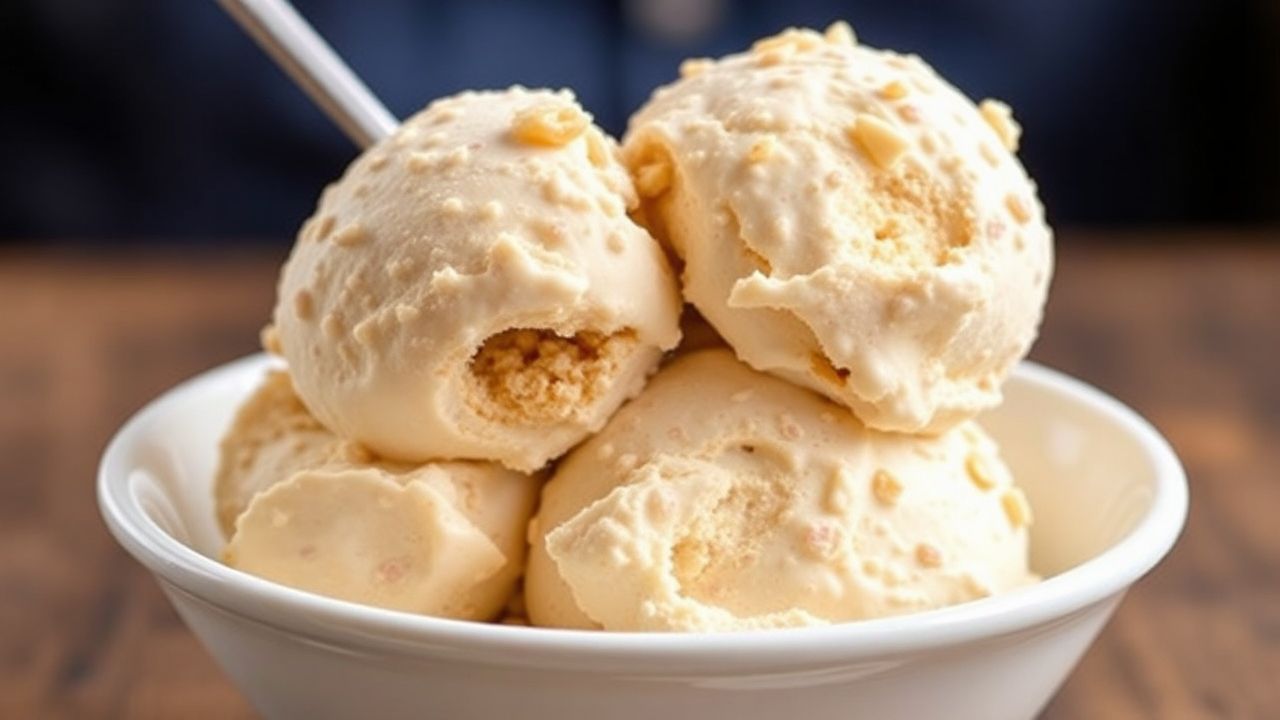
In the heart of New England’s food story sits a frozen treasure that has pleased families for generations: Grapenut ice cream. Grapenuts cereal brings a signature nutty crunch, while a classic vanilla custard base keeps every scoop smooth and creamy.
- What Is Grapenut Ice Cream?
- Origins in New England (and Why People Loved It)
- Prep and Cook Time
- Yield
- Difficulty Level
- Ingredients for Grapenut Ice Cream
- Instructions
- Expert Insight: Toasting and timing control the crunch
- Tips for Success
- Pro-Caution: Overheating custard can ruin the texture
- Serving Suggestions
- Nutrition Snapshot
- How to Store and Keep Texture
- Q&A
- What it is: Vanilla ice cream folded with Grapenuts for a crunchy bite.
- Why it works: Toasted cereal holds texture better than most flakes.
- How to make it: Use a custard for creaminess, then chill fully before churning.
- How to serve: Pair with fruit and warm syrup for a classic New England feel.
As tastes change, this dessert still earns repeat requests because it offers more than sweetness. It delivers contrast—crisp cereal texture inside a rich, cold custard—that feels both nostalgic and fresh.
Grapenut ice cream also makes sense from a food science angle. The cereal’s toasted, malt-like notes show up in the final flavor, and the crunch survives freezing far better than softer cereals. If you want a “regional classic” that stays distinct, this one earns the spotlight.
What Is Grapenut Ice Cream?
Grapenut ice cream is vanilla ice cream made with a cooked dairy base, then mixed with Grapenuts cereal just before churning. The goal is simple: keep cereal pieces crisp while the ice cream stays creamy and scoopable.
The “grapenut” part matters because Grapenuts cereal uses small, crunchy nuggets instead of large flakes. That texture plays well in frozen desserts, and it keeps the dessert from turning into a soft mash. For background on how ice cream texture forms, see Ice cream.
You’ll also notice a warm, toasted character. Grapenuts often tastes like malt and toasted grain, which blends naturally with vanilla. When you toast cereal lightly, you deepen those notes without overpowering the custard.
The “Cereal Crunch” Advantage
Most add-ins soften as they freeze, especially if they start with high moisture. In contrast, toasted cereal pieces stay dry and firm, so the bite remains crisp longer. That is why this style keeps its signature texture.
For a deeper look at grain flavor and toasting effects, check Malt. Toasting increases aroma compounds, so the cereal flavor becomes more expressive inside the ice cream.
Origins in New England (and Why People Loved It)
Grapenut ice cream rose in popularity as New Englanders embraced old-fashioned pantry ingredients. Early ice cream shops often promoted textured mix-ins, because customers wanted more than a plain scoop.
Many family traditions link this dessert to soda fountains, seaside towns, and local fairs. Even if specific shop records vary by town, the pattern holds: communities loved desserts that used recognizable ingredients from breakfast tables and baking shelves.
This aligns with the broader history of regional American desserts. New England cooking often highlights simple staples—milk, eggs, sugar, and grains—then builds flavor through technique. If you want wider context, explore New England.
Why Vintage Recipes Still Matter
Old recipes focus on balance: custard richness plus a flavor contrast. Grapenut ice cream does that automatically because cereal adds both crunch and toasted sweetness.
That balance is a key reason modern home cooks still try it. It feels “special,” but the method stays approachable—toast cereal, cook custard, chill, then churn.
Prep and Cook Time
Plan ahead, because chilling drives the final texture. When you cool the custard fully, fat and water distribute evenly, which improves churn results.
Use the timeline below so you can start today and serve tomorrow. The longest step is the overnight chill, not active work.
- Preparation: 20 minutes
- Cooking/Churning: 40 minutes
- Freezing: Minimum 4 hours (preferably overnight)
Yield
This recipe makes about 1 quart, which equals roughly 6 generous servings. If you want extra for toppings or taste-testing, plan for a little overflow.
Quart-size batch also helps the machine churn evenly. Smaller batches can churn more consistently, especially with older home ice cream makers.
Difficulty Level
This is Medium difficulty because it uses a custard. Custard recipes require gentle heat and careful tempering, but you don’t need special culinary training.
If you have made pudding or pastry cream before, you already understand the key motions: whisk yolks, temper slowly, and cook until the custard coats a spoon.
Ingredients for Grapenut Ice Cream
Choose simple, high-quality dairy and mature vanilla. When the base tastes great, the cereal crunch stands out even more.
Note: Grapenuts cereal availability varies by region. If you cannot find it, use a comparable toasted, crunchy cereal, but the classic flavor depends on Grapenuts specifically.
- 2 cups whole milk
- 2 cups heavy cream
- 3/4 cup granulated sugar
- 1/2 teaspoon kosher salt
- 6 large egg yolks
- 1 teaspoon pure vanilla extract
- 1 cup traditional Grapenuts cereal
- 2 tablespoons unsalted butter
Instructions
Follow these steps in order for the best texture. The key points are gentle heating, proper chilling, and adding the cereal at the right time.
Try to keep your pacing steady. When custard cooks too hot, it can turn grainy, and that affects mouthfeel in every bite.
- Toast the Grapenuts: In a dry skillet, melt the butter and toast Grapenuts over medium heat. Stir often until golden and fragrant, about 5 minutes. Cool completely.
- Heat milk and cream: In a heavy-bottomed saucepan, combine milk, cream, and half the sugar. Heat over medium until it just steams and looks creamy, not boiling.
- Whisk egg yolks: In a bowl, whisk yolks with the remaining sugar and kosher salt. Mix until paler and slightly thick.
- Temper the yolks: Slowly pour about one cup of hot dairy into yolks while whisking. Then return the yolk mixture to the saucepan.
- Cook custard base: Cook on low, stirring constantly, until it thickens and coats the back of a spoon. Aim for about 170°F and do not boil.
- Strain and chill: Pour custard through a fine-mesh sieve. Stir in vanilla, cover with plastic wrap pressed to the surface, then refrigerate until fully cold—at least 4 hours.
- Combine and churn: Stir cooled toasted Grapenuts into the custard. Pour into your ice cream maker and churn according to your model, typically 20–30 minutes.
- Freeze until firm: Transfer to a freezer-safe container. Freeze at least 4 hours for a scoopable texture.
[TIP]Expert Insight: Toasting and timing control the crunch
Toast the cereal only until it smells deeper and looks slightly darker. Over-toasting makes the crunch taste bitter, especially after months in the freezer.
Add the toasted pieces after the custard chills. Cold custard helps the cereal stay crisp during churn, which improves the “crunch-to-cream” ratio per scoop.
Tips for Success
Small choices create big results in frozen texture. Use these practical steps to keep your Grapenut ice cream stable and flavorful.
Most issues come from rushing the chill or using too much heat. Slow down at the custard stage, then let the base rest long enough for smooth churning.
- Toast gently so Grapenuts turns golden without burning. Toasted malt notes improve flavor while protecting crunch.
- Use fresh eggs for a cleaner custard flavor and smoother thickening.
- If you skip an ice cream maker, freeze in a shallow pan and stir vigorously every 30 minutes for 3–4 hours.
- Store leftover cereal airtight. Add fresh at serving if you want extra crispness.
- For a New England twist, substitute part of the sugar with maple syrup to add warm, woody sweetness.
[WARNING]Pro-Caution: Overheating custard can ruin the texture
Custard thickens as it warms, but boiling can scramble egg proteins and create a grainy mouthfeel. Stir constantly and keep heat low once the custard starts to coat.
If your custard looks lumpy, strain immediately and continue heating gently only if it smooths. Texture problems carry through the entire batch.
Serving Suggestions
Serve Grapenut ice cream in chilled bowls or waffle cones. Cold glass and quick plating help the cereal stay crisp and prevent melt pools.
Top with fresh blackberries or sliced peaches, then finish with a drizzle of warm maple syrup. The fruit acid balances the malt sweetness and makes every spoonful feel brighter.
For a classic pairing, serve alongside spiced apple cake or ginger molasses cookies. If you want extra crunch, add a light sprinkle of chopped toasted nuts on top right before serving.
Nutrition Snapshot
Nutritional values vary by brand and portion size, but this estimate helps with planning. Keep in mind that custard ingredients drive most calories.
Use this table for portion awareness, then taste and adjust toppings based on your preferences.
| Nutritional Info (per serving) | Calories | Protein | Carbs | Fat |
|---|---|---|---|---|
| Grapenut Ice Cream | 280 | 5 g | 30 g | 16 g |
How to Store and Keep Texture
After you freeze the batch, keep the container sealed tightly to limit ice crystals. Exposure to air makes texture rougher, even when the recipe uses good fat and custard.
For best results, eat within about 1–2 weeks. The crunch remains best early on, while cereal stays texturally distinct against the creamy base.
If you want a general guide to why ice crystals form, read Ice crystal. Better storage reduces freeze-thaw cycles and helps keep scoops smooth.
Q&A
What exactly is Grapenut ice cream?
It is vanilla ice cream with a custard base and Grapenuts cereal folded in for a crunchy texture. The cereal adds toasted, nutty flavor that stays noticeable even after freezing.
Why is Grapenuts cereal a good add-in for ice cream?
It comes as small, crunchy nuggets with a dry, toasted profile. That structure holds up inside cold dairy, so you still get a crisp bite instead of soft, diluted cereal.
Can I make it without an ice cream maker?
Yes. Freeze in a shallow container and stir every 30 minutes until firm, usually 3–4 hours. Stirring breaks up ice crystals for a smoother spoon.
How do I keep the cereal from going soft?
Chill the custard fully before churning, and use toasted cereal that cools before mixing. For maximum crunch, add a small portion of fresh cereal on top at serving.
Does Grapenut ice cream contain gluten?
Traditional Grapenuts may contain gluten depending on product formulation and cross-contact. Always check the packaging for the most accurate statement for your location.
What pairs best with this dessert?
Fruit like blackberries and peaches pairs well because their brightness balances malt-like sweetness. Warm maple syrup, toasted nuts, and spiced baked goods also work nicely.
See also: Grapenut ice cream