
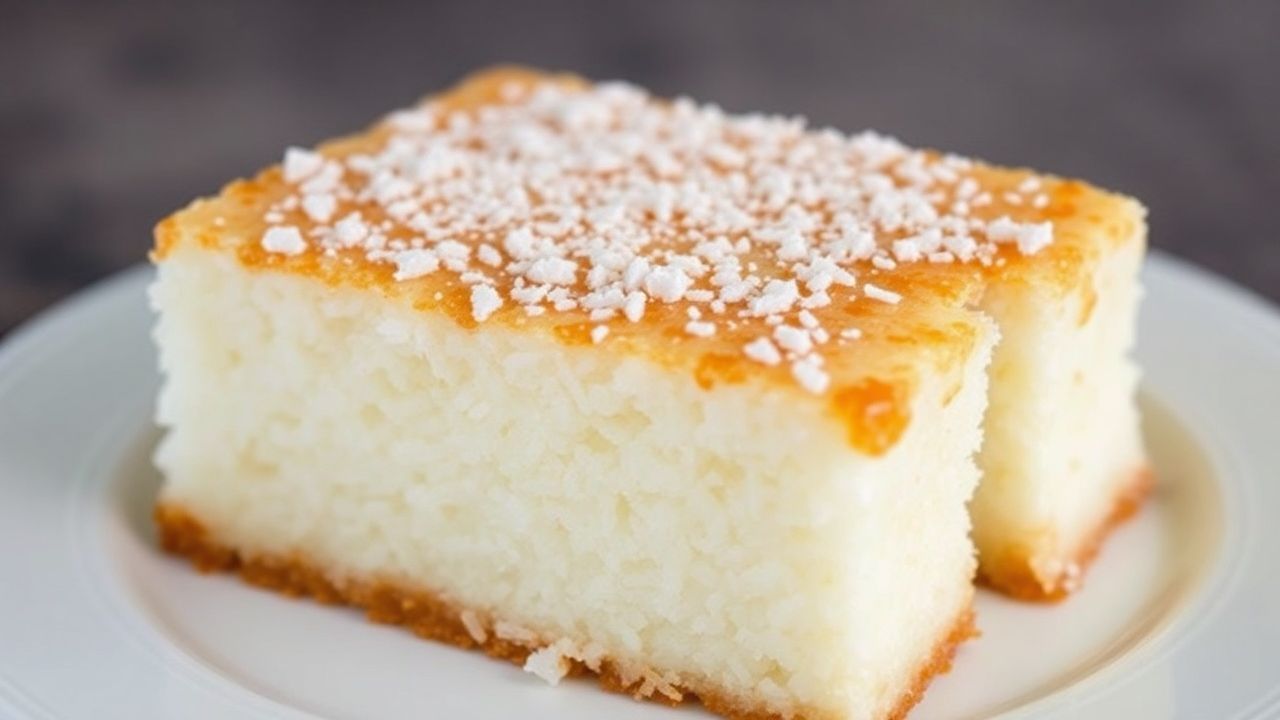
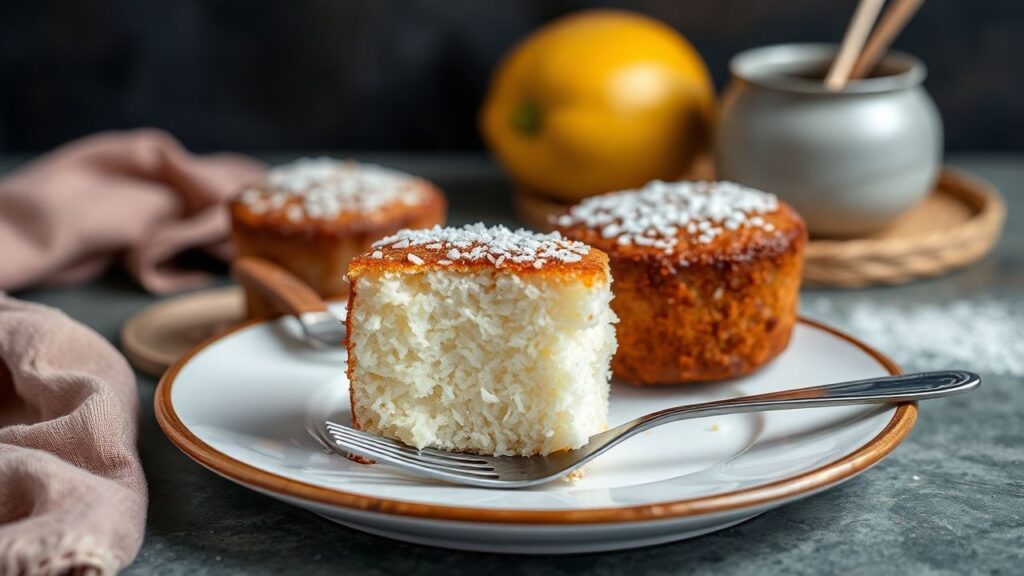
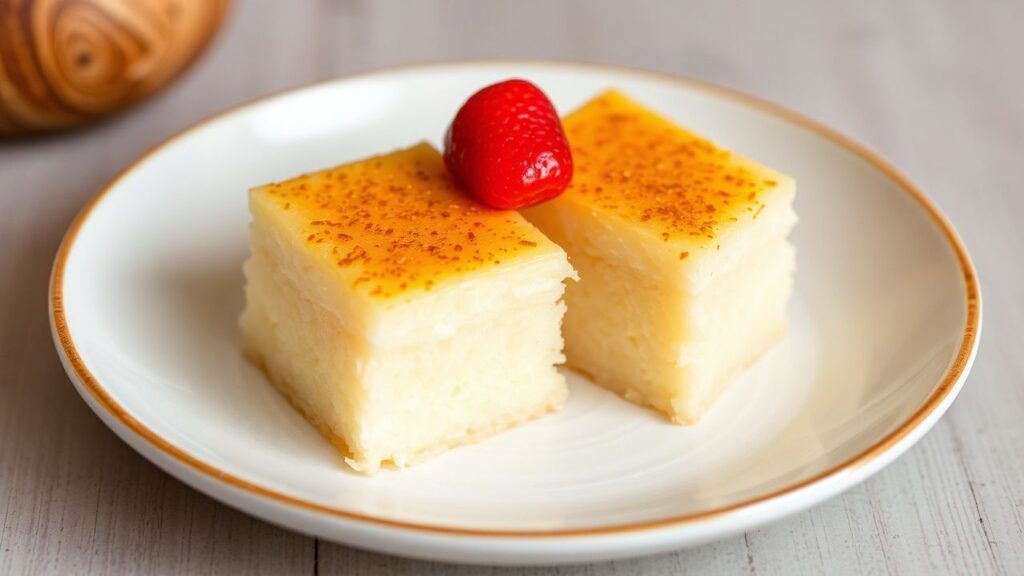
Sweet coconut rice cakes, known as bibingka, sit at the heart of Filipino holiday baking. They deliver a tender, slightly chewy crumb with a warm coconut aroma and a lightly caramelized top.
At a Glance
- Key flavor: coconut milk plus pandan for a classic tropical perfume.
- Best texture: don’t overmix; bake just until set.
- Serving cue: warm bibingka tastes best with toasted coconut or butter.
- Flexible method: you can steam or bake depending on your setup.
From neighborhood street markets to home ovens during Christmas season, bibingka stays popular because it feels celebratory and comfort-forward at the same time. Its ingredients are simple—rice flour, coconut, eggs—but the outcome tastes “special” every time. If you love Filipino desserts, you’ll recognize the profile right away: creamy, sweet, and gently fragrant.
To understand why sweet coconut rice cakes taste so memorable, it helps to know how rice-based desserts evolved across Southeast Asia. Rice flour and glutinous rice are common starch bases, and coconut shows up widely in island cuisines. For background on rice as a staple crop, see rice.
Sweet Coconut Rice Cakes (Bibingka): What They Are
Sweet coconut rice cakes are Filipino rice cakes made with glutinous rice flour and flavored with coconut milk. Many cooks add pandan for fragrance and finish with grated or toasted coconut for texture.
Bibingka also links to traditional baking rituals—often associated with the festive season and community gatherings. If you want wider context on Filipino culture and history, refer to the Philippines for geographic and cultural background.
Prep and Cook Time
Use this schedule when you want bibingka for dessert, snack, or a holiday table spread. The time window below assumes a standard oven and an 8-inch pan.
Quick targets: you’ll mix in under 20 minutes, then bake until the top sets and edges turn lightly golden. Adjust a few minutes based on your oven’s hot spots.
- Readiness: 20 minutes
- Cooking: 40 minutes
- Total: 1 hour
Yield and Difficulty Level
This recipe makes a small batch for sharing, which helps keep the texture soft and fresh. Plan on 8 generous slices if you cut after the cake cools slightly.
If you’re new to Filipino rice desserts, start once and focus on mixing technique and baking time. You can master the method quickly because the batter behaves predictably.
Yield: Makes 8 generous servings.
Difficulty: Easy to Medium — ideal for home cooks who want classic results.
Key Ingredients That Bring Out Authentic Bibingka Flavor
Every ingredient plays a job. Rice flour creates chew; coconut milk adds moisture; eggs add structure; pandan adds aroma; and a touch of butter helps browning.
For a broader look at coconut as a crop used in cooking across many regions, review coconut. Understanding the ingredient helps you judge what to taste for while cooking.
- Glutinous rice flour: the foundation for that soft, chewy bite.
- Coconut milk: creamy richness with natural sweetness and aroma.
- Sugar: balances coconut flavor without overpowering it.
- Eggs: set the batter so the cake slices cleanly.
- Salt: sharpens sweetness and improves overall taste.
- Unsalted butter: supports golden color and a light nutty note.
- Pandan leaves (optional): classic fragrant notes that make bibingka recognizable.
- Fresh or toasted coconut: adds a crunchy contrast and boosts coconut aroma.
Below is an ingredient list you can follow exactly.
- 1 ½ cups glutinous rice flour
- 1 cup coconut milk (fresh or canned)
- ¾ cup granulated sugar
- 2 large eggs
- ¼ teaspoon salt
- 2 tablespoons melted unsalted butter
- 2 pandan leaves (optional) — tie into a knot or chop fine
- Grated fresh coconut or toasted coconut flakes — for garnish
Step-by-Step Guide for Soft, Flavorful Sweet Coconut Rice Cakes
Good bibingka comes from steady heat and gentle batter handling. Overmixing can make the cake tough, and underbaking can leave a wet center.
Follow the steps in order, and use visual cues. Once you see the top set and lightly brown, you’re very close.
- Preheat your oven to 350°F (175°C). Grease an 8-inch round cake pan or line it with banana leaves for a more classic aroma.
- Mix the dry base: whisk glutinous rice flour, sugar, and salt until evenly combined.
- Mix the wet base: beat eggs, then slowly whisk in coconut milk until smooth.
- Infuse pandan: steep pandan in the coconut milk mixture for about 10 minutes, then strain out leaves before combining.
- Combine wet and dry: stir until smooth and thick. Stop as soon as the batter looks uniform.
- Prepare the pan: pour batter into the lined or greased pan. Drizzle melted butter over the top.
- Bake for 35–40 minutes, or until a toothpick comes out clean and the top looks lightly browned.
- Cool briefly: let it rest for a short time so it sets. Then unmold and slice.
- Garnish: finish with grated or toasted coconut flakes.
Want a deeper understanding of how ovens and heat affect baked textures? Baking science often comes down to starch gelatinization and protein setting. For reference on heat-driven changes in food, see baking.
Serving Tips and Creative Variations
Sweet coconut rice cakes taste best warm, when the coconut aroma still feels bold. Serve slices with simple toppings instead of heavy sauces.
If you want to experiment, do it in a way that keeps the core texture intact. Small add-ins work better than big swaps.
Classic Presentation
Brush the top with a little butter, then sprinkle sugar or add toasted coconut. This boosts the “caramel-like” aroma without making the cake greasy.
For a dessert tradition reference, you can explore bibingka for the wider context of the dish name and regional variations.
Flavor Boost Options
Some cooks add macapuno (young coconut sport) for extra chew and sweetness. Others add salted egg for a savory-leaning contrast, but keep the amount moderate so it doesn’t overpower coconut.
If you’re curious about eggs in baking and why they help structure, check eggs in cooking. Eggs act as a binder and set during heating.
Textural Twist
To add crunch, fold in toasted cashews or pumpkin seeds. Add-ins should be chopped fine so they distribute evenly through each slice.
Toast nuts or seeds first. That step improves flavor and reduces the chance of a “raw” taste in the finished cake.
Vegan-Amiable Adjustments
You can make a vegan version by replacing eggs with a suitable egg substitute that still supports structure. Use coconut oil instead of butter if you want to keep it fully plant-based.
Since egg substitutes differ in performance, bake slightly longer and check doneness with a toothpick.
Small method choices create big differences in how the cake smells and tastes. Keep the batter thick, bake until just set, and top with toasted coconut for the finishing crunch.
Recommended Pairings
A cup of hot ginger tea (salabat) pairs well because its spice brightens coconut sweetness. For a caffeine-free option, choose herbal tea with mild flavor.
If you prefer coffee or chocolate drinks, keep them rich but not overly bitter. The goal stays simple: balance sweetness and keep the coconut flavor in front.
Overbaking also hardens the outer layer, which makes slices feel dry. Start checking around 35 minutes, then adjust based on your pan and oven.
Chef’s Notes: Tips for Consistent Success
Use these notes to prevent common issues like a gummy center or a rubbery crumb. Bibingka behaves best when you respect both mixing and bake time.
Small corrections, like steeping pandan properly or adding garnish right before serving, can raise the overall experience.
- For the best aroma, use fresh coconut milk and fresh pandan leaves.
- If pandan is unavailable, pandan extract can help, but add cautiously.
- Check doneness at 35 minutes and bake only until set.
- Cool slightly before slicing for cleaner pieces.
- Make-ahead: store in an airtight container up to 3 days, then reheat gently.
When reheating, aim for warming rather than browning. Gentle heat restores softness without drying the cake.
| Nutrient | Per Serving |
|---|---|
| Calories | 210 kcal |
| Protein | 3 g |
| Carbohydrates | 35 g |
| Fat | 6 g |
If you want more Filipino dessert ideas, use your site’s internal collection pages to keep readers moving. You can also reference general food science topics to strengthen trust. For a quick primer on sugars used in desserts, see sugar.
Discover more traditional Filipino desserts in our Filipino Desserts Collection. For additional reference on rice desserts worldwide, consult rice dishes and compare techniques across cuisines.
FAQ
What makes sweet coconut rice cakes taste “bibingka-like”?
Sweet coconut rice cakes rely on glutinous rice flour for chew and coconut milk for a creamy tropical flavor. Pandan adds a signature fragrance, and toasted coconut on top boosts aroma and texture.
Can I steam sweet coconut rice cakes instead of baking?
Yes, steaming works if your batter stays thick and you cook until the center sets. Baking typically creates more browning on top, while steaming keeps a softer surface.
Why did my bibingka turn out gummy in the middle?
Usually, the cake needed more time or your oven temperature ran low. It can also happen if you mixed too wetly or used coconut milk that produced a looser batter.
How do I store sweet coconut rice cakes for the best texture?
Cool the cake, then store in an airtight container. Keep it at room temperature up to 2–3 days, or refrigerate for longer storage, then reheat gently.
Can I reduce the sweetness without changing the texture?
Yes. Lower the sugar slightly, but keep the ratio balanced so the eggs and rice flour still set properly. If you reduce sugar a lot, the cake may taste flatter and feel less “caramelized.”
See also: sweet coconut rice cakes