
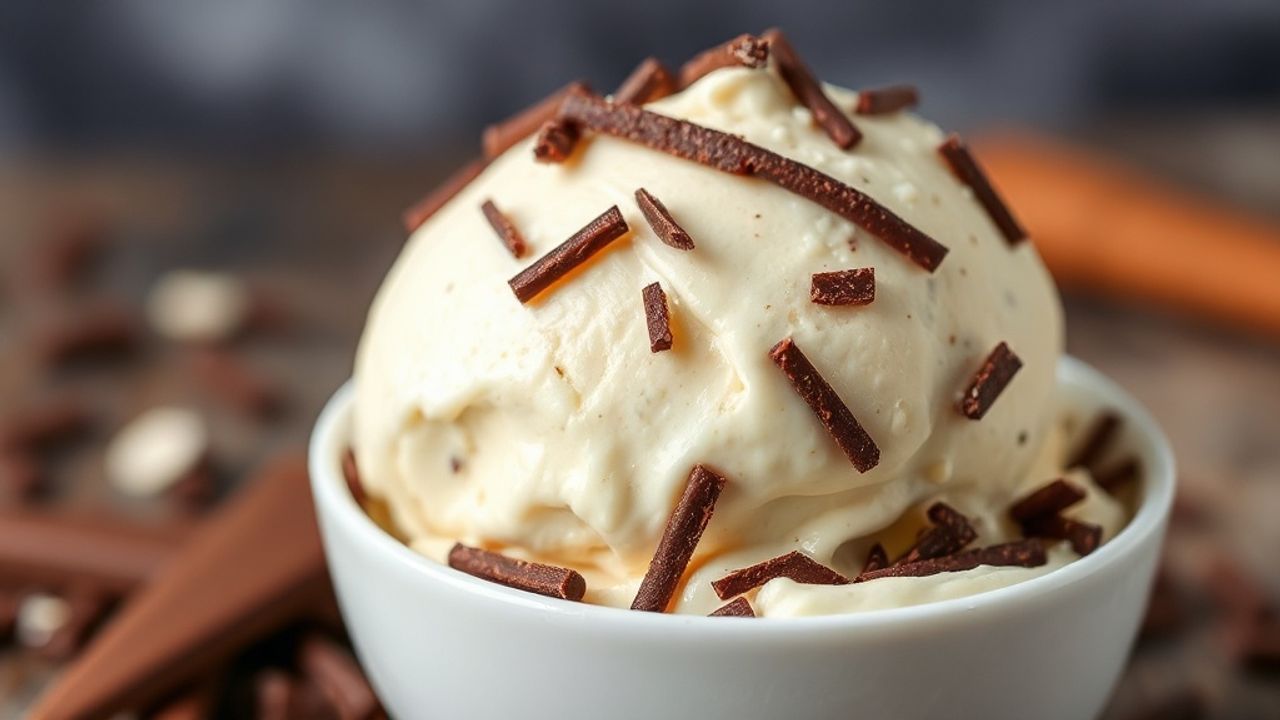
Stracciatella gelato blends creamy vanilla with thin chocolate shards, then freezes them so each bite delivers a smooth base and a crisp finish. If you love classic Italian frozen desserts, this flavor hits the sweet spot between elegance and comfort.
- The Origins and Evolution of Stracciatella Gelato in Italian Cuisine
- Prep and Cook time
- Yield
- Difficulty Level
- Ingredients
- Instructions
- Tips for Success: Expert advice for Stracciatella Gelato
- Serving Suggestions: Elevate the Experience
- Q&A
- What exactly is Stracciatella gelato?
- How did Stracciatella gelato get its name?
- Why does the chocolate turn into shards instead of staying as chips?
- Is Stracciatella gelato the same as Stracciatella soup?
- Can I make Stracciatella gelato without an ice cream maker?
- Wrapping Up
- Signature look: marbled ribbons of dark chocolate in vanilla.
- Key technique: add chocolate during the final churning minutes.
- Best texture: chill the custard fully before freezing.
- Flavor match: bittersweet chocolate balances rich dairy.
This guide shows how stracciatella gelato works, how it evolved in Italian kitchens, and how you can make it at home with reliable results. You will also find timing, ingredient choices, and serving ideas that support a creamy scoop with crisp shards.
The Origins and Evolution of Stracciatella Gelato in Italian Cuisine
Stracciatella gelato takes its name from the Italian idea of shredding or tearing, which fits the way the chocolate breaks into irregular shards. You can see a clear connection to how Italian cooks use simple ingredients and focused methods to create strong sensory contrast.
In Italy, gelato producers often develop flavors by adapting textures. For example, chocolate can behave very differently depending on when you add it to the freezing base. That timing turns chocolate from “chunks” into “ribbons,” which is exactly what makes stracciatella gelato recognizable.
To place this flavor in context, it helps to know how Italian frozen desserts rely on milk, eggs, sugar, and controlled freezing. Gelato differs from many ice creams because it typically uses more milk than cream and freezes at a lower rate, which affects body and melt. Learn the broader background in gelato.
You may also see the name “stracciatella” linked to other Italian dishes. While those foods do not taste the same as gelato, the shared idea of “torn” pieces explains the naming logic. For reference on Italian naming patterns and regional cuisine, see Italian cuisine.
Prep and Cook time
Plan ahead for the custard chill step, because texture depends on it. You will cook the base briefly, then cool it fully before churning.
- Preparation: 20 minutes
- Chilling: 4 hours (or overnight)
- Churning: 30 minutes
- Total Time: Approximately 5 hours (active time is much shorter)
Yield
This recipe makes a small batch that freezes smoothly and stays scoopable. It works well for testing your chocolate-shard technique.
Difficulty Level
Intermediate: You need patience during chilling and skillful chocolate timing to get crisp ribbons instead of sticky chunks. Focus on smooth custard cooking and precise addition during churning.
As a general reference for how eggs set in cooked custards, review custard. That science helps you understand why you should avoid boiling.
Ingredients
Use full-fat dairy for the best body, and choose a dark chocolate with enough cocoa solids to set into shards. If you want a stronger bittersweet contrast, pick higher cacao.
- 2 cups whole milk
- 1 cup heavy cream
- 3/4 cup granulated sugar
- 5 large egg yolks
- 1 vanilla bean, split and seeds scraped (or vanilla extract as a substitute)
- 4 oz high-quality dark chocolate (at least 70% cacao), finely chopped or grated
- Pinch of salt
Instructions
Start with a gentle custard. Cook it just until it thickens, then strain it for a smooth base that churns evenly.
- In a medium saucepan, combine milk, cream, and the vanilla bean pod. Heat over medium until steaming but not boiling, about 5–7 minutes.
- In a heatproof bowl, whisk the egg yolks, sugar, and salt until pale and slightly thickened.
- Temper the yolks: slowly pour about 1/2 cup of warm milk into the bowl, whisking constantly to prevent curdling.
- Return yolk mixture to the saucepan. Cook on low heat, stirring, until the custard coats a spoon, around 170°F (do not boil).
- Remove from heat and strain through a fine sieve to remove any cooked egg bits and the vanilla pod.
- Cool the custard to room temperature, then cover and refrigerate at least 4 hours or overnight. Full chilling improves churn performance and flavor clarity.
- Churn the custard in your ice cream maker until it reaches a soft-serve texture.
- Meanwhile, finely chop or grate the dark chocolate. Add chocolate shards during the last 5 minutes of churning, so they freeze fast and form crisp ribbons.
- Transfer to a freezer-safe container, smooth the top, and freeze for 2 hours or until firm enough to scoop.
For a deeper look at why custards thicken and set, visit vanilla flavor to connect ingredient choice with expected taste. For the chocolate behavior in cold bases, the key idea is timing, not special magic.
Tips for Success: Expert advice for Stracciatella Gelato
Small changes matter in frozen desserts. If you treat the process like a system—custard thickness, chill time, and chocolate timing—you will get consistent shards every batch.
- Use fresh, high-quality dairy and fresh eggs for a clean custard flavor.
- Temper carefully. Tempering keeps the yolks smooth and supports a silky base.
- Chill fully before churning. Cold custard helps the ice cream maker form smaller crystals.
- Add chocolate gradually near the end of churning to avoid clumping.
- If you prefer a dairy-free option, test swaps in separate batches, because texture and melt can shift quickly.
- For stronger vanilla, infuse overnight by letting the vanilla bean steep in the warm dairy before cooking the custard.
- No ice cream maker? Use a shallow container and stir every 25–30 minutes until thickened and set.
When you strain the custard, you remove small bits that could become unpleasant “specks.” That step also improves mouthfeel, which matters for a dessert defined by smooth cream.
Serving Suggestions: Elevate the Experience
Serve stracciatella gelato slightly cold, not rock-hard, so the vanilla tastes bright and the chocolate ribbons crack pleasantly. Chilled bowls help the ice cream hold its shape.
For a classic Italian pairing, try biscotti or crunchy cookies. The contrast works because the gelato gives you creaminess and the cookie adds dry snap.
Garnish ideas that stay on-theme:
- Fresh mint leaves for aromatic freshness
- Light dusting of cocoa powder or finely grated chocolate
- Crunchy toasted hazelnuts or almonds for nutty depth
- A small drizzle of warm chocolate sauce or a splash of espresso for a café-style finish
If you want to understand how chocolate flavor develops from cocoa to finished taste, read about chocolate. It helps explain why higher cacao often tastes deeper and less sweet.
Also consider a pairing drink like Vin Santo for a dessert wine vibe, and reference Vin Santo if you want a quick overview.
| Nutritional Facts (per serving) | Amount |
|---|---|
| Calories | 280 kcal |
| Protein | 5 g |
| Carbohydrates | 26 g |
| Fat | 18 g |
If you want more variety in your Italian frozen-dessert rotation, compare textures across flavors. Many people love stracciatella beside pistachio or hazelnut because the nutty notes echo chocolate’s roast character.
For broad background on Italian sweets and where gelato fits among classics, explore Italian pastry. Then use your own taste tests to decide which pairings feel most “authentic” to you.
Q&A
What exactly is Stracciatella gelato?
Stracciatella gelato is a frozen Italian dessert that combines a silky vanilla base with dark chocolate shards. The chocolate breaks into thin, crisp pieces and freezes throughout the custard.
How did Stracciatella gelato get its name?
The name “stracciatella” connects to the Italian idea of shredding or tearing. The gelato reflects that concept through the irregular chocolate shards mixed into vanilla.
Why does the chocolate turn into shards instead of staying as chips?
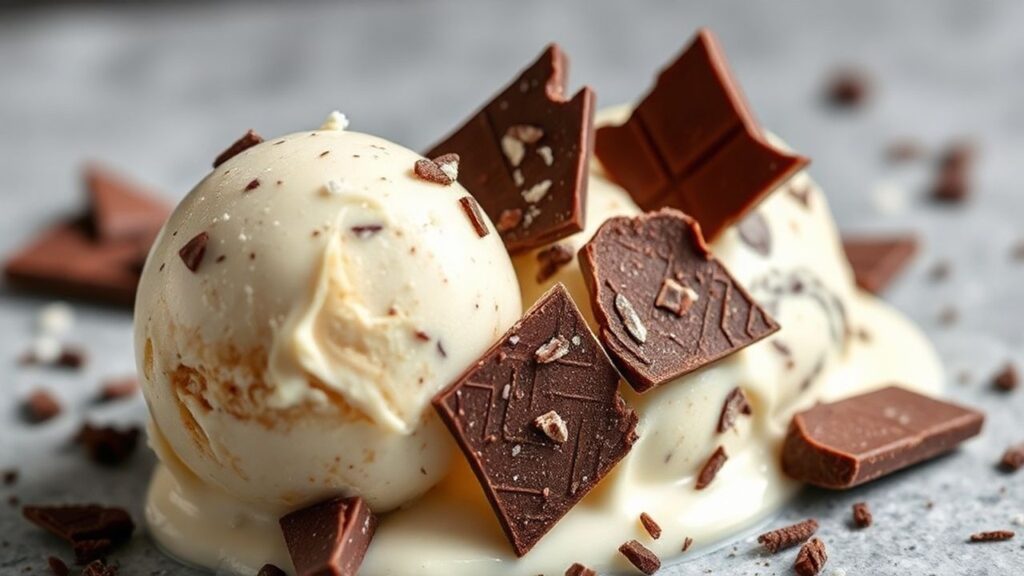
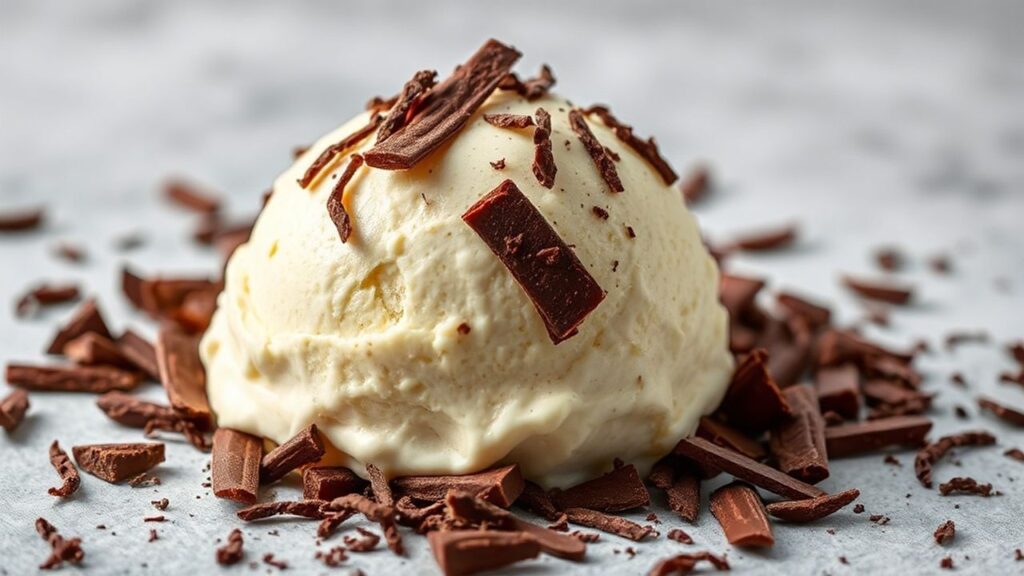
Chocolate shards form because you add chocolate while the mix churns and is cold enough to set quickly. The motion spreads pieces evenly, and the cold base helps them harden into crisp ribbons.
Is Stracciatella gelato the same as Stracciatella soup?
No. Stracciatella soup is a savory dish with egg “shreds” in broth. Stracciatella gelato is sweet and uses chocolate pieces infused into a vanilla custard base.
Can I make Stracciatella gelato without an ice cream maker?
You can, but you must stir for better texture. Freeze the base in a shallow container and stir every 25–30 minutes until thickened and scoopable, then fold in chocolate during a late thickening stage.
Wrapping Up
Stracciatella gelato delivers a simple promise: creamy vanilla and crisp chocolate shards in every spoonful. When you chill the custard fully and add chocolate near the end of churning, you protect the signature marbled ribbon effect.
Make it once, taste the difference, then adjust your chocolate choice to match your sweetness preference. With the right timing, you can turn a classic Italian flavor into a repeatable homemade ritual.
See also: Stracciatella gelato