

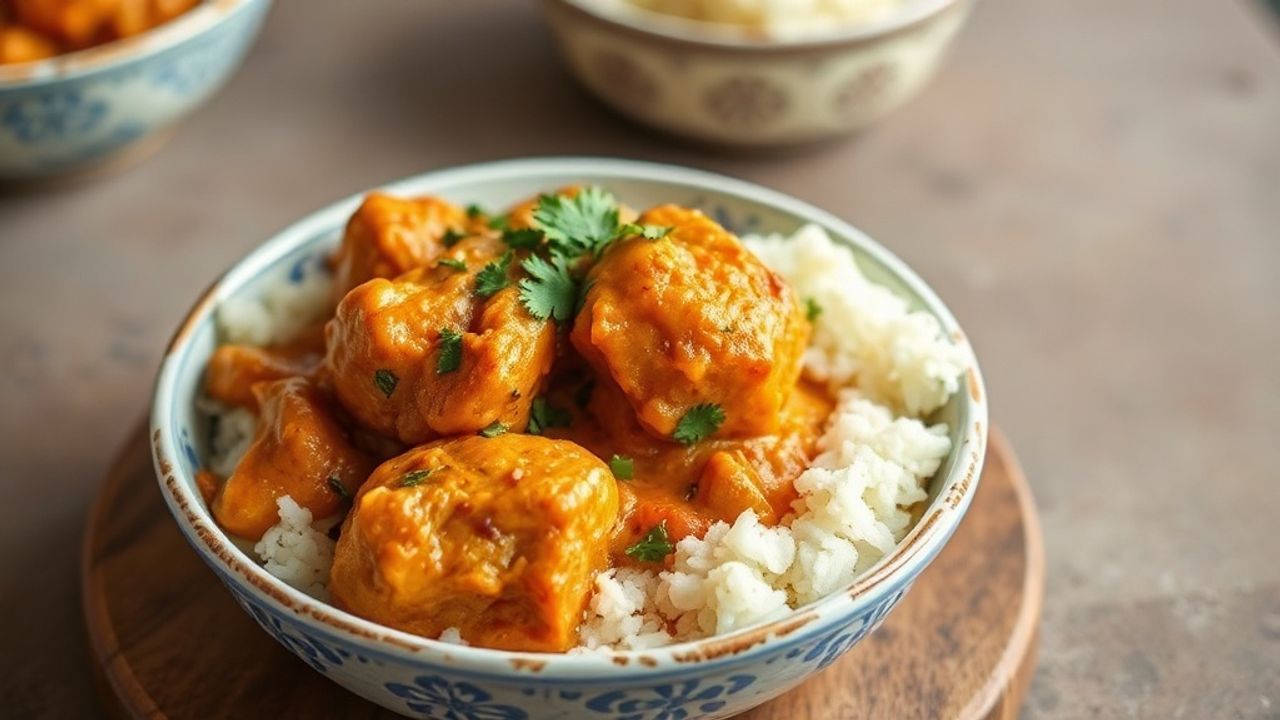
Butter Chicken remains one of the most celebrated dishes in Indian cuisine—rich, silky, and balanced between tang and warmth. This guide explains origins, sauce technique, plating, and a dependable home recipe so you can reproduce the classic with confidence.
- Origins and Evolution of Butter Chicken
- Essential Ingredients and Why They Matter
- Mastering the Rich and Creamy Sauce
- Protein Prep: Marination and Charring
- Perfect Pairings and Serving Tips
- Innovative Twists that Respect Tradition
- Recipe Details
- Chef’s Tips for Consistent Results
- Nutritional Information (Per Serving)
- Related Recipes and Internal Resources
- FAQ
- Origin: Born in Delhi as murgh makhani, created to reuse tandoori chicken while adding a creamy tomato gravy.
- Core technique: Slow-cooked tomato base, tempered spices, and finish with butter and cream for that signature texture.
- Pairings: Serve with basmati rice or naan to balance richness and add textural contrast.
- Make-ahead advantage: Flavors deepen overnight—reheat gently on low heat.
Origins and Evolution of Butter Chicken
Butter Chicken, known in Hindi as murgh makhani, originated in Delhi in the mid-20th century. Chefs at Moti Mahal combined leftover tandoori chicken with a creamy tomato sauce to produce a dish that balanced smoke, acidity, and fat.
Regional cooks adapted the recipe, changing spice ratios, marination times, and fat sources. Despite these variations, the dish’s core remains: tender, lightly charred chicken immersed in a buttery, tomato-forward gravy.
Essential Ingredients and Why They Matter
Ingredient selection shapes flavor and texture. Use ripe tomatoes or a concentrated canned puree to provide sweet acidity that carries the spices. For aromatic depth use a measured blend like garam masala rather than an undefined mix; its volatile oils release at the right temperatures.
Butter and cream create the emulsion that gives the sauce its silkiness. Choose unsalted butter to control sodium and full‑fat cream for mouthfeel. For rice pairing, long-grain basmati rice offers the ideal aromatic lift and separate grains.
Mastering the Rich and Creamy Sauce
Start by caramelizing onions to build savory backbone. Temper whole spices briefly in hot fat to bloom essential oils and then add the pureed tomatoes; slow-simmer until the raw acid evaporates and natural sugars concentrate.
Blend or strain the sauce for a smooth texture before finishing with butter and cream. Add dairy off heat or on the lowest setting to prevent curdling and preserve the glossy emulsion.
Spice Timing and Heat Control
Add powdered spices early when cooking tomatoes so they integrate and lose rawness. Reserve delicate fenugreek leaves (kasuri methi) for the end to preserve aroma and avoid bitterness.
To adjust heat, modulate chili quantity in the marinade and the sauce separately. Finish with a small pinch of sugar if tomatoes taste overly acidic; this balances the profile without masking spices.
Protein Prep: Marination and Charring
Marinate chicken in yogurt, lemon, and spice to tenderize and infuse flavor. The lactic acid in yogurt loosens muscle fibers while spices penetrate the meat for layered taste.
Sear or broil the marinated pieces briefly to introduce char and Maillard flavors. This step recreates the original tandoor’s smoky notes using accessible kitchen techniques like a hot grill or high‑heat broiler.
Perfect Pairings and Serving Tips
Butter Chicken benefits from neutral, absorbent carbs. Serve with steaming basmati rice or pillowy naan to sop up the sauce. Balance richness with crisp, acidic sides like kachumber salad—diced cucumber, tomato, and onion with lemon.
Garnish strategically: a swirl of cream, a drizzle of melted butter, and freshly chopped coriander brighten the plate and introduce fresh aromatics before serving.
Innovative Twists that Respect Tradition
Small, controlled tweaks can add interest while honoring the classic. Incorporate a tablespoon of cashew paste for extra body or a teaspoon of smoked paprika to deepen the smoky notes without upending the profile.
For a lighter take, swap heavy cream for coconut cream in modest amounts to introduce a subtle tropical tone. Keep the spice balance conservative so the dish remains approachable.
Recipe Details
Readiness: 20 minutes | Marinating: 1 hour (overnight preferred) | Cooking: 35 minutes | Total: 1 hr 55 min.
Yield: Serves 4 generously. Difficulty: Medium — suitable for cooks familiar with basic Indian spice work.
Ingredients
600 g boneless chicken thighs, cut into bite-sized pieces. 1 cup plain yogurt; 5 ripe tomatoes pureed; 1/2 cup heavy cream; 3 tbsp unsalted butter (divided); spices and aromatics as listed below.
- 2 tbsp lemon juice, 2 tsp garam masala, 1 tsp turmeric, 1 tsp chili powder
- 1 tbsp ginger‑garlic paste, 1 large onion (finely chopped), 1‑2 green chilies (optional)
- 1 tsp cumin seeds, salt to taste, fresh coriander for garnish, 1 tbsp cooking oil
Instructions
- Marinate chicken: Combine yogurt, lemon juice, 1 tsp garam masala, turmeric, chili powder, and ginger‑garlic paste. Coat the chicken and refrigerate at least 1 hour or overnight for depth.
- Sauté: Heat oil and 2 tbsp butter. Add cumin to sizzle, then onions and chilies. Cook until golden brown, about 8 minutes, stirring to avoid burning.
- Tomato base: Add pureed tomatoes and salt. Simmer uncovered for 12–15 minutes until the sauce thickens and oil separates slightly.
- Char the chicken: Sear marinated pieces in a hot pan or broiler until lightly browned and nearly cooked through for smoky flavor.
- Combine and finish: Add chicken to the sauce, cover and cook on low 10 minutes. Off the heat, stir in cream and remaining butter slowly to finish a smooth emulsion.
- Serve: Garnish with coriander and a drizzle of cream. Pair with rice or bread and serve hot.
Chef’s Tips for Consistent Results
Tip 1: Use thigh meat for juiciness; breast will dry faster. Cut uniform pieces to ensure even cooking.
Tip 2: Toast whole spices briefly in fat to unlock aroma, then add aromatics. This yields a clearer, spiced profile without raw spice bitterness.
If the sauce breaks or looks grainy after adding cream, gently whisk in a tablespoon of warm water while on the lowest heat to re-emulsify. Avoid high heat to prevent separation.
For best make-ahead practice, refrigerate the finished curry overnight. Reheat slowly on low heat and adjust seasoning before serving.
Nutritional Information (Per Serving)
Estimated per serving: 420 kcal, Protein 35 g, Carbohydrates 10 g, Fat 28 g. Values vary with exact ingredients and portion sizes.
For lower fat, reduce butter and substitute half the cream with evaporated milk; however, expect slight changes in mouthfeel and flavor intensity.
Related Recipes and Internal Resources
Explore complementary recipes and technique pages to expand your meal. Check our step-by-step guide to homemade flatbreads for pairing ideas at homemade naan guide.
Learn tandoor-style charring techniques and alternative grills in our technique piece at tandoori techniques. These internal resources help you reproduce authentic texture without specialized equipment.
FAQ
What is the difference between butter chicken and tikka masala?
Butter Chicken (murgh makhani) typically features a creamier, butter-forward sauce with a sweeter tomato profile. Chicken Tikka Masala often has a more pronounced spice blend and may be tangier or more tomato-accented depending on regional styles.
Can I make Butter Chicken vegetarian?
Yes. Substitute paneer or firm tofu for chicken and follow the same marination and sauce steps. Use light searing for paneer to maintain texture and avoid overcooking.
How long should I marinate the chicken?
At minimum one hour is effective, but overnight marination (6–12 hours) yields deeper flavor and improved tenderness. Keep marinated chicken refrigerated until cooking.
Is it necessary to char the chicken?
Charring adds a smoky note that reflects the original tandoori method. If you lack a grill, searing in a very hot pan or using the broiler replicates the effect sufficiently.
How do I stop the sauce from separating?
Finish with fats off heat or on the lowest setting, and stir slowly. If separation occurs, add a tablespoon of warm water and whisk gently to re-emulsify the sauce.
For deeper reading on related culinary terms, consult the authoritative entries on tandoor and fenugreek to understand traditional techniques and flavor agents used in this cuisine.
Recreate the classic by controlling spice timing, using ripe tomatoes, and finishing with butter and cream. With these steps you will consistently achieve a balanced, restaurant-quality butter chicken at home.
See also: Butter Chicken