
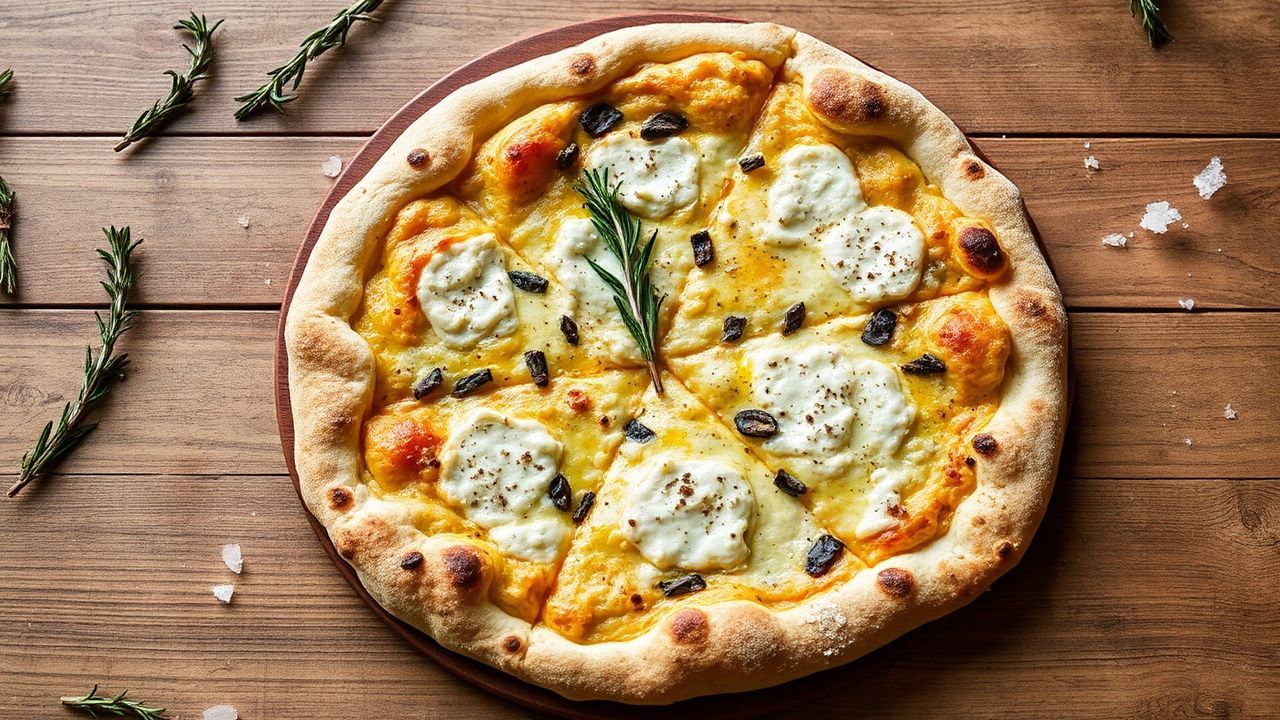
Pizza Bianca is a restrained Italian flatbread that balances crisp crust, light crumb and fragrant olive oil. This recipe emphasizes technique: correct hydration, deliberate dimpling and a hot bake to yield classic texture and flavor.
- Prep and Cook Time
- Yield
- Difficulty Level
- Ingredients
- Instructions
- 1. Activate the Yeast
- 2. Make the Dough
- 3. Knead the Dough
- 4. First Rise
- 5. Shape the Dough
- 6. Second Rise & Dimple
- 7. Bake
- 8. Finish and Serve
- Notes on Technique
- Tips for Success
- Serving Suggestions
- Nutritional Overview
- Q&A
- Can I use all-purpose flour instead of bread flour?
- Why isn’t my dough rising?
- Can I make the dough ahead of time?
- How do I get a crisp crust without a pizza stone?
- Should I add salt before or after baking?
- The Conclusion
- FAQ
- Key takeaway: Use bread flour and controlled hydration to produce an airy, open crumb.
- Technique focus: Dimpling creates oil pockets that concentrate flavor and keep the crumb moist.
- Finish right: Always add flaky sea salt after baking to preserve crunch and visual contrast.
- Bake hot: A preheated stone or steel gives rapid oven spring and a blistered base.
Prep and Cook Time
Prep Time: 20 minutes active, plus 1.5–2 hours for the first rise. The timeline lets the yeast develop flavor without complicated scheduling.
Cook Time: 15–20 minutes in a very hot oven. A 450°F (230°C) bake on a preheated stone or steel gives rapid color development while protecting the airy interior.
Yield
This formula makes one large Pizza Bianca, roughly eight servings when cut into rustic strips. The ratio and technique scale directly, so doubling the batch keeps the same handling and fermentation times.
Store leftovers at room temperature for up to two days or refresh in a hot oven for best texture. Reheating on a hot surface restores crispness faster than a microwave.
Difficulty Level
Easy: skillful handling matters more than complicated ingredients. The home baker focuses on dough feel, controlled rises and a hot bake rather than advanced techniques.
Follow the hydration, mixing and dimpling steps to replicate professional results. Small adjustments—temperature, flour absorption—account for most variation.
Ingredients
For the Dough:
- 500 g (about 4 cups) bread flour
- 360 ml (1.5 cups) lukewarm water (105–115°F / 40–46°C)
- 7 g (1 packet) instant or active dry yeast
- 10 g (2 tsp) fine sea salt
- 15 ml (1 tbsp) olive oil
For the Topping:
- 2–3 tbsp high-quality extra virgin olive oil
- 2 tbsp fresh rosemary needles, finely chopped
- 1–2 tsp flaky sea salt (Maldon-style)
Instructions
1. Activate the Yeast
Combine lukewarm water and yeast in a small bowl and wait 5–10 minutes until foamy. Use instant yeast directly in the flour if you prefer to skip proofing.
This simple check confirms yeast viability and avoids wasted time with inactive yeast. Maintain water temperature carefully so you do not kill the yeast.
2. Make the Dough
Mix bread flour and fine sea salt in a large bowl. Add the yeast mixture and 1 tablespoon of olive oil, then fold until a shaggy dough forms.
Cover and rest 10 minutes for autolyse-like hydration; this improves extensibility and reduces kneading time. Resting helps the dough develop structure with less work.
3. Knead the Dough
Knead by hand 8–10 minutes until smooth and elastic, or use a stand mixer with a dough hook for 5–7 minutes. Aim for a slightly tacky feel, not sticky.
Check windowpane strength: a well-kneaded dough stretches thin without tearing. If the dough resists, give it one more minute of kneading and a short bench rest.
4. First Rise
Place dough in a lightly oiled bowl, turning to coat. Cover and let it rise in a warm, draft-free spot for 1–1.5 hours until doubled.
This fermentation builds flavor and structure. For added depth, refrigerate after the first rise for a slow cold ferment of 12–16 hours; bring to room temperature before shaping.
5. Shape the Dough
Preheat the oven to 450°F (230°C). If available, position a heated pizza stone or steel to maximize bottom heat. A preheated cast-iron skillet is a good alternative.
Punch down gently and stretch the dough into a rectangle or oval about ½-inch thick. Preserve internal air pockets to maintain an open crumb during the bake.
6. Second Rise & Dimple
Transfer the shaped dough onto parchment. Press deep dimples across the surface with your fingertips; these pockets trap olive oil and create concentrated flavor spots.
Allow the dough to rest, covered, for 20 minutes so the gluten relaxes and the surface dries slightly before oiling. Dry skin on the surface helps the oil bead and crisp during baking.
7. Bake
Drizzle the dough generously with olive oil so it pools in dimples. Scatter fresh rosemary needles evenly across the top for aromatic lift.
Slide the dough (on parchment) onto the hot stone or baking sheet. Bake 15–20 minutes until deeply golden, blistered and puffed. Let the crumb set for a few minutes before finishing.
8. Finish and Serve
Remove from the oven and immediately sprinkle flaky sea salt over the surface. The contrast of fragrant oil, rosemary and crunchy salt defines an exceptional Pizza Bianca.
Serve warm, torn into strips or squares. Offer a small bowl of cold extra virgin olive oil for dipping to complement the bread’s aroma and mouthfeel.
Notes on Technique
Use a kitchen scale for consistent hydration; small flour variances change the dough’s feel and final texture. Adjust flour only by tablespoon increments when necessary.
For a crisp bottom, place the pizza stone high in the oven and slide the dough directly onto the stone. Rapid radiant heat produces a blistered surface while preserving interior softness.
Tips for Success
Weigh Your Flour. Use a scale for accuracy to avoid a dense, dry crust from too much flour. Precision here is a faster route to consistent results than guesswork.
Lukewarm Water Matters. Keep water at 105–115°F (40–46°C) so yeast activates without being damaged. Temperature controls fermentation speed and flavor development.
Serving Suggestions
This Pizza Bianca pairs well with cured meats, soft cheeses, or simply a bowl of cold extra virgin olive oil for dipping. The neutral bread canvas complements many antipasti choices.
Top slices with fresh arugula and a squeeze of lemon for brightness. For richer servings, add shaved Parmesan and thin prosciutto after baking.
Nutritional Overview
The following values are estimates per serving (1/8 of recipe). Actual values vary by ingredient brand and portion size. Use these for planning rather than strict dietary tracking.
Approximate per serving: ~220 kcal, 6 g protein, 35 g carbohydrates, 6 g fat, ~580 mg sodium. Adjust based on oil amount and finishing salt used.
Q&A
Can I use all-purpose flour instead of bread flour?
Yes. All-purpose flour works but yields a softer, less chewy crumb. Bread flour’s higher protein supports stronger gluten and better oven spring for an airier texture.
If you substitute, reduce water slightly and expect a denser profile. Adjust by feel: the dough should be tacky but manageable.
Why isn’t my dough rising?
Check yeast freshness and water temperature. Water that is too hot kills yeast; too cold slows fermentation. Also ensure the dough was placed in a warm, draft-free location for the first rise.
If fermentation still fails, try a fresh yeast batch or extend the rise time slightly in a warmer area. Small temperature changes have large effects on yeast activity.
Can I make the dough ahead of time?
Absolutely. After the first rise, refrigerate the dough in an oiled, covered container for up to 24 hours. Return it to room temperature for about an hour before shaping and baking.
Cold fermentation improves flavor and gives more control over timing. Bring dough fully to pliable temperature for best shaping results.
How do I get a crisp crust without a pizza stone?
Preheat a heavy baking sheet or cast-iron skillet for at least 30 minutes. Transfer the dough on parchment directly to the hot surface to mimic a stone’s effect.
Thin pans conduct heat differently; a steel or cast iron holds heat and produces a crisper bottom. Avoid placing dough on a cold tray.
Should I add salt before or after baking?
Always finish with flaky sea salt after baking. This preserves the salt’s crunchy texture and concentrated flavor impact that contrasts with the soft crumb.
Sprinkle immediately after the bake while the surface is still warm so the salt adheres without dissolving into the crumb.
The Conclusion
Simple Perfection
The hallmark of a great Pizza Bianca is ingredient quality and precise technique. Use high-protein flour, correct hydration and a hot oven to produce superior crust and crumb.
Finish with aromatic rosemary, excellent olive oil and flaky sea salt to deliver a memorable bite. Repeating the method yields reliable, restaurant-quality results at home.
FAQ
How long can I store leftover Pizza Bianca?
Store leftovers in a paper bag at room temperature for up to two days. Reheat in a 350°F (175°C) oven for 5–10 minutes to refresh crispness.
Can I add toppings before baking?
Traditional Pizza Bianca is minimalist, but you can add thin-sliced garlic or small amounts of cheese before baking. For delicate greens, add them after baking to avoid wilting.
Does the rosemary need to be chopped?
Chopping rosemary releases oils and reduces woody texture. Use fresh needles finely chopped for even aromatic distribution and a better mouthfeel.
Is cold fermentation necessary?
Not necessary, but a long cold ferment (12–16 hours) enhances flavor complexity and can improve texture. If short on time, follow the standard rise schedule provided.
What’s the best oil to use?
Choose a high-quality extra virgin olive oil with fresh, fruity notes for topping; it makes a noticeable difference in aroma and mouthfeel. Use sparingly for balance.
For additional context on related topics, consult the Wikipedia entries on Pizza, olive oil, rosemary and sea salt. These sources provide background on ingredients and cultural context.
See also: Pizza Bianca