
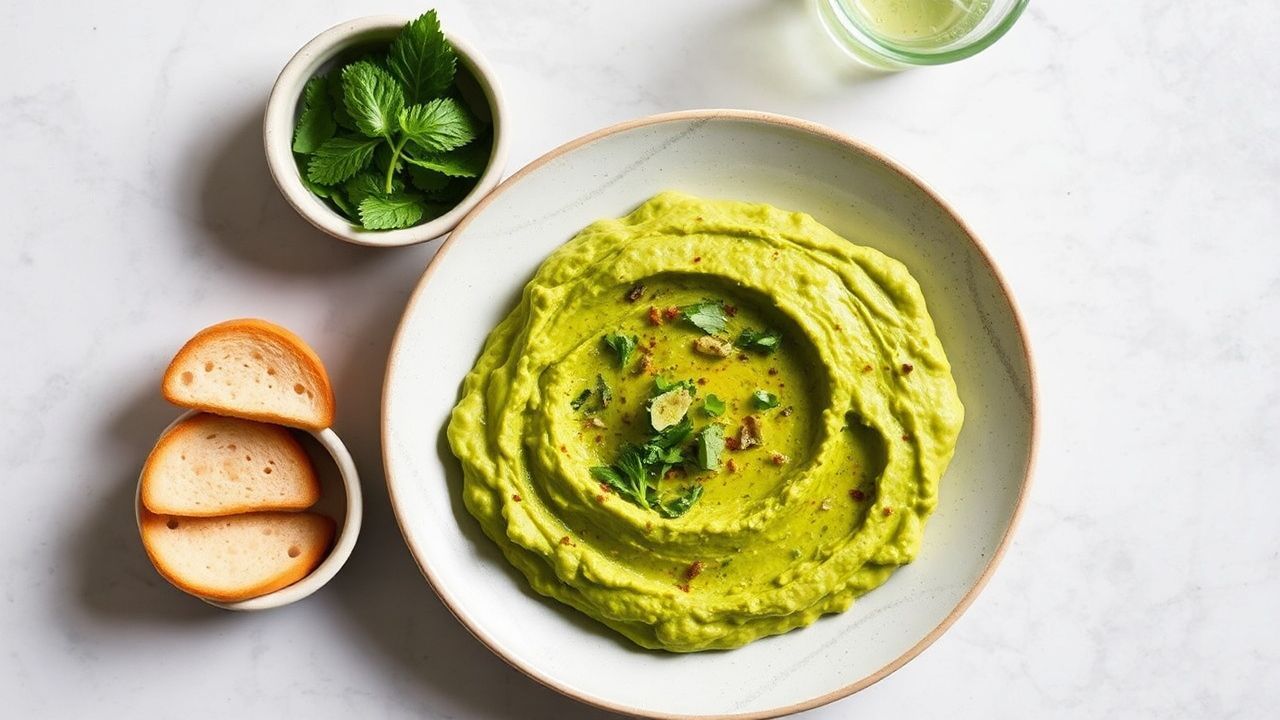
A zesty green harissa hummus plate brings fresh herbs, chili heat, and creamy chickpeas onto one tray. It works for weeknight snacks, holiday spreads, and everything in between—because the flavor stays bold and the prep stays simple. This recipe turns a classic dip into a bright, herb-forward centerpiece.
- Flavor: Green chilies, garlic, mint, and cilantro create a clean, spicy tang.
- Texture: Blend for creaminess, then loosen with water for a spreadable finish.
- Plating: Swirl, drizzle olive oil, and add crunchy or tangy toppings.
- Make-ahead: Chill 30 minutes (or up to 24 hours) for deeper flavor.
Green harissa adds a vivid green color and an aromatic punch that plain hummus can’t match. When you combine it with tahini and lemon, you get a balanced dip: rich, bright, and lightly smoky if your harissa includes roasted chilies.
For background, harissa sits in the broader family of chili pastes used across North Africa and the Middle East. If you want a deeper idea of its roots, see harissa. For the base dip, chickpeas connect this plate to classic hummus methods and flavors.
Now let’s build a tray that looks as good as it tastes. You’ll get clear steps, practical tips, and reliable timing—so you can serve confidently.
Zesty Green Harissa Hummus Plates: What Makes Them Stand Out
A green harissa hummus plate stands out because the flavor comes from two directions at once. You start with creamy tahini and chickpeas, then you add fresh herbs and green chilies for a sharp, green-bright finish.
Also, the plating matters. A shallow bowl, a smooth swirl, and a drizzle of olive oil create a restaurant-style look. For garnish ideas and serving rhythm, it helps to understand the classic “dip + crunch + acid” logic behind many mezze spreads.
As a quick reference, this style fits the wider mezze tradition of shared small dishes. If you want context, read mezze. This recipe simply gives mezze a vivid green signature.
Finally, adjust heat to your crowd. Green harissa paste can vary in intensity, so your lemon and herbs should steer the balance.
Ingredients for a Bright, Herb-Forward Plate
Gather ingredients that support both creaminess and freshness. Chickpeas and tahini form the backbone, while green harissa, herbs, and lemon deliver the zesty character.
For ingredient terms you may see elsewhere—like the chickpea base for hummus—use chickpea as a reference point for why the texture behaves the way it does.
Core Components
Use canned chickpeas or cooked from dry. Either works, but rinsing canned chickpeas helps remove extra sodium and improves the flavor of the final blend.
Choose a green harissa paste you trust. If you make your own, keep the paste fresh and not overly cooked—fresh herbs keep the plate lively.
Optional Toppings for Texture and Color
Toppings should do one job: add crunch, add tang, or add aroma. Toasted pine nuts add richness and crunch, while za’atar brings earthy, sesame-forward notes.
Also consider microgreens or edible flowers for color. Even a simple drizzle and a sprinkle can turn a bowl into a centerpiece.
Shopping List
- 1 1/2 cups cooked chickpeas (or one 15 oz can, drained and rinsed)
- 1/4 cup green harissa paste (store-bought or homemade)
- 1/4 cup tahini (well-stirred)
- Juice of 1 large lemon (about 3 tablespoons)
- 2 cloves garlic, minced
- 1/4 cup extra virgin olive oil, plus more for drizzling
- 1/4 cup fresh cilantro leaves, packed
- 2 tablespoons fresh mint leaves
- 1/2 teaspoon ground cumin
- 1/2 teaspoon fine sea salt, adjust to taste
- 2-3 tablespoons cold water, as needed for texture
- Optional garnish: toasted pine nuts, za’atar, microgreens, or edible flowers
Prep and Cook Time (Plus Yield)
This is a fast plate that fits into real schedules. You can make it in about 25 minutes, then chill briefly so flavors settle.
The yield stays ideal for sharing. Plan for a casual appetizer or snack that serves around 6 people.
Timing
- Planning: 15 minutes
- Cook Time: 10 minutes (mainly for any roasting or sauté steps if you build harissa from scratch)
- Total Time: 25 minutes
Yield
About 2 cups (serves 6 as an appetizer).
If you expect heavy snacking, plan one extra batch or add more pita and veggies.
Instructions: How to Make Zesty Green Harissa Hummus Plates
Follow these steps in order. The blend order matters because it controls texture and helps herbs distribute evenly.
Use a food processor for smoothness. If you don’t have one, a blender works too, but you may need more stopping and stirring.
Blend the Base
Place chickpeas, tahini, lemon juice, garlic, cumin, and sea salt into a food processor. Pulse until roughly combined, then scrape the bowl.
Keep pulsing until the mixture looks thick and cohesive. This base should smell creamy, tangy, and evenly spiced.
Add Green Harissa and Fresh Herbs
Add green harissa, cilantro, and mint. Blend on high until the mixture turns a vivid green and looks uniform.
Scrape down the sides once or twice. If you see streaks of herbs or harissa, blend a little longer.
Adjust Texture to a Spreadable Finish
With the processor running, drizzle in olive oil. Then add cold water one tablespoon at a time until the hummus becomes creamy and spreadable.
In most cases, you’ll use 2–3 tablespoons. Chickpea texture changes by brand, so stop when it spreads easily.
Taste and Balance
Take a spoonful and adjust salt, lemon, or harissa. Add a bit more green harissa for heat or mint for freshness.
Balance matters here. Lemon brightens, herbs cool, and harissa brings the green chili character.
Chill and Garnish
Spoon into a shallow serving bowl and smooth the top. Cover and chill for at least 30 minutes so flavors meld.
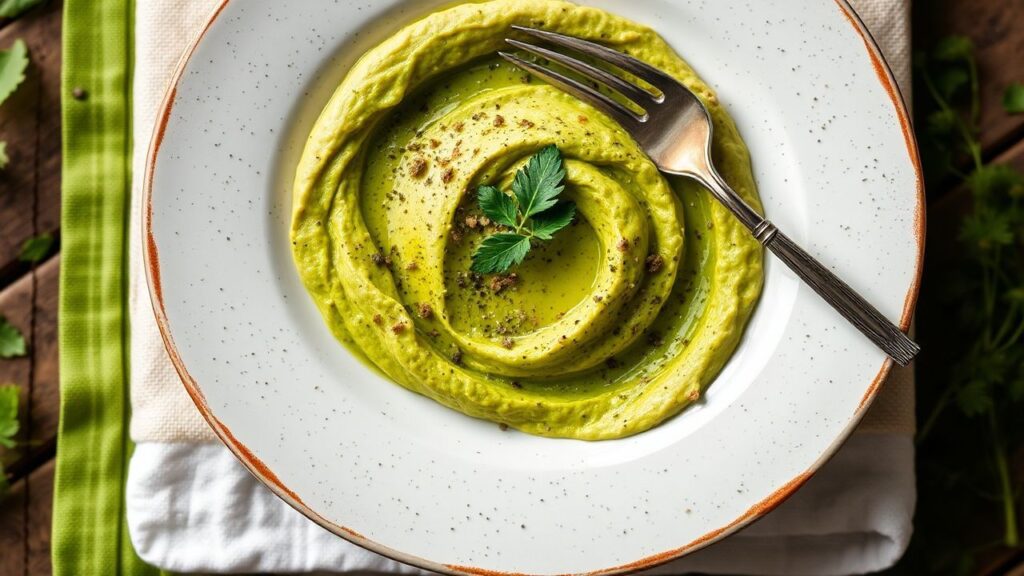
Before serving, drizzle with olive oil and finish with toasted pine nuts and za’atar. Add microgreens or edible flowers for a vivid, fresh look.
Tips for Success (Texture, Heat, and Timing)
Small tweaks make a big difference with this plate. If you want it silky, manage liquid and blend time.
If you want it zesty, focus on lemon first, then harissa. That order keeps the heat from overpowering the freshness.
Also, store it in a tight container. Chilling helps the flavors merge, and the olive oil can settle—just stir before serving.
For additional context on why olive oil and emulsions feel different in cold foods, you can reference olive oil and its role in Mediterranean-style sauces and dips.
Make Harissa Your Way (Smoky or Bright)
If you make your own green harissa, you control the flavor lane. Roast some chilies for smoky depth, or keep them raw for a sharper, greener bite.
That choice changes heat perception. Smoky harissa feels deeper, while bright harissa feels more immediate and fresh.
When you adjust, do it gradually. Add harissa by teaspoons, then blend for 10–15 seconds so the flavor distributes evenly.
If you’re sensitive to spice, use less harissa and boost herbs and lemon for a still-vibrant profile.
Fix Common Texture Problems
If the hummus looks grainy, add 1 tablespoon olive oil or water and blend again. Granularity usually improves once chickpeas fully break down.
If it feels too thick, add water. If it feels too loose, blend again for 20–30 seconds to re-smooth the texture.
Make-Ahead Plan
Prepare this hummus up to 24 hours ahead. Cover tightly and refrigerate so the flavors settle and the herbs taste less sharp.
Right before serving, stir and add a fresh drizzle of olive oil. This brings back sheen and aroma.
Diet-Friendly Options
Hummus naturally aligns with many plant-forward diets. This green version also stays vegan when you use tahini and plant-based ingredients.
If you need a sesame-free approach, choose a seed butter you tolerate. Texture and flavor will shift, so adjust lemon and salt to compensate.
Serving Suggestions: Build the Perfect Zesty Green Harissa Hummus Plate
Plating should make eating easy. The goal is “dip-first” access, plus visual pop from garnishes and drizzles.
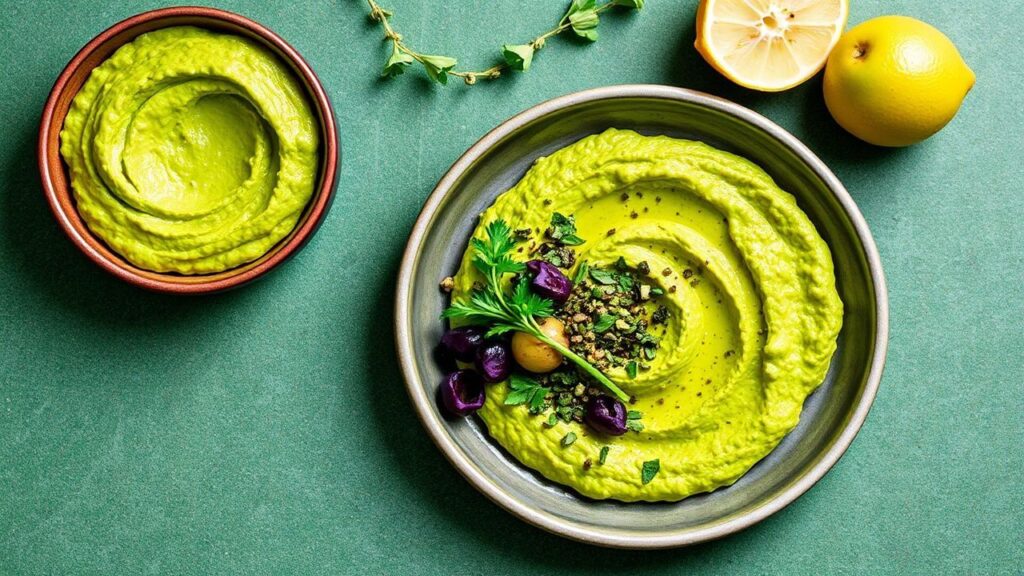
Use a wide bowl or shallow plate. A gentle swirl creates a surface that holds oil and toppings.
Plating Techniques
Create a swirl with the back of a spoon, then drizzle olive oil from the center outward. This spreads aroma across every bite.
Dot around with toasted pine nuts or za’atar for texture contrast. Aim for a mix of crunchy and fragrant toppings.
Color and Herb Garnishes
Scatter microgreens, chopped parsley, or edible flowers to emphasize the green theme. Fresh garnish also boosts aroma right before serving.
If you want a tangy note, add a few thin radish slices or a small handful of chopped cucumber.
What to Serve With It
Serve with warm pita triangles for classic dipping. For contrast, add raw veggies like cucumber ribbons, bell pepper strips, and carrot sticks.
You can also serve it alongside roasted vegetables or grilled halloumi for a richer plate.
Bold Pairing Ideas
Pair this hummus with tangy roasted eggplant, grilled halloumi, or a bowl of marinated olives. The acid and salt help the herbs taste brighter.
If you plan a mezze-style table, include a few simple items so guests can mix and match bites.
Nutritional Snapshot (Per 1/4 Cup)
Nutrition can shift slightly depending on the brand of tahini, chickpeas, and green harissa. Still, this estimate gives you a solid planning range.
Use it as a guide for portioning on a snack board, especially if guests want lighter bites.
| Nutrient | Per 1/4 Cup Serving |
|---|---|
| Calories | 130 kcal |
| Protein | 5 g |
| Carbohydrates | 12 g |
| Fat | 7 g |
For general background on hummus ingredients, you can also explore tahini. That helps explain why tahini drives creaminess and flavor depth in many hummus styles.
FAQ
Quick answers help you fix issues fast and serve with confidence. Use these notes as a practical checklist before your guests arrive.
- Zesty Green Harissa Hummus Plates: What Makes Them Stand Out
- Ingredients for a Bright, Herb-Forward Plate
- Prep and Cook Time (Plus Yield)
- Instructions: How to Make Zesty Green Harissa Hummus Plates
- Blend the Base
- Add Green Harissa and Fresh Herbs
- Adjust Texture to a Spreadable Finish
- Taste and Balance
- Chill and Garnish
- Tips for Success (Texture, Heat, and Timing)
- Make Harissa Your Way (Smoky or Bright)
- Fix Common Texture Problems
- Make-Ahead Plan
- Diet-Friendly Options
- Serving Suggestions: Build the Perfect Zesty Green Harissa Hummus Plate
- Nutritional Snapshot (Per 1/4 Cup)
- FAQ
If you want to refine heat, flavor balance, or texture, most answers below point back to simple blending and tasting steps.
What makes green harissa hummus different from traditional hummus?
Traditional hummus relies on chickpeas, tahini, garlic, and lemon for a creamy, earthy flavor. Green harissa hummus adds green chilies and fresh herbs, so it tastes brighter, spicier, and more aromatic.
The vivid green color also signals the flavor shift: herb-forward with a chili kick.
How do I make the hummus taste “zesty” instead of just spicy?
Start with lemon and salt balance. Then adjust green harissa in small steps so you control heat without losing freshness.
Fresh mint and cilantro help cool the chili notes and keep the profile zesty.
Why is my hummus grainy, and how can I fix it?
Graininess usually comes from incomplete blending or chickpeas that didn’t break down well. Blend longer, then add a small amount of water or olive oil and blend again.
Stop only when it spreads smoothly and looks glossy.
Can I make green harissa hummus ahead of time?
Yes. Make it up to 24 hours ahead, refrigerate it in an airtight container, and stir again before serving.
Add a quick drizzle of olive oil on top right before guests eat.
Is zesty green harissa hummus suitable for special diets?
It can fit vegan and gluten-free diets when you use plant-based ingredients. It also works for many vegetarian menus as a protein-rich appetizer.
For sesame allergies, swap tahini with a seed butter you tolerate and re-balance lemon and salt.
See also: zesty green harissa hummus