
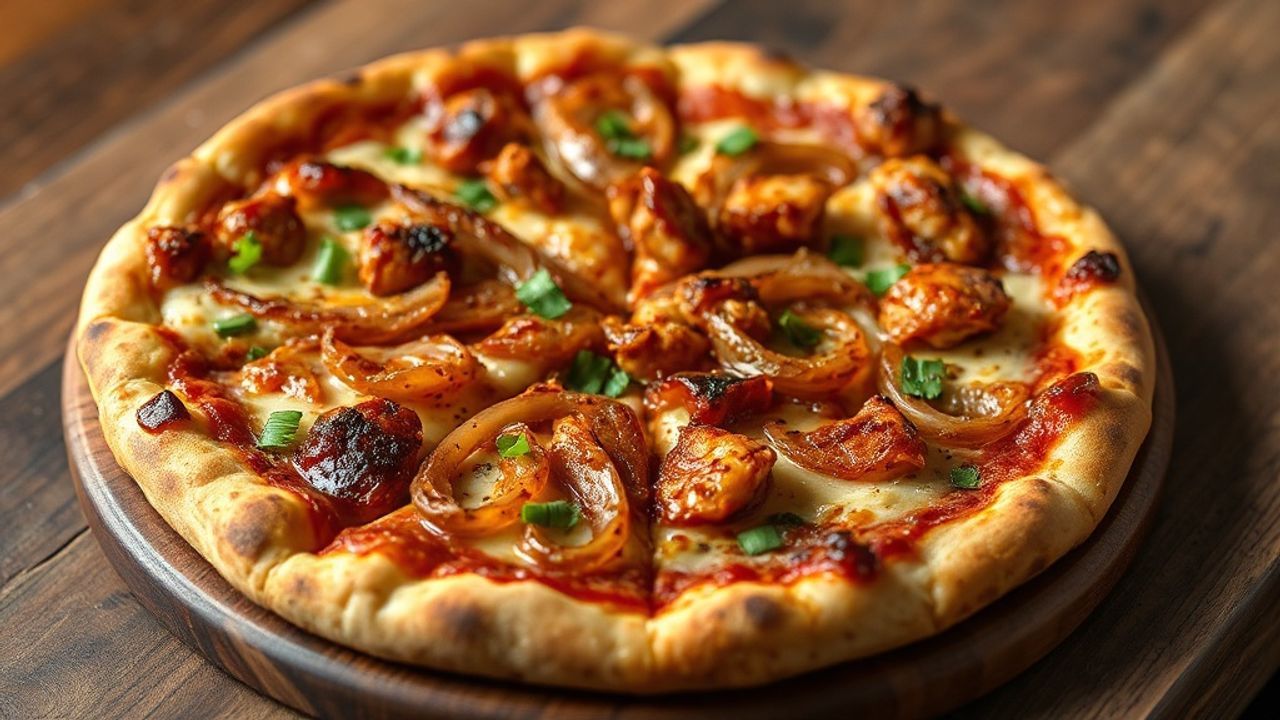
BBQ chicken pizza delivers a bold balance of smoky sauce, tender protein, and sweet caramelized onions that lift each slice. This recipe focuses on technique so you consistently get a crisp crust, properly melted cheese, and deeply flavored onions.
- Key takeaway: Slow caramelization amplifies sweetness without bitterness.
- Key takeaway: Use a balanced BBQ sauce and two cheeses for melt and smoke.
- Key takeaway: High oven heat and a preheated stone yield the crispiest crust.
- Key takeaway: Control moisture to keep the base blistered and crisp.
Why BBQ Chicken Pizza Works
BBQ chicken pizza succeeds because it combines contrasting tastes and textures: tangy sauce, sweet onions, melty cheese, and a crisp base. Each element plays a clear role and interacts with the others to heighten perceived flavor.
Understanding contrast helps you control seasoning, texture, and bake variables so every slice tastes balanced. For context on pizza techniques and history, consult pizza.
Essential Ingredients for BBQ Chicken Pizza
Start with quality chicken, a balanced BBQ sauce, and onions that stand up to long cooking. Use a mix of low-moisture mozzarella for stretch and a smoked cheese for aroma to avoid a greasy topping layer.
Pick onions with moderate sulfur for smoother caramelization; yellow onions are reliable choices. For reference on the chemical changes in browning, read about caramelization.
Also add internal resources for step-by-step guidance: see our BBQ chicken tag for related pies and pizza crust techniques. These internal guides reinforce consistent results when you combine methods.
Prep and Timing: What to Plan
Plan roughly 45 minutes total using pre-cooked chicken and ready dough: 20 minutes prep, 25 minutes bake. If you make dough or cook chicken from raw, add rise and cook time accordingly.
Preheat your oven and stone or steel to the highest safe temperature for at least 30 minutes to ensure strong bottom heat. High radiant heat crisps the base quickly while allowing toppings to finish without drying out.
Step-by-Step Instructions
Warm the BBQ sauce with a touch of apple cider vinegar and smoked paprika to balance sweetness. Keep the sauce warm because a cold, thick spread can create uneven baking on the pie.
Caramelize onions slowly over medium-low heat with a mix of butter and neutral oil until deep golden. Stir every few minutes and resist increasing the heat; fast color creates bitter compounds rather than rich sweetness.
Assembling the Pizza
Roll or stretch dough to a 12-inch circle and place on a floured peel or parchment. Spread a thin, even layer of sauce, add shredded chicken, then distribute onions and cheese in layers to ensure even melting.
Bake on the preheated stone or steel for 12–15 minutes, depending on oven temperature and dough thickness. Remove when the crust shows golden blisters and the cheese has light brown spotting, then rest for 3–5 minutes to let juices settle.
Chef-Level Tips and Technique
Use two complementary cheeses: mozzarella for melt and smoked gouda or provolone for complexity. This pairing delivers depth without creating an oily, separated top layer.
Control moisture by patting cooked chicken dry and draining excess liquid from onions before they go on the pie. Too much water mutes flavors and softens the crust, defeating the goal of a blistered base.
When seasoning, taste components separately and adjust acidity with apple cider vinegar or lemon if the sauce tastes flat. Small corrections in the sauce or topping seasoning produce large improvements on the assembled pizza.
Caramelizing Onions: Practical Rules
Slice onions uniformly to ensure even cooking; aim for 3–4 mm slices for consistent softening and color. Use a wide skillet so slices contact the pan; crowding leads to steaming rather than browning.
Cook on medium-low and stir regularly for 20–30 minutes until deep golden and jammy. If you need faster color, raise heat briefly and watch closely to avoid burning, then reduce heat again to finish.
Onion Varieties and Flavor
Yellow onions deliver balanced sweetness and hold up well; red onions give a milder, fruitier edge when caramelized. Sweet varieties such as Vidalia or Walla Walla will caramelize faster due to higher sugar content.
Choose onions by desired final flavor and texture, and adjust cook time to match their sugar and sulfur profile. For technical background, review the onion entry on varieties and flavor chemistry.
Oven Setup and Crust Strategy
Use a pizza stone or steel preheated for at least 30 minutes at the oven’s top temperature for best bottom heat. This produces the rapid oven spring and blistering typical of well-baked pizzas.
If you have a convection setting, use it cautiously; it can dry toppings faster than desired. For thick-crust dough, lower the temperature slightly and extend bake time to finish the interior without over-browning the exterior.
Serving and Pairings
Garnish with fresh cilantro or thinly sliced scallions to add brightness and cut through richness. A squeeze of lime can lift flavors further if your BBQ sauce skews heavy on molasses or sugar.
Serve with a crisp green salad dressed simply with lemon vinaigrette or a tangy slaw to contrast the savory-sweet profile. For beverage pairing, try a hoppy ale or citrus-forward iced tea to complement the smoky notes.
After that caution, space toppings evenly and avoid clumping cheese directly over wet onions. Proper layering preserves texture and allows flavors to concentrate without waterlogging the crust.
Nutritional and Ingredient Notes
A typical slice from a 12-inch pie with moderate cheese yields roughly 300–350 kcal and 20–25 g protein depending on chicken amount and crust thickness. Adjust cheese, chicken amount, and crust thickness to modulate calories and macros.
For dairy-free or vegan adaptations, substitute shredded smoked cheese analogs and use jackfruit or seasoned mushrooms in place of chicken. Always verify that your BBQ sauce and cheese alternatives are free of animal-derived ingredients.
For cheese selection and melting characteristics, consult the cheese reference on texture and flavor categories. That resource helps when choosing substitutes for melt and smoky notes.
FAQ
Below are common questions I hear from cooks refining their BBQ chicken pizza. Each answer focuses on practical technique and safe food handling.
If you still have specific constraints (oven type, dough hydration, or dietary limits), follow the guidance here and then adapt with small test bakes to dial settings.
How long should I caramelize onions for pizza?
Caramelize onions for 20–30 minutes on medium-low heat until they are deeply golden and soft. Stir often to prevent sticking and to ensure even color across slices.
What type of BBQ sauce is best?
Choose a balanced sauce—tangy with moderate sweetness and low heat. A Kansas City–style profile works well because it blends tomato, molasses, and vinegar notes without overwhelming other toppings.
Can I use raw chicken on the pizza?
Yes, but par-cook raw chicken to ensure it reaches a safe internal temperature and to remove excess moisture. Thinly sliced or shredded pre-cooked chicken gives more consistent texture and faster bake times.
How do I get a crispy crust every time?
Preheat a stone or steel at maximum oven temperature and bake quickly on the lowest rack to maximize bottom heat. Thin dough, minimal wet toppings, and a hot surface help the crust blister and avoid sogginess.
Are there vegetarian alternatives that keep the BBQ flavor?
Smoked mushrooms, jackfruit, or roasted cauliflower absorb BBQ sauce and provide texture similar to chicken when pre-roasted and seasoned. Roast or sear them first to concentrate flavor before assembling.
For foundational reading on smoked flavors and outdoor cooking processes, consult the barbecue page for context on smoke profiles and sauce traditions.
With disciplined timing for onions, the right cheese pairing, and respect for oven heat, you will produce consistent, flavorful BBQ chicken pizza. Practice one variable at a time—dough hydration, oven temp, or topping load—to isolate improvements.
See also: BBQ chicken