
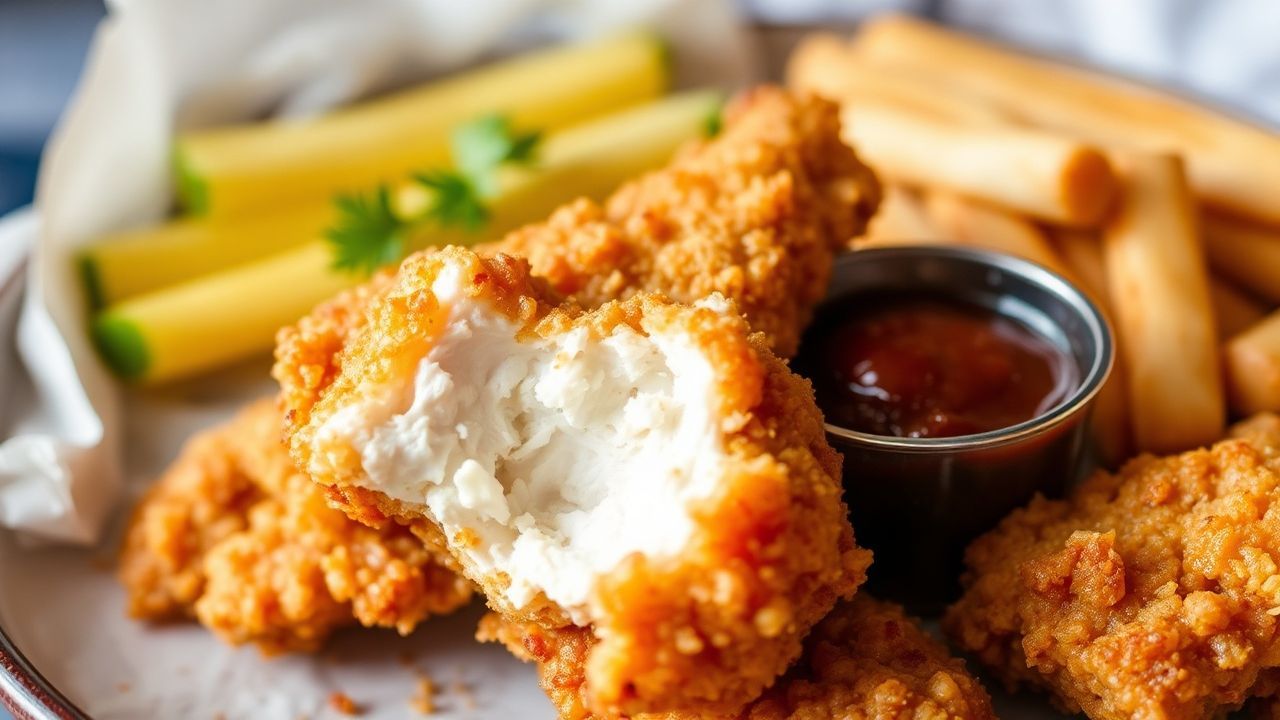
Fried Chicken delivers that irresistible crunch and juicy interior when you control coating chemistry, oil temperature, and timing precisely. This guide lists practical techniques and expert adjustments to help you achieve consistent, restaurant-quality fried chicken at home.
- Fried Chicken Essentials
- Fried Chicken: Ingredients and Prep
- Fried Chicken: Frying Technique
- Tips and Troubleshooting
- Serving and Pairings
- FAQ
- How do I keep fried chicken juicy without undercooking the crust?
- Can I brine instead of marinate in buttermilk?
- What oil should I use for the best fried chicken?
- Is oven-frying a viable alternative to deep frying?
- How long can leftovers stay crisp?
- In Retrospect
- Key technique: Maintain oil temp and rest coated pieces before frying.
- Flavor move: Use buttermilk-based marinades for tender meat and deeper flavor.
- Texture tip: Add baking powder or cornstarch to the dry mix for extra lift and crisp.
- Finish: Drain on a wire rack to preserve crunch while juices redistribute.
Fried Chicken Essentials
Fried chicken depends on three pillars: the marinade, the coating, and the frying environment. Each pillar interacts: acids in the marinade tenderize, coating adhesion locks in moisture, and precise heat converts that coating into a crisp crust.
Understanding the science behind these steps improves repeatability. For reference on the cooking method, review deep frying to see how hot oil transfers energy to food and creates Maillard color and crust.
Fried Chicken: Ingredients and Prep
Start with quality pieces: bone-in, skin-on thighs and drumsticks give the best juice retention and handle longer cook times. Trim excess fat, then score the skin lightly where necessary to help the coating adhere and render evenly.
For the marinade, use buttermilk to tenderize and impart subtle tang. Read more on the properties of buttermilk to understand why it performs well for fried chicken marinades.
Marinade Strategy
Combine 2 cups of buttermilk with optional hot sauce and salt. Submerge chicken fully and refrigerate; eight hours to overnight yields the best balance of flavor and texture. The acid and enzymes in buttermilk break down proteins enough to tenderize without turning the meat mushy when used correctly.
Pat pieces lightly before dredging; remove excess marinade but leave a thin wet coat to help the dry mix adhere. This balance reduces loose flour and gives a thicker, uniform crust after frying.
Dry Coating and Additives
Use a base of all-purpose flour. Add a small portion of cornstarch or a full teaspoon of baking powder to the dry mix to encourage tiny air pockets and lift. Season the mix with salt, smoked paprika, garlic powder, and black pepper for a dependable savory profile.
Press the flour onto the surface firmly and let coated pieces rest on a wire rack for 10-15 minutes. This rest promotes adhesion and decreases flour shedding during frying, which improves final texture and oil clarity.
Fried Chicken: Frying Technique
Choose an oil with a high smoke point, like peanut or canola oil, and heat to a steady 350°F (175°C). A reliable thermometer and heavy-bottomed pot give you consistent results. You can read about oil varieties on the peanut oil page to compare smoke points and flavor profiles.
Fry in batches to avoid overcrowding, which causes the oil temperature to drop and yields greasy, unevenly cooked pieces. Maintain temperature between 325°F and 350°F for best balance of crust development and internal doneness.
Technique Details
Gently lower chicken into oil using tongs; do not drop pieces which splatters oil and destabilizes temperature. Turn pieces occasionally for even browning and monitor internal temperature to verify doneness at 165°F (74°C) for poultry.
Drain on a wire rack set over a shallow pan rather than stacking or paper towels. The rack prevents trapped steam from softening the crust and keeps the exterior crisp while the interior juices settle.
Tips and Troubleshooting
If the coating slips, the problem is usually too much wet marinade or insufficient pressure when pressing the flour. Wipe excess buttermilk before dredging and press dry mix firmly into the skin to create mechanical adhesion.
Temperature swings cause most issues. Use a heavy pot and an accurate thermometer. Reduce heat when adding cold pieces, and allow the oil to recover before adding more chicken to the pot.
Chef’s Notes
Substitutions: Greek yogurt stands in for buttermilk at a 1:1 ratio for a tangy profile. Replace a small portion of flour with cornstarch for a lighter, flakier crust.
Spice blends: Add cayenne for heat, dried thyme for herb depth, or a pinch of ground mustard for bright umami. Adjust salt last and taste a small fried flour sample to calibrate seasoning.
Make-Ahead and Holding
Marinate up to 24 hours for deeper flavor without risking texture loss. For holding, keep fried pieces on a wire rack in a low oven (200°F) for short periods; this keeps them warm and maintains crispness.
Avoid stacking or covering tightly, which traps steam and ruins the crust. If you must transport, pack pieces with ventilation and re-crisp briefly in a hot oven before serving.
Serving and Pairings
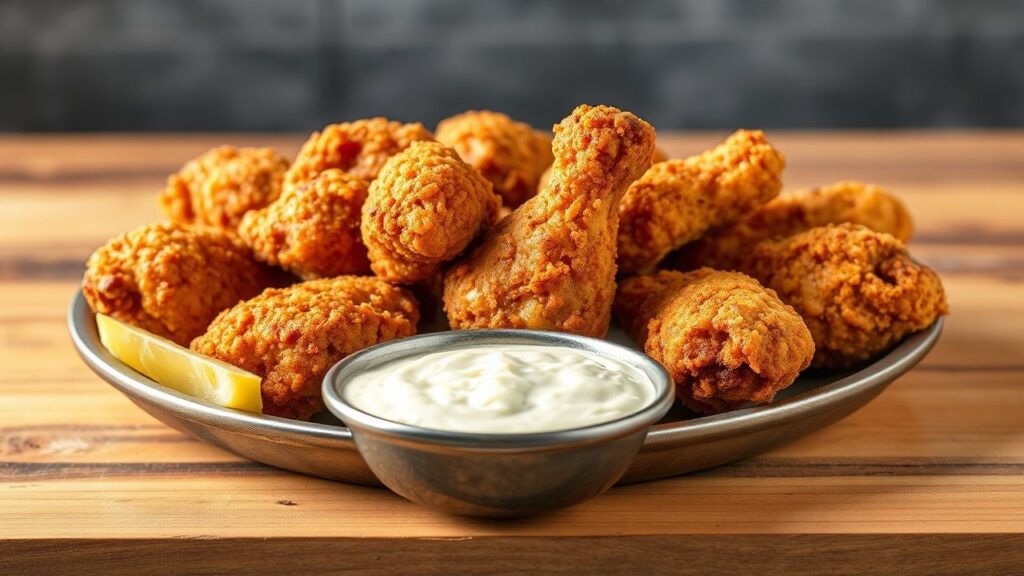
Serve fried chicken hot with acid and fat contrasts: a lemon wedge, pickles, or hot honey brighten the palate. Classic sides like coleslaw, mashed potatoes, or cornbread add textural and flavor balance to the plate.
Garnish with fresh herbs for color and a final aromatic note. Provide salt at the table so diners can adjust seasoning to taste without over-salting during cooking.
FAQ
How do I keep fried chicken juicy without undercooking the crust?
Maintain oil between 325–350°F and use bone-in pieces which tolerate longer cooking. Finish thicker pieces in a preheated oven at 350°F for 8–10 minutes if the crust risks overbrowning before the interior reaches safe temperature.
Use a probe thermometer to confirm 165°F internal temperature. Proper temperature control ensures both crispness and safety.
Can I brine instead of marinate in buttermilk?
Yes. A simple saltwater brine adds moisture and seasoning without acid. Buttermilk offers both acid and enzymes which tenderize; choose brine for straightforward seasoning and buttermilk for tenderness and tang.
Balance brine strength (about 5-6% salt) and time (1-4 hours for smaller pieces; longer for whole birds) to avoid overly salty results.
What oil should I use for the best fried chicken?
Use neutral oils with high smoke points such as peanut, canola, or sunflower oil. Each oil contributes different aromas; peanut oil adds a subtle nuttiness while canola remains virtually neutral.
Change oil based on frequency of frying; discard oil that develops off-odors or heavy darkening to avoid flavor transfer and shortened smoke point performance.
Is oven-frying a viable alternative to deep frying?
Oven-frying can produce a satisfying crust with less oil. Use a wire rack and preheated oven at 425°F, spray lightly with oil, and flip once. Expect a different texture: less deep-fried flakiness, but still enjoyable and lower in fat.
For closer results, combine shallow frying to start the crust, then finish in a hot oven to cook through while preserving exterior crunch.
How long can leftovers stay crisp?
Refrigerate leftovers within two hours. To re-crisp, use a 375°F oven on a wire rack for 8-12 minutes until hot and crunchy again. Microwaving softens the coating due to steam.
Store uncovered for short periods in the fridge, or seal after full cool-down to avoid condensation inside containers.
In Retrospect
Mastering fried chicken requires repeatable technique: consistent marinades, a reliable dry mix, and disciplined temperature control. Each step compounds to produce a dependable, crisp crust and juicy interior.
Follow the 7 crispy secrets here, practice controlled frying, and refine seasoning to personal taste. With a few focused adjustments, your fried chicken will move from good to exceptional and stay reliably crisp every time.
See also: Fried Chicken